Hadith of the Day
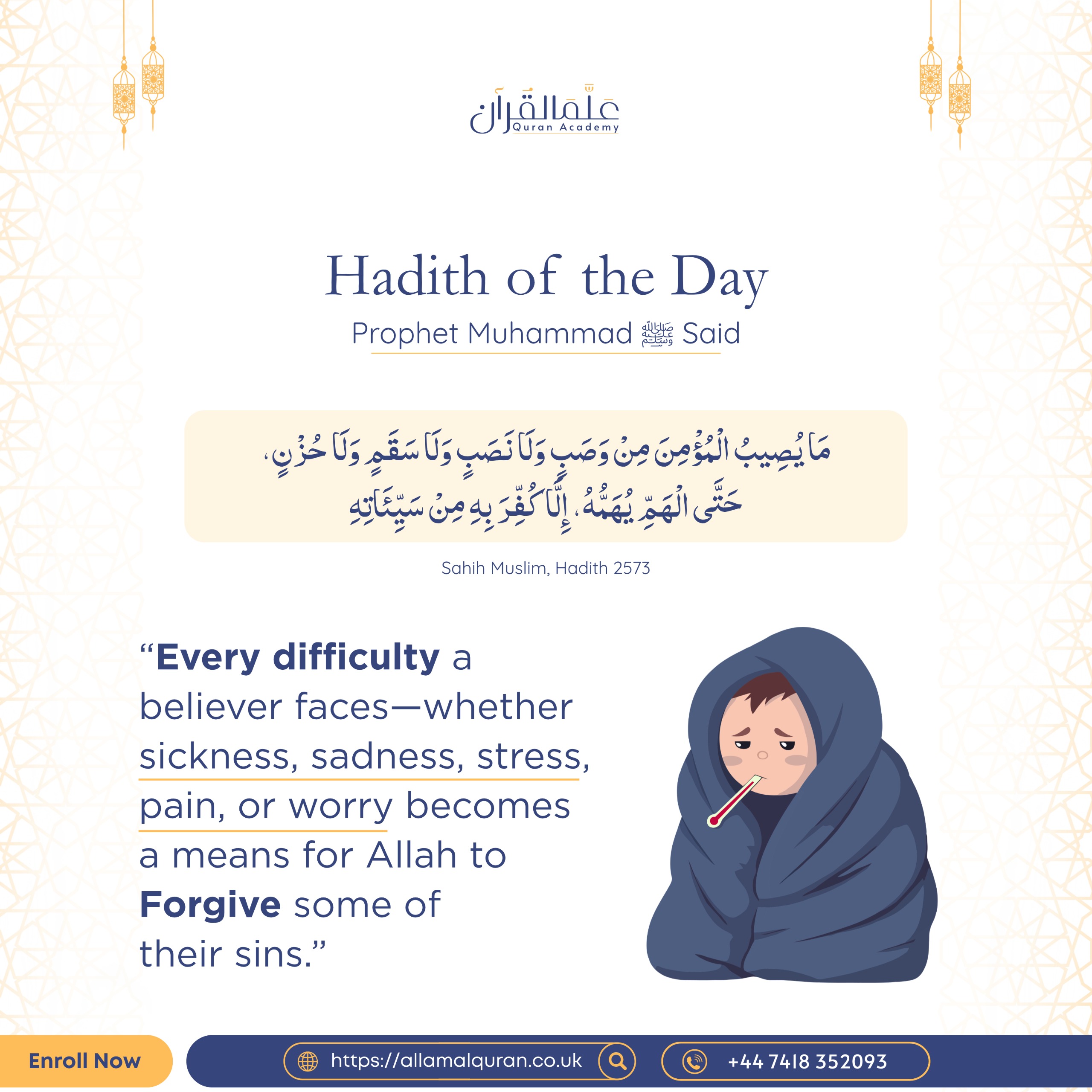
A comforting reminder that hardship, stress, sadness, pain, and worry can become a means of forgiveness when met with patience and faith.
Hadith of the Day teaches that a believer's pain is never meaningless. Islam gives hope to the heart by showing that even difficulty can carry hidden mercy from Allah.
Every Muslim faces moments of illness, tiredness, grief, anxiety, disappointment, or emotional heaviness. This hadith reminds us that Allah can use those moments to remove sins, raise rank, and soften the soul.
The message is not to seek hardship, but to respond with patience, dua, trust, and the belief that Allah sees every silent struggle. This perspective does not erase pain, but it gives pain a spiritual meaning.
Hadith of the Day in English
No fatigue, illness, sorrow, sadness, hurt, or distress befalls a Muslim, even a thorn that pricks them, except that Allah expiates some of their sins because of it.
Main Meaning
Hardship can become a means of forgiveness when a believer remains patient.
Daily Practice
Respond with dua, sabr, salah, wise action, and trust in Allah's mercy.
Best Use
Share it with someone going through stress, grief, sickness, or worry.
7 Powerful Lessons from Hadith of the Day
These lessons help families, students, and teachers understand hardship through the lens of Islamic hope.
Pain Is Not Wasted
Allah knows every difficulty, even the smallest discomfort that people may never notice.
Sins Can Be Forgiven
The hadith gives hope that trials can wipe away sins by Allah's mercy.
Patience Has Value
Sabr is not passive weakness. It is steady faith while seeking halal solutions.
Emotional Pain Matters
Sadness, anxiety, and worry are mentioned alongside physical pain and illness.
Allah Sees Hidden Struggles
A believer may suffer quietly, but nothing is hidden from Allah's knowledge.
Hope Protects the Heart
This teaching helps Muslims avoid despair when life feels heavy.
Trials Can Raise Rank
With faith and patience, difficulty can bring a person closer to Allah.
Comfort Others
Use this reminder gently to support people, not to dismiss their pain.
How to Apply This Hadith of the Day
This reminder becomes practical when it helps you respond to hardship with faith and wise action.
- Make dua and ask Allah for relief, forgiveness, and strength.
- Pray on time, even when your heart feels tired or distracted.
- Seek medical, emotional, or family support when it is needed.
- Avoid comparing your test with another person's test.
- Comfort others with mercy instead of judging their pain.
A thorn, a worry, a tear, or a sleepless night can become a path to forgiveness when the believer turns back to Allah.
Why Hadith of the Day Gives Hope During Hardship
This hadith gives Muslims a balanced way to understand pain. It does not tell people to pretend they are fine, and it does not dismiss grief. Instead, it teaches that pain can have meaning with Allah.
A believer may feel tired, worried, or broken, but still remain honored by Allah. Sometimes the world only sees weakness, but Allah sees patience, tears, dua, and effort. That hidden struggle can become a reason for forgiveness.
This is why Muslims should be gentle with people going through difficulty. We do not know which hardship is purifying them, raising them, or bringing them closer to Allah.
Parent and Teacher Q&A on Hadith of the Day
This topic should be taught with gentleness because children and adults may be carrying quiet struggles.
Should we tell people not to feel sad?
No. Islam acknowledges sadness. We comfort people and remind them of Allah's mercy with kindness.
Does patience mean doing nothing?
No. Patience includes seeking treatment, asking for help, making dua, and avoiding sinful reactions.
How can children understand it?
Explain that Allah knows when they feel hurt, sick, worried, or upset, and He rewards patience.
Authentic References for Hadith of the Day
Read the narration in Sahih al-Bukhari 5641 and Sahih Muslim 2573a.
Final Reflection on Hadith of the Day
Hadith of the Day gives comfort to every believer who is carrying pain, stress, worry, illness, or sadness. Ask Allah for ease, take the right steps, and trust that no hardship is unseen by Him.