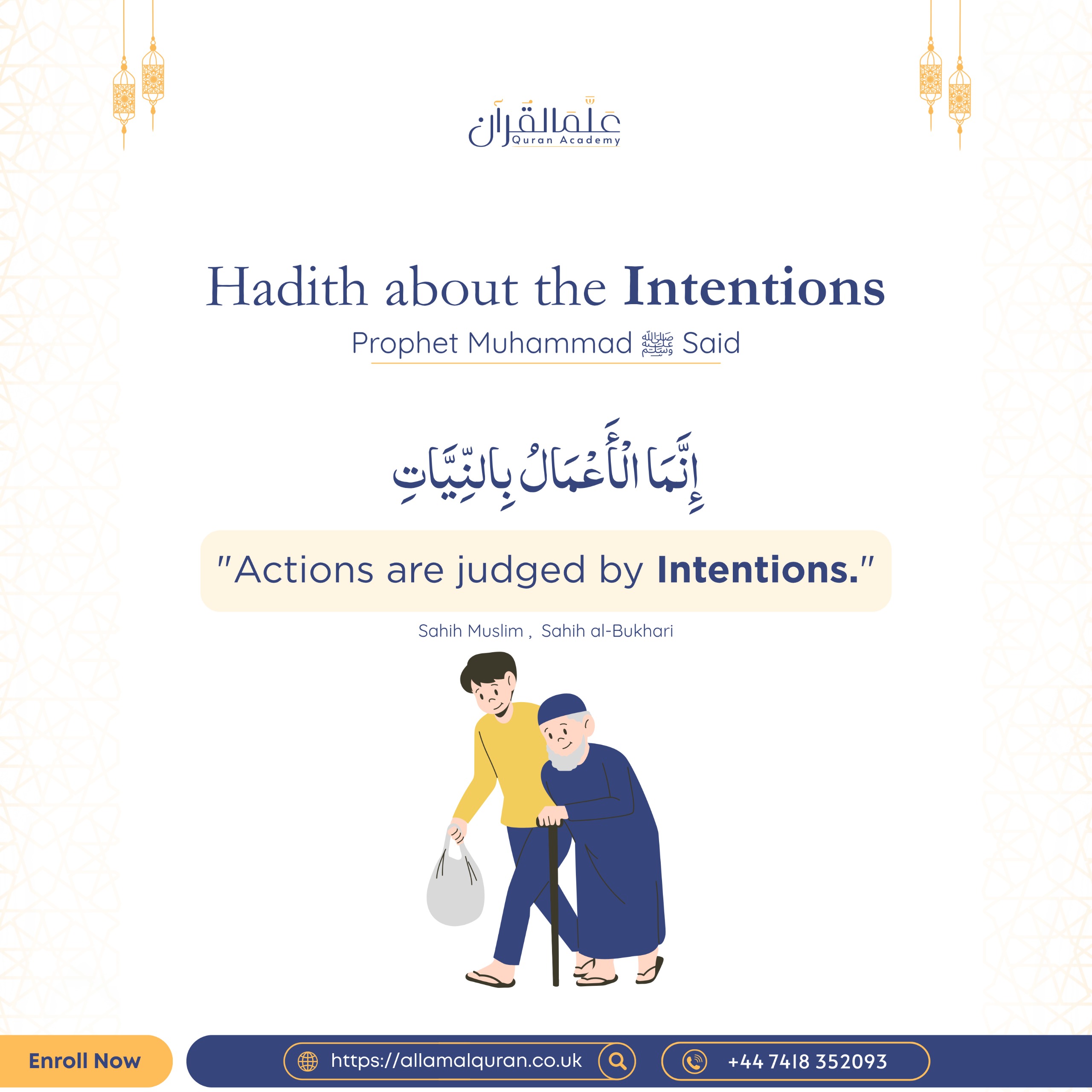
Hadith about the Intentions
A powerful reminder that Allah looks beyond outward actions and judges deeds by the sincerity, purpose, and direction of the heart.
Hadith about the Intentions is one of the most important teachings in Islam. It reminds every Muslim that actions are not only judged by appearance, size, or public praise, but by the intention behind them.
A small deed done sincerely for Allah can become great. A large deed done for showing off can lose its value. This is why scholars often place this hadith at the beginning of Islamic books and lessons.
The lesson is simple but life-changing: before we pray, study, teach, give charity, work, help family, or speak to others, we should check the reason inside the heart.
Hadith about the Intentions in English
"Actions are only by intentions, and every person will have only what they intended."
Main Meaning
The value of a deed is connected to the intention in the heart.
Daily Practice
Renew your intention before prayer, study, work, charity, and service.
Best Use
Teach it to children early so they learn sincerity before performance.
7 Powerful Lessons from Hadith about the Intentions
These lessons make the hadith practical for worship, family life, education, work, and personal growth.
Sincerity Comes First
A believer begins good deeds by seeking Allah's pleasure, not people's applause.
Small Deeds Can Grow
A simple action can become heavy in reward when the intention is pure.
Showing Off Is Dangerous
Doing good only for praise can damage the spiritual value of the deed.
Daily Life Can Become Worship
Study, work, parenting, and helping others can become worship with the right intention.
The Heart Needs Checking
Intentions can change, so a Muslim renews sincerity again and again.
Teachers Need Ikhlas
Teaching Quran, hadith, or Islamic manners should be done for Allah before reputation.
Children Learn Purpose
This hadith helps children understand why they pray, learn, share, and obey.
Begin Again
If your intention becomes weak, quietly renew it and return to Allah.
How to Apply Hadith about the Intentions
This hadith becomes life-changing when it is used before ordinary actions, not only before major worship.
- Before salah, remind yourself that you are standing before Allah.
- Before studying, intend to gain beneficial knowledge and serve others.
- Before giving charity, seek Allah's pleasure instead of praise.
- Before teaching children, intend to guide with mercy and sincerity.
- Before posting online, ask whether the action is helpful or only for attention.
A sincere intention can turn an ordinary moment into worship, and a hidden deed into a treasure with Allah.
Why Hadith about the Intentions Matters Today
In modern life, people often measure success by likes, praise, numbers, titles, and public attention. This hadith brings the believer back to a deeper question: what does Allah see in my heart?
Someone may teach, donate, volunteer, or help others while secretly wanting recognition. Another person may quietly serve family, make dua, clean a prayer space, support a student, or comfort someone in private, and Allah may raise that hidden deed because it was sincere.
The Hadith about the Intentions protects the Muslim from spiritual distraction. It teaches us not to chase applause and not to despair when no one notices our effort. Allah knows every sincere action, even when people never see it.
Parent and Teacher Q&A on Hadith about the Intentions
This hadith is ideal for Islamic classrooms because it connects the heart with daily behavior.
How can children understand intention?
Explain it as the reason inside the heart: why am I doing this action?
Can normal actions become worship?
Yes. Eating, studying, working, and helping family can become worship with a good intention.
What if the intention changes?
Renew it quietly. A believer keeps returning the heart back to Allah.
Authentic References for Hadith about the Intentions
Read this famous narration in Sahih al-Bukhari 1 and Sahih Muslim 1907a.
Final Reflection on Hadith about the Intentions
Hadith about the Intentions teaches that the heart matters deeply. Ask Allah for sincerity, renew your purpose often, and turn everyday actions into worship through honest intention.