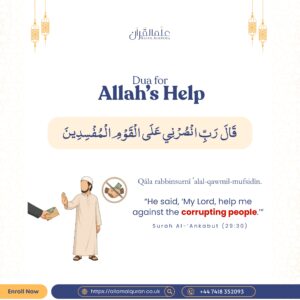

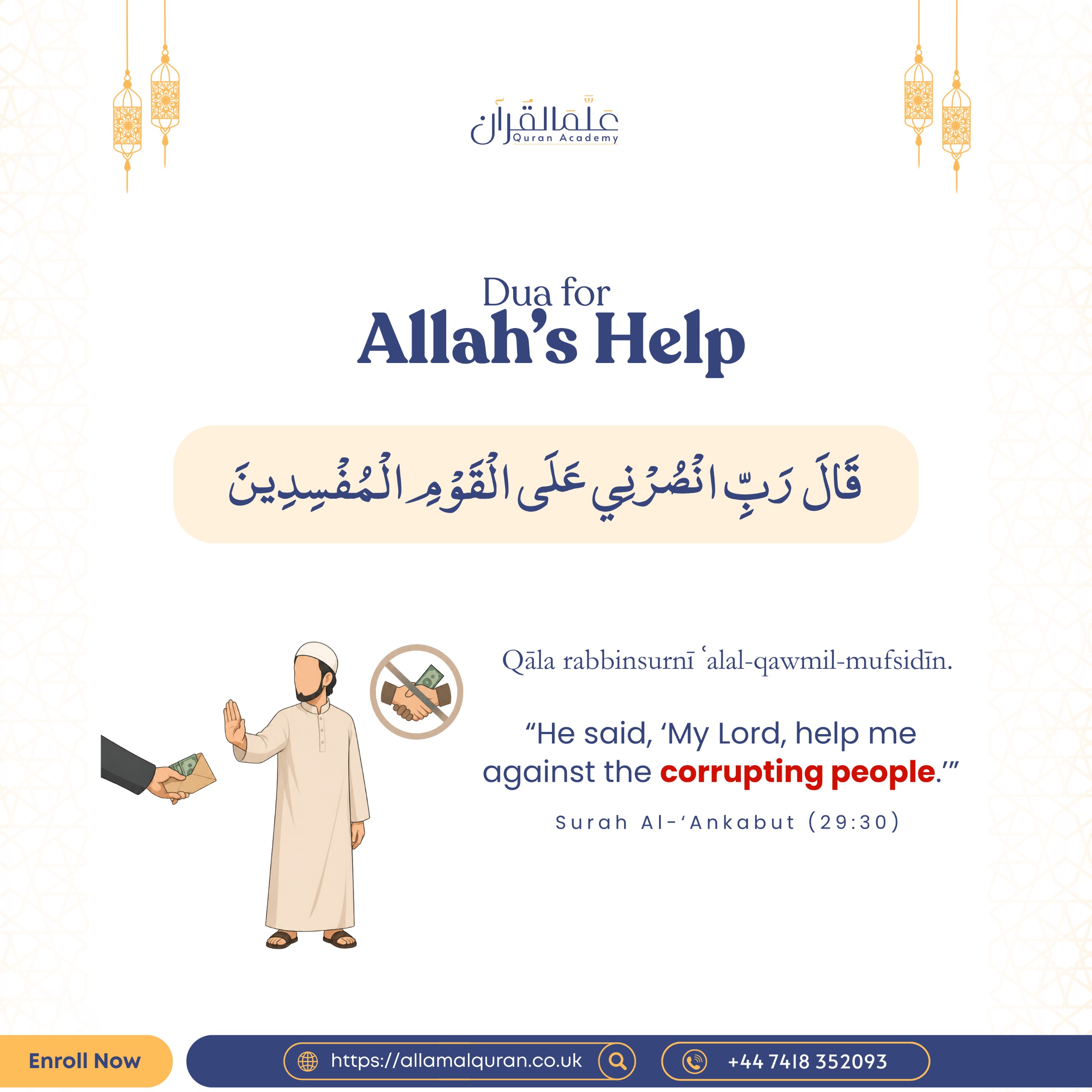
This profound supplication was uttered by Prophet Lut (Alayhis Salam) when he faced immense opposition from a nation steeped in immorality and corruption. The Arabic word “insurnī” (help me) reflects total reliance on Allah’s power, while “al-qawmil-mufsidīn” refers to those who spread mischief, injustice, and moral decay. This dua is not merely a historical plea; it is a timeless tool for every believer who encounters oppression, societal decay, or personal trials where human aid falls short.
✦ Key takeaway: This dua teaches us to turn to Allah first, acknowledging that true victory comes from Him. It also reminds us that corruption—whether in governance, community, or family—must be resisted with faith, patience, and prayer.
Prophet Lut was sent to a people who had abandoned natural law and engaged in grave sins. When his warnings were met with mockery and threats, he did not retaliate with violence or despair. Instead, he invoked Allah’s help against the mufsidīn—those who corrupt the earth. This verse encapsulates the essence of tawheed (monotheism) in action: the believer’s ultimate refuge is Allah. The dua is a powerful reminder that even prophets, with all their wisdom, depended entirely on divine aid.
The root word “nasara” (to help) appears frequently in the Quran, often in contexts of divine victory and support. By pairing it with “mufsidīn”, the dua highlights the contrast between righteousness and corruption. Ibn Kathir (may Allah have mercy on him) noted that this supplication shows the prophet’s complete trust in Allah’s justice. It is not a prayer for personal revenge but for the restoration of moral order.
In an age of misinformation, ethical confusion, and systemic injustice, the Dua for Allah’s Help is profoundly relevant. Educators, parents, community leaders, and every Muslim who witnesses wrongdoing can recite this dua with conviction. It fortifies the heart, clarifies the mission, and aligns our efforts with divine will.
While dua is a powerful weapon, Islam encourages us to take lawful means alongside it. Prophet Lut did not only pray; he also advised his people and migrated when commanded. Similarly, we should:
By combining sincere supplication with responsible action, we embody the sunnah of the prophets and become agents of positive change.
✦ Imam Al-Qurtubi mentioned that this dua is a model for every oppressed believer. It demonstrates that complaining to Allah is not a sign of weakness but of profound faith. The prophet did not rely on his own power, nor did he despair of Allah’s mercy.
Let this dua become a regular part of your daily supplications. Whether you are a teacher facing a disruptive classroom, a parent concerned about your child’s environment, or an individual struggling against internal or external corruption, turn to Allah with these words. He is Al-Nasir (The Helper), and He never abandons those who seek His aid with sincerity.
Dua for Allah’s Help — Surah Al-‘Ankabut (29:30) · Tafsir and guidance for teachers, parents, and every believer.
“And whoever relies upon Allah – then He is sufficient for him.” (Surah At-Talaq 65:3)