Hadith of the Day
A powerful reminder that mercy is a central part of Islamic character, family life, community manners, and the believer's relationship with Allah.
Hadith of the Day reminds us that mercy is not optional in Islam. The Prophet Muhammad ﷺ taught believers to show compassion to people, families, children, elders, students, neighbors, and those in need.
This daily reminder helps the heart move away from harshness and toward gentleness. A merciful person speaks carefully, forgives when possible, helps without humiliating others, and treats people with dignity.
Hadith of the Day in English
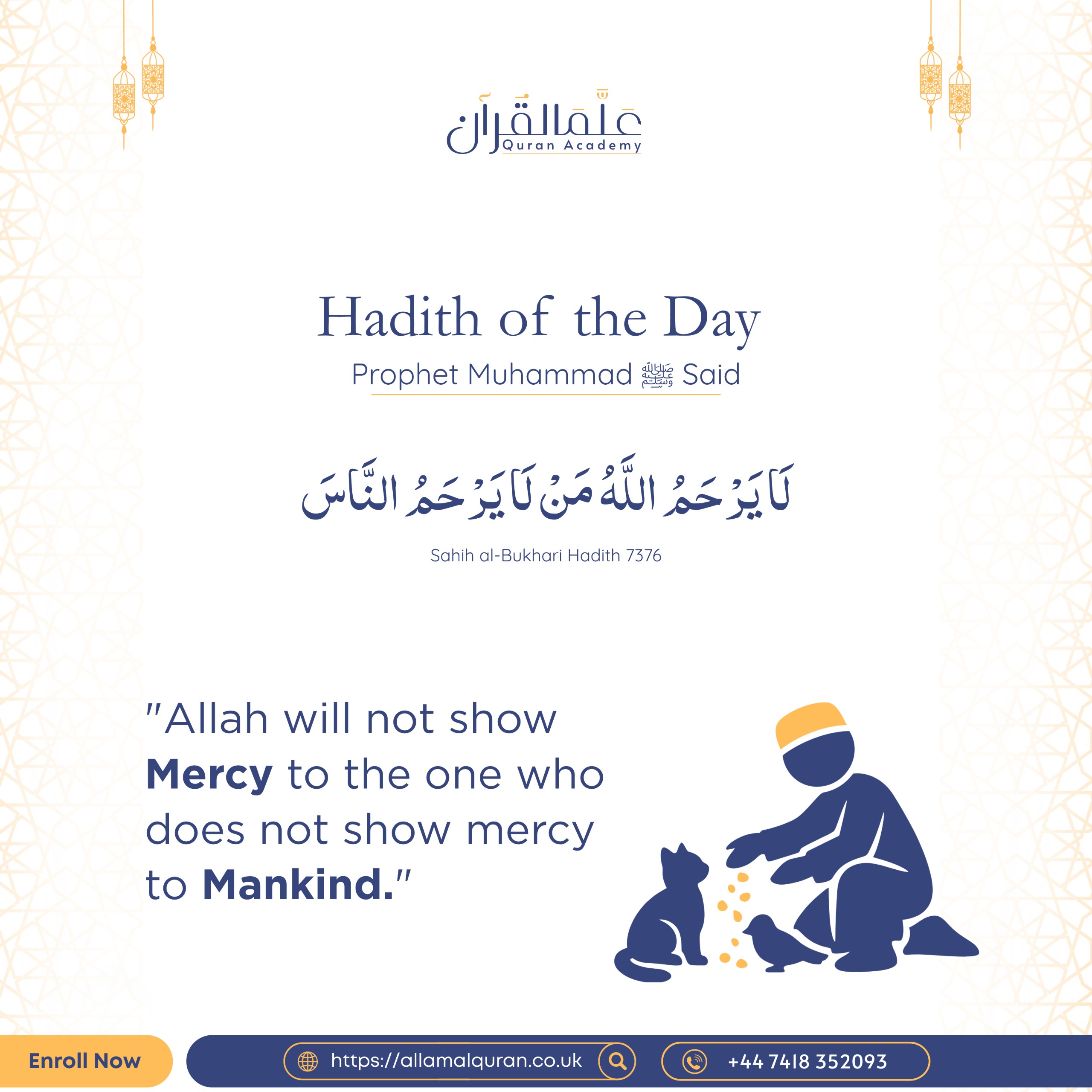
"Allah will not show mercy to the one who does not show mercy to mankind."
Main Meaning
Mercy toward people is part of faith and prophetic character.
Daily Practice
Speak gently, forgive wisely, help others, and avoid cruelty.
Best Use
Share it in family reminders, classroom discussions, and daily reflection.
7 Powerful Lessons from Hadith of the Day
These lessons make the hadith practical for children, parents, teachers, and everyday Muslim life.
Mercy Is Faith in Action
A soft heart is shown through helpful words and caring behavior.
Harshness Has Consequences
The hadith warns against becoming cold, cruel, or careless toward people.
Family Comes First
Mercy should begin at home with parents, spouses, children, and siblings.
Children Need Gentleness
Teaching with care often reaches the heart better than anger or humiliation.
Forgiveness Has Wisdom
Mercy does not ignore harm, but it avoids revenge, mockery, and unnecessary harshness.
Community Needs Compassion
Helping the poor, lonely, sick, and weak brings prophetic mercy into society.
Allah Loves Mercy
The believer hopes for Allah's mercy by treating His creation with care.
Easy Daily Reminder
Choose one merciful action each day and make it part of your character.
How to Practice This Hadith of the Day
Mercy becomes real when it changes ordinary moments, not only when it is spoken about.
- Speak kindly to family, students, coworkers, and neighbors.
- Help someone who is struggling without embarrassing them.
- Correct children with patience instead of shouting or mocking.
- Forgive small mistakes when forgiveness will bring goodness.
- Make dua for people instead of only criticizing them.
Mercy is not weakness. In Islam, mercy is strength guided by faith, wisdom, and love for Allah.
Parent and Teacher Q&A on Hadith of the Day
This reminder is easy to teach because children can practice mercy through simple daily actions.
How can children show mercy?
They can share, speak gently, avoid teasing, help younger children, and care for classmates.
Does mercy mean no discipline?
No. Discipline can be firm and fair while still avoiding cruelty, insult, and humiliation.
How can families practice it?
Choose one daily mercy habit, such as forgiving quickly, helping at home, or making dua for others.
Authentic References for Hadith of the Day
Read this narration in Sahih al-Bukhari 7376. You can also reflect on the Quranic description of the Prophet ﷺ as mercy at Quran.com 21:107.
Final Reflection on Hadith of the Day
Hadith of the Day teaches that mercy should become part of a Muslim's speech, choices, teaching, parenting, and community life. Ask Allah to make your heart gentle and your actions a source of comfort for others.