Dua After Adhan
The beautiful supplication taught after the call to prayer, asking Allah to grant Prophet Muhammad ﷺ Al-Wasilah, Al-Fadilah, and the praised station promised to him.
Dua After Adhan is an authentic supplication Muslims recite after hearing the call to prayer. It is a moment of remembrance, love for the Prophet ﷺ, and hope for Allah's reward.
When the adhan is heard, a Muslim responds with respect. The believer repeats after the mu'adhdhin, sends blessings upon the Prophet ﷺ, and then recites this dua with sincerity and attention.
This short routine helps the heart move from daily distraction into worship. It reminds us that salah is not only a duty, but a meeting with Allah that deserves preparation, calmness, and love.
Dua After Adhan in Arabic
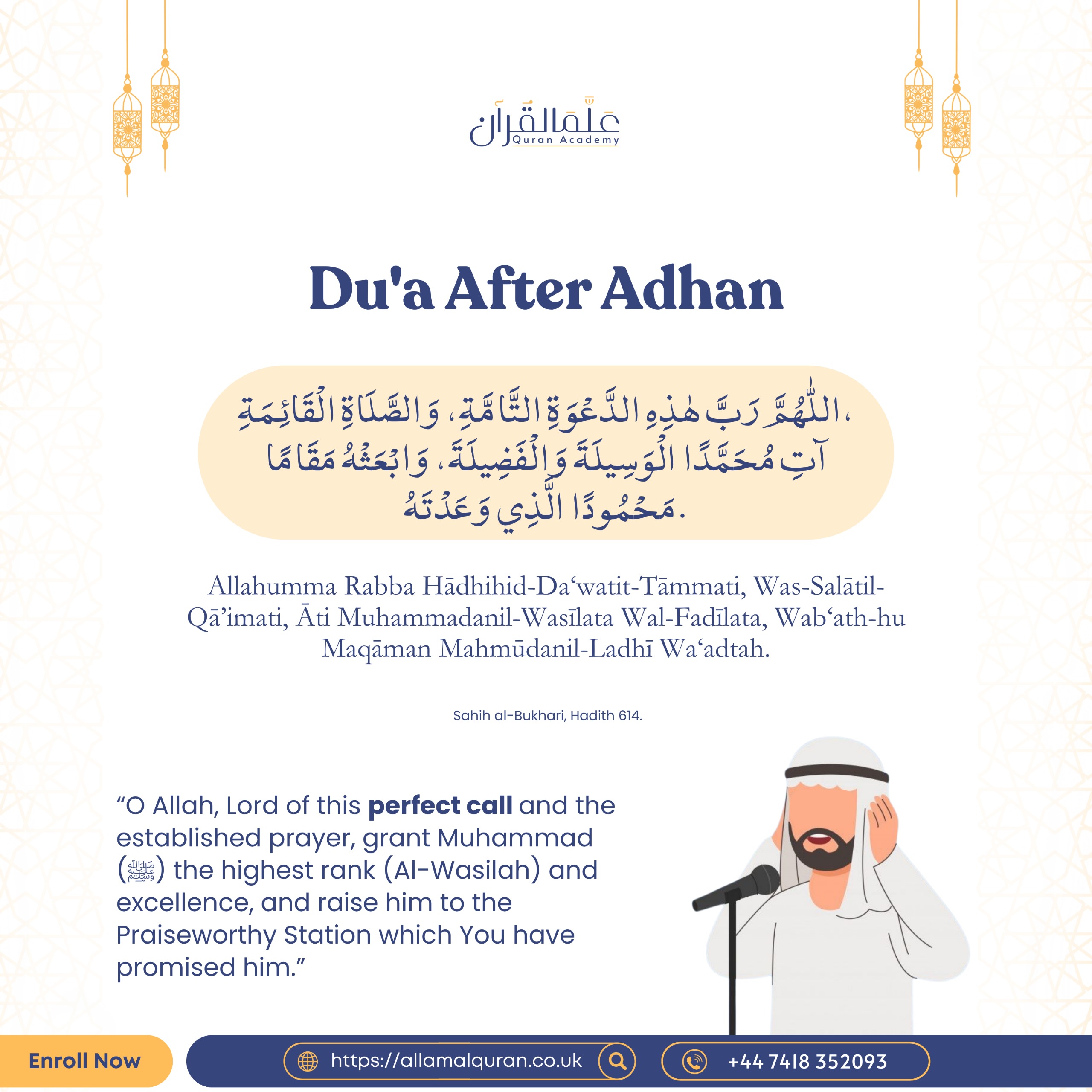
اللَّهُمَّ رَبَّ هَذِهِ الدَّعْوَةِ التَّامَّةِ، وَالصَّلَاةِ الْقَائِمَةِ، آتِ مُحَمَّدًا الْوَسِيلَةَ وَالْفَضِيلَةَ، وَابْعَثْهُ مَقَامًا مَحْمُودًا الَّذِي وَعَدْتَهُ
Dua After Adhan Transliteration
Allahumma Rabba hadhihid-da'watit-tammah, was-salatil-qa'imah, ati Muhammadanil-wasilata wal-fadilah, wab'athhu maqamam-mahmudanilladhi wa'adtah.
Dua After Adhan Meaning
O Allah, Lord of this perfect call and established prayer, grant Muhammad ﷺ Al-Wasilah, Al-Fadilah, and the praised station You promised him.
Hadith Source
This supplication is recorded in Sahih al-Bukhari and is connected to a special reward for the believer.
7 Powerful Benefits of Dua After Adhan
These benefits help children, parents, teachers, and students understand why this short Sunnah routine is so meaningful.
Follows the Sunnah
Reciting it connects the believer to an authentic practice taught by the Prophet ﷺ.
Honors the Call to Prayer
It teaches the heart to pause and respect the invitation to salah.
Increases Love for the Prophet ﷺ
The dua asks Allah to grant him the highest station and special honor.
Builds a Prayer Routine
It creates a peaceful habit between hearing the adhan and standing for salah.
Teaches Important Meanings
Words like Wasilah and Maqam Mahmud open the door to deeper Islamic learning.
Easy for Families
Parents can teach it gradually after each adhan until children memorize it.
Brings Hope for Intercession
The hadith mentions a special reward connected to reciting this supplication sincerely.
Short Daily Worship
A few moments after the adhan can become a regular act of remembrance.
How to Recite Dua After Adhan
This Sunnah is simple, but it should be practiced with attention, respect, and understanding.
- Listen to the adhan carefully and repeat the words after the mu'adhdhin.
- Send blessings upon the Prophet Muhammad ﷺ after the adhan ends.
- Recite the supplication calmly and understand its meaning.
- Prepare for salah instead of returning immediately to distraction.
- Teach children one line at a time until it becomes familiar.
The moments after the adhan are a gentle doorway from worldly noise into remembrance, prayer, and love for the Messenger ﷺ.
Meaning of Wasilah and Maqam Mahmud in Dua After Adhan
Al-Wasilah refers to a special rank near Allah granted to one servant. Maqam Mahmud means the praised station promised to Prophet Muhammad ﷺ.
Understanding these meanings helps the believer recite with presence of heart. The dua is not only memorized words; it is a request that Allah honor His Messenger ﷺ with the noble rank He promised.
For students and children, this meaning can be taught in simple words: we are asking Allah to give Prophet Muhammad ﷺ a special and honored place. This builds love, respect, and connection with the Messenger of Allah ﷺ.
Parent and Teacher Q&A on Dua After Adhan
This section can help families and Islamic teachers explain the supplication in a simple and practical way.
When should children learn it?
They can begin with the short meaning first, then slowly memorize the Arabic and transliteration.
What should be taught first?
Teach children to respect the adhan, stay quiet, repeat after it, and prepare for prayer.
How can families practice it?
Keep a printed copy near the prayer area and recite it together after each adhan at home.
Authentic References for Dua After Adhan
Read the narration in Sahih al-Bukhari 614. You can also reflect on the Quranic command to send blessings upon the Prophet ﷺ at Quran.com 33:56.
Final Reflection on Dua After Adhan
Dua After Adhan is a short but powerful Sunnah that connects the believer to salah, remembrance, and love for Prophet Muhammad ﷺ. Learn it, recite it with meaning, and make the moments after the adhan a calm return to Allah.