Kindness to Animals
A beautiful Islamic teaching that shows mercy is not limited to people. Allah rewards compassion shown to every living creature.
Kindness to Animals is an important part of Islamic character. The Prophet Muhammad ﷺ taught mercy, gentleness, and responsibility toward the creatures Allah placed around us.
Islam does not treat animals as objects for careless use. They are living beings that feel hunger, thirst, pain, fear, and comfort.
Kindness to Animals in Islam
The Prophet ﷺ taught that mercy toward living creatures can become a means of reward, while cruelty can become a serious sin.
Main Teaching
Feed, protect, and care for creatures instead of harming them.
Daily Practice
Give water, avoid cruelty, and teach children gentle behavior.
Islamic Character
Mercy should appear in speech, action, family life, and community habits.
7 Powerful Lessons About Kindness to Animals
These lessons help parents, teachers, and students turn Islamic mercy into daily action.
Mercy Is Worship
Gentle treatment of creation can become an act of obedience to Allah.
Cruelty Is Serious
Islam warns against starving, trapping, beating, or frightening creatures without right.
Water Matters
Offering water to a thirsty creature is a simple act with great meaning.
Children Learn by Example
Parents should model gentle touch, calm speech, and responsible care.
Pets Are a Responsibility
Food, shelter, hygiene, and safety are part of the trust.
Compassion Softens the Heart
Mercy toward weaker creatures helps build humility and gratitude.
Every Good Deed Counts
Islam teaches that even small acts of care can matter deeply with Allah.
Teach Practical Mercy
Children can help refill water bowls, avoid teasing pets, and report harm responsibly.
How to Practice Kindness to Animals
Compassion becomes real when it appears in daily habits, not only in words.
- Provide clean water and food for animals under your care.
- Do not tease, scare, kick, chase, or hurt any creature for fun.
- Teach children to touch pets gently and respect their space.
- Report abuse or neglect to a responsible adult or proper authority.
- Keep living spaces clean so pets and people stay healthy.
Mercy toward a small creature can reveal the greatness of a person's heart before Allah.
Teacher and Parent Q&A on Kindness to Animals
These answers make the topic easy to teach in Islamic studies, family discussions, and classroom reminders.
Can children keep pets?
Yes, when the family can provide proper care, cleanliness, food, water, and safety.
What if an animal is dangerous?
Protect people safely and responsibly. Mercy does not mean ignoring harm or danger.
How do we teach mercy?
Use real examples: filling water, speaking gently, avoiding teasing, and helping injured creatures responsibly.
Authentic References About Kindness to Animals
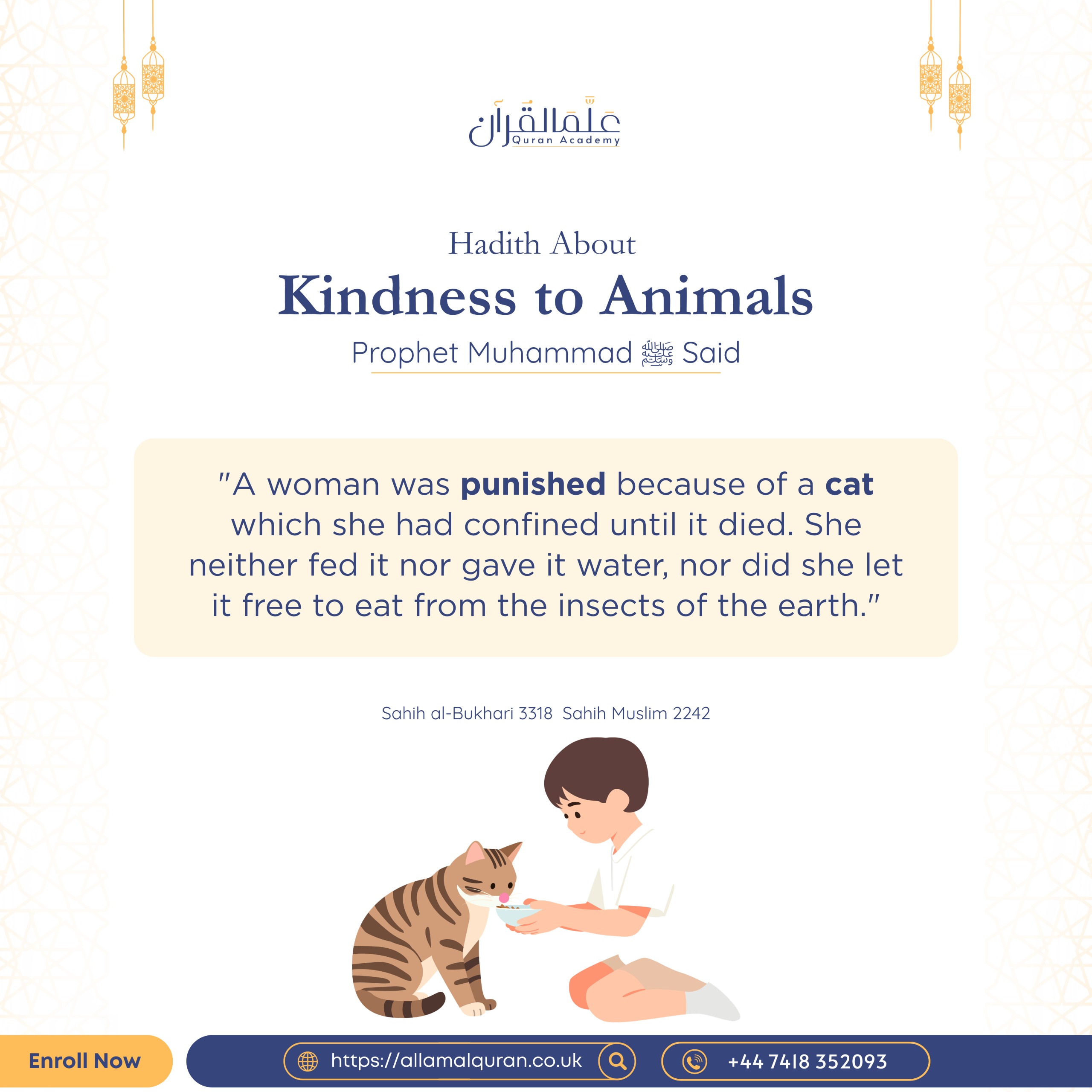
Read authentic hadith about mercy to living creatures in Sahih al-Bukhari 2363. You can also read the warning about cruelty to a cat in Sahih al-Bukhari 3318.
Final Reflection on Kindness to Animals
Kindness to Animals teaches Muslims to carry mercy into ordinary life. Feed, protect, avoid cruelty, and teach children that every creature belongs to Allah and deserves care.