Kindness to Animals

Kindness to Animals
Kindness to Animals – Islamic Perspective | Widget
Prophetic Tradition | Sahih al-Bukhari 3318

Kindness to Animals: A Sacred Duty

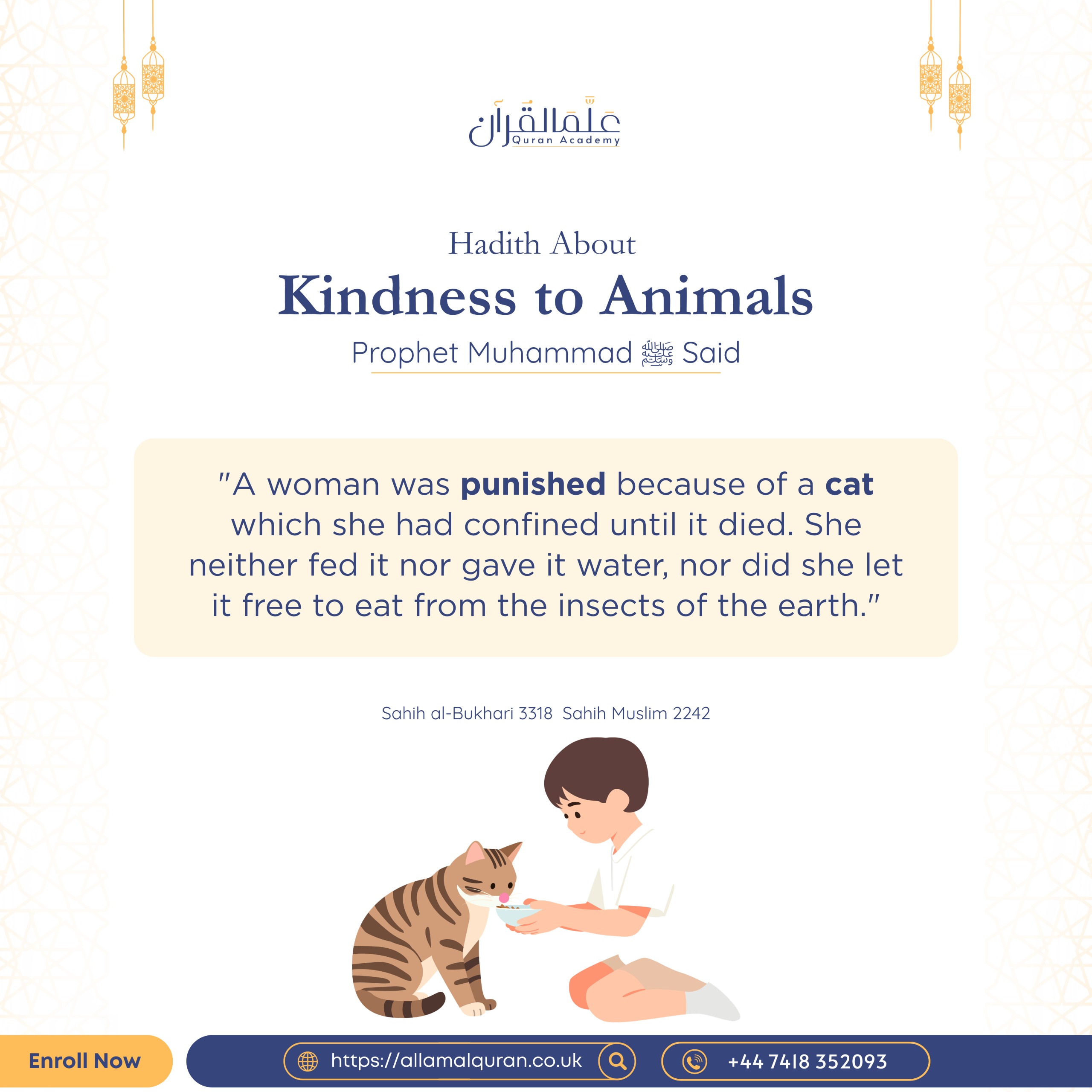
"A woman was punished because of a cat which she had confined until it died. She neither fed it nor gave it water, nor did she let it free to eat from the insects of the earth." – Prophet Muhammad (peace be upon him)

Compassion toward animals is not a mere optional virtue in Islam — it is a measure of faith and moral character. The hadith above serves as a powerful reminder that cruelty, even to the smallest creatures like a cat, carries immense consequence in the Hereafter. This article explores the theological depth, ethical guidelines, and modern applications of kindness to animals, drawing from primary sources and scholarly insight.

Theological Foundation: Every Creature Praises

Islamic teachings emphasize that animals are communities like human beings (Qur’an 6:38). The Prophet Muhammad, peace be upon him, not only spoke against cruelty but actively encouraged mercy. In another narration, a prostitute was forgiven because she gave water to a thirsty dog. These contrasting examples illustrate that mercy to animals can lead to divine forgiveness, while negligence leads to punishment. The hadith mentioned above — regarding the woman and her cat — highlights three specific failures: withholding food, withholding water, and refusing to let the cat scavenge naturally. Each omission was a conscious decision, making her accountable.

Scholars explain that animals have rights (huquq) in Islam: proper shelter, food, water, and freedom from torture or confinement. The woman violated all three. Imam Al-Nawawi commented that this hadith establishes that causing harm to any living being without valid reason is a major sin. Thus, "kindness to animals" is not abstract — it is a tangible responsibility ingrained in daily life.

Practical Kindness: From Backyards to Global Action

Today, kindness to animals extends beyond feeding strays. It includes ethical treatment of farm animals, avoiding animal testing when alternatives exist, supporting wildlife conservation, and raising children with empathy. The Prophet explicitly forbade branding animals on the face, cutting tails, or overworking beasts of burden. In an era of industrial farming, Muslims and all people of conscience are called to reflect: are we confining animals in ways that echo the punishment-worthy confinement described in the hadith?

Modern animal welfare organizations align with these prophetic principles: providing clean water stations for birds and stray cats, building animal shelters, and advocating against caged confinement without proper care. Even small actions — placing a bowl of water on a hot day, rescuing an injured bird, or adopting from a shelter — are acts of worship that reflect divine mercy. The Prophet said, “Whoever is merciful even to a sparrow, Allah will be merciful to him on the Day of Judgment.”

Furthermore, Islamic law (Shari'ah) prohibits hunting for sport, and requires that slaughter for food be performed with the least suffering. The spiritual dimension teaches us that our treatment of the voiceless creatures mirrors our relationship with the Creator. In the words of classical scholars, “If you cannot be kind to a cat, how can you claim to be kind to humanity?”

Teachers & Parents Dialogue: Raising a Compassionate Generation
Teacher Umar: How can we explain the cat hadith to young children without frightening them?
Excellent question. Focus on the positive message: Allah loves those who show mercy. Explain that the woman's mistake was forgetting that animals feel hunger and thirst. Use storytelling: “Imagine if someone locked you without food — that’s why we must always check on our pets and strays.” Conclude with the reward for feeding any animal.
Parent Sarah: My child wants to feed every stray cat but we worry about safety. Islamic balance?
Wonderful concern! Islam teaches responsibility without endangering oneself. You can involve your child by preparing a safe feeding station at a distance, using gloves, or coordinating with local animal rescue groups. Teach your child that kindness includes protecting oneself and the animal from harm. The intention matters most.
Teacher Aisha: Any classroom activities to instill animal compassion?
Absolutely. 1) “Design a kindness calendar” – one act per week (e.g., put out water, draw thank you cards for shelter workers). 2) Read age‑appropriate hadith and have kids act out helping an animal. 3) Start a class project to collect old blankets for animal shelters. Link every activity to the Prophetic model.
Parent Zayn: Our apartment doesn't allow pets. Can we still teach kindness?
Yes, emphatically! Kindness to animals is not limited to owning pets. You can feed birds on your balcony, sponsor an animal at a sanctuary, use apps that donate to wildlife rescue, or teach your child to avoid stepping on insects unnecessarily. Also, boycott entertainment that exploits animals. The spirit of mercy transcends pet ownership.
Frequently Asked Questions – Islamic Rulings on Animal Kindness
Does Islam permit keeping pets like cats? +
Yes, cats are especially honoured in Islamic tradition. The Prophet ﷺ had a cat named Muezza. However, owners must provide food, water, medical care, and cannot restrict them to the point of harm. It is sinful to neglect any pet.
What is the ruling on hunting for sport? +
Hunting for mere entertainment is prohibited (haram). Hunting is only permitted for genuine necessity like food or to prevent harm. The Prophet cursed anyone who takes a living being as a mere target.
Are there rewards for showing kindness to wild animals? +
Absolutely. The Prophet said, “If anyone kills even a sparrow unjustly, it will cry to Allah on Judgment Day.” Rescuing any creature—bird, deer, or even insects—from harm is a charitable act (sadaqah). Every living being has a right to mercy.
How can schools integrate animal ethics in curriculum? +
Teachers can design project-based learning: study local animal welfare, invite veterinarians, connect Hadith to science (animal habitats). Also, promote “compassion challenges” where children document small acts of animal kindness.

Final Reflection: The Ultimate Test of Character

The hadith about the woman and the cat is a profound caution against indifference. In a world where animal abuse often goes unnoticed, Muslims are called to be frontline defenders of the voiceless. True godliness is reflected in how we treat the most vulnerable — including animals. Scholars like Ibn Hajar noted that the cat’s confinement without food or water combined three types of transgression: neglect, imprisonment without cause, and refusal to allow natural provision. Each of us should audit our own behaviour: Do we turn a blind eye to stray animals? Do we provide water for birds in summer? Do we support ethical farming?

By embracing prophetic mercy, we not only protect creation but also nourish our own souls. Kindness to animals is not a marginal issue — it is central to faith. Let the legacy of the Prophet ﷺ guide our hands, homes, and communities to be sanctuaries of mercy.

© 2026 · Based on Sahih al-Bukhari 3318 & Sahih Muslim 2242 · Educational resource for Kindness to Animals · No copyright infringement intended.