
Hadith about the Thinking

Hadith about the Thinking

Hadith about the Thinking

Husn al-Dhann: How Positive Thoughts Elevate Your Worship

Hadith about the Thinking

The Authentic Hadith about the Thinking

Islam is not just a religion of physical actions; it places immense value on the state of the mind and the heart. When searching for a Hadith about the Thinking, we find that our cognitive habits—how we perceive Allah and how we view others—are directly linked to our spiritual success.

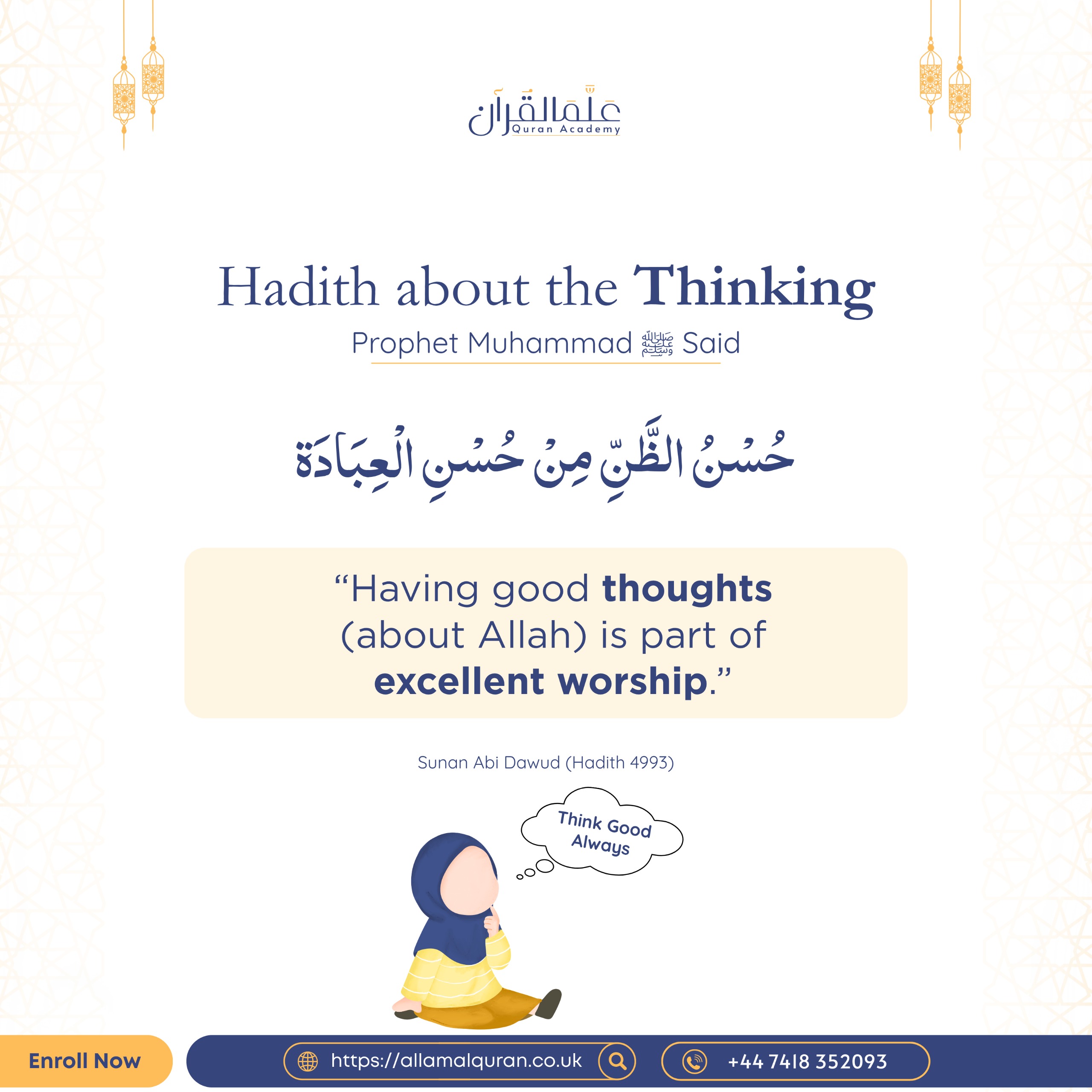
The Prophet Muhammad (peace be upon him) beautifully summarized the importance of having a positive mindset, known in Arabic as Husn al-Dhann (good assumptions).

إِنَّ حُسْنَ الظَّنِّ مِنْ حُسْنِ الْعِبَادَةِ
Transliteration: Inna husn adh-dhanni min husn al-'ibadah.

“Indeed, having good thoughts (a good opinion) is part of excellent worship.”

This remarkable Hadith about the Thinking is recorded in Sunan Abi Dawud 4993. It teaches us that guarding our minds against negativity, suspicion, and despair is actually an act of high-level worship.

7 Powerful Lessons from this Hadith about the Thinking

Understanding this specific Hadith about the Thinking can completely transform your mental health and spiritual well-being. By actively practicing Husn al-Dhann, you align your mind with divine wisdom. Here are 7 powerful lessons we can extract from this teaching:

  • Good Thoughts About Allah: Always assume that Allah has a perfect plan for you. Even in hardship, trust that His delays are not denials.
  • Good Thoughts About People: Give your brothers and sisters the benefit of the doubt. If someone ignores you, assume they are busy rather than arrogant.
  • Worship Beyond the Physical: While Salah and Fasting are physical worship, maintaining a clean, positive mind is an internal worship that Allah loves.
  • Protection from Anxiety: Negative overthinking breeds stress. This Hadith about the Thinking proves that optimism is a Sunnah that protects the heart.
  • Eradicating Suspicion: The Quran warns that some suspicion is a sin. A positive mindset cuts off the whispers (Waswas) of Shaytan.
  • Self-Compassion: Think well of yourself. Acknowledge that you are a striving believer who makes mistakes but seeks Allah's infinite mercy.
  • Attracting Blessings: In a Hadith Qudsi, Allah says, "I am as My servant thinks I am." Expect good from Allah, and you will receive good.

Teacher & Parent Dialogue: Nurturing a Positive Mindset

How do we actively implement the profound lessons from this Hadith about the Thinking in our homes and classrooms?

Q1 Parent: "My child is very pessimistic and always assumes they will fail. How can this Hadith help?"
Teacher's insight: Sit down with them and explain this beautiful concept. Tell them that assuming the best outcome is actually a way of pleasing Allah. Have them replace "I am going to fail" with "I will try my best, and I think Allah will help me." This reframes their mindset from fear to faith.
Q2 Parent: "How do we balance 'thinking good' with being naive or getting taken advantage of?"
Teacher's strategy: Islam teaches a balance. You should have Husn al-Dhann (good assumptions) about people's intentions to keep your heart clean, but you must still tie your camel. Be cautious in business and safety, but do not let suspicion rot your personal relationships.
Q3 Both: "What is the best way to train our minds to stay spiritually positive?"
Shared Goal: A healthy mind requires healthy input. Limit negative media and surround yourself with beneficial knowledge. We invite you and your family to explore our comprehensive Islamic courses at Allamalquran Academy to keep your minds focused on the beautiful teachings of the Quran and Sunnah.

Final Reflection: The Hadith about the Thinking is a gentle reminder that our minds are sacred spaces. When we fill our thoughts with optimism, grace, and trust in the Almighty, we elevate our everyday mindset into an act of continuous worship. May Allah grant us clean hearts and positive minds. Ameen.