
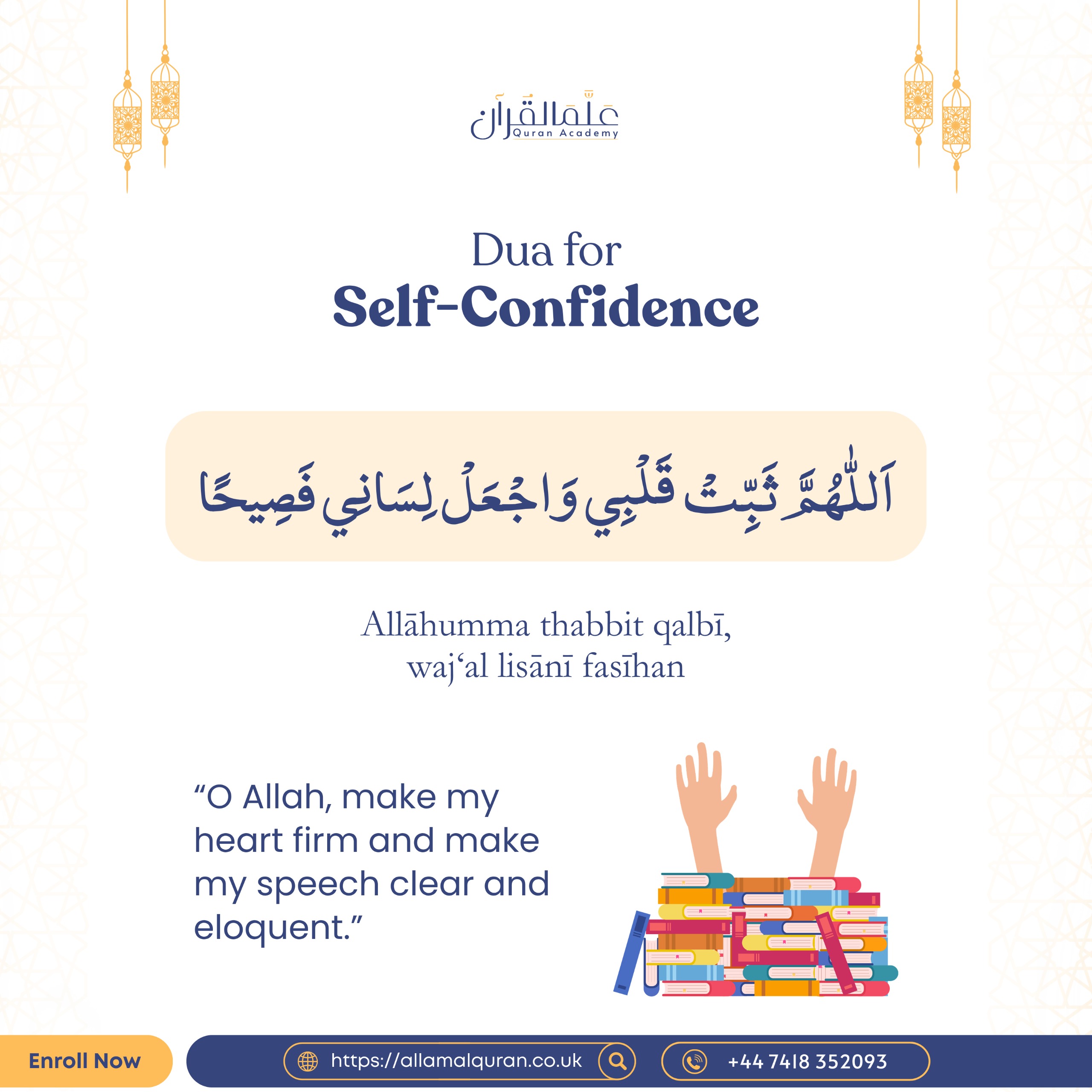
In moments of doubt, public speaking, or crucial conversations, the heart may tremble and the tongue may stumble. Islam offers profound spiritual remedies—among them, a concise yet powerful Dua for Self-Confidence. This supplication: "Allāhumma thabbit qalbī, waj‘al lisānī faṣīḥan" (O Allah, make my heart firm and make my speech clear and eloquent) is a direct appeal for divine reinforcement. More than just words, it transforms fear into tranquility and hesitation into articulation. This comprehensive article explains its meaning, benefits, and how teachers and parents can nurture resilience in children using this beautiful Dua for Self-Confidence.
Self-confidence in Islam is not arrogance; it is tawakkul (reliance on Allah) paired with self-assurance. The heart (qalb) is the center of emotions—fear, anxiety, and doubt reside there. By asking Allah to 'thabbit' (make firm/steadfast) the heart, we seek emotional resilience. Simultaneously, requesting a 'faṣīḥ' (eloquent, fluent) tongue ensures that our ideas are expressed precisely. This Dua for Self-Confidence, often recited by students, professionals, and those facing interviews, bridges inner strength with outer expression. Repetition embeds a psychological shift: you remind yourself that Allah is the ultimate source of poise.
Moreover, the Arabic word Faṣāḥah denotes clarity, purity of speech, and freedom from linguistic errors. Reciting this Dua for Self-Confidence before a presentation or exam realigns your intention. When combined with preparation, it removes the 'knot' from the tongue—similar to Prophet Musa (AS) asking Allah to loosen the knot from his tongue (Surah Ta-Ha 20:25-28). It is a practical, immediate tool for anyone struggling with low self-esteem or public speaking jitters.
From a neuroscientific lens, repetitive dhikr and duas activate the parasympathetic nervous system, lowering cortisol. The rhythmic pronunciation of 'Allāhumma thabbit qalbi' creates a calming cadence. Islamic scholars recommend reciting this Dua for Self-Confidence after every obligatory prayer, before sleep, and specifically when stepping into challenging scenarios. Over time, the mind associates the dua with safety, and confidence becomes a conditioned spiritual response.
Children often mirror adult anxiety. When parents and teachers work together to embed this Dua for Self-Confidence into daily routines, the impact multiplies. Young learners who struggle with class presentations, social interaction, or even reciting in front of peers can benefit immensely. The following Q&A section addresses common concerns and provides actionable insights from an educator and parent perspective.
Self-confidence is not built overnight. Reciting the Dua for Self-Confidence triggers what psychologists call 'cognitive reappraisal'—you attribute your trembling heart to a need for divine firmness, not incompetence. This reduces shame. Additionally, set a daily 'confidence ritual': before any video call, meeting, or difficult conversation, close your eyes, place your right hand over your heart, and recite the dua 3 times slowly.
Interactive Confidence Booster: Click below to reveal a practical affirmation inspired by the dua.
For educators, design a 'Confidence Corner' in the classroom with the dua displayed in Arabic and English. Each morning, allocate 90 seconds for a collective recitation. Parents can recite it during family halaqas or before homework sessions. To build an even stronger foundation for your family, consider exploring the comprehensive Islamic courses at Allamalquran Academy.
Before Interviews: Recite 21 times while visualizing success. Before Public Speaking: Recite silently while breathing deeply. For Students: Recite the Dua for Self-Confidence before oral exams or presentations. For New Parents: Recite for confidence in parenting decisions. The universality of this dua makes it a timeless tool for all ages.
Additionally, Islamic tradition encourages reciting this dua after the Friday prayer and during the last third of the night. Combining it with salawat upon the Prophet (peace be upon him) multiplies blessings. You can also write the dua on a piece of paper (with wudu) and keep it in your pocket as a symbolic reminder.
Confidence is not the absence of fear; it is the conviction that Allah is with you. The Dua for Self-Confidence acknowledges vulnerability while seeking divine strength. For parents and teachers, your role is to model reliance on Allah without dismissing emotions. Next time your child or student stutters, whisper this dua with them. May Allah grant us all firm hearts and eloquent tongues. Ameen.
Click each time you recite the dua silently or aloud — strengthen consistency.