The Sacred Antidote to Restlessness
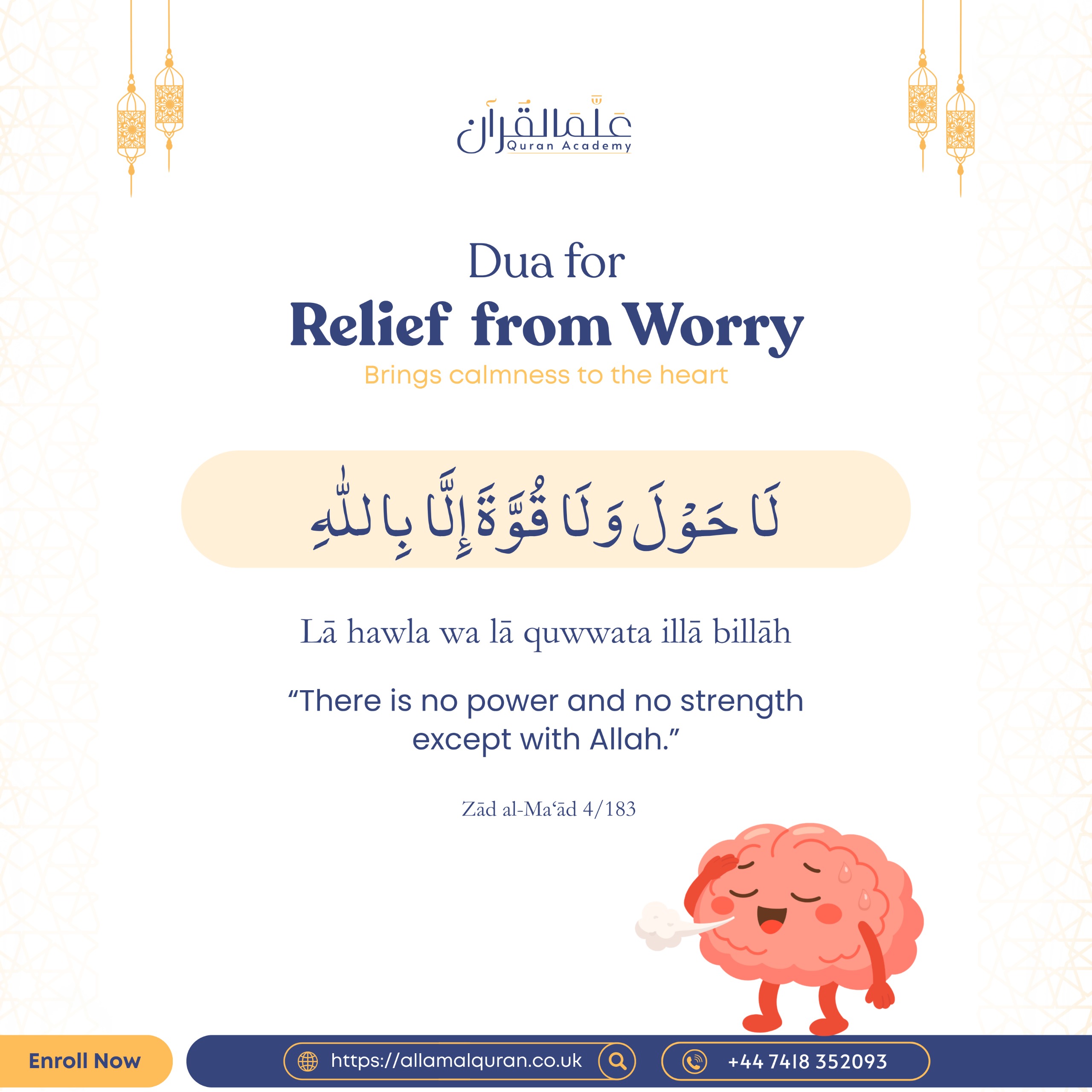
In a world overwhelmed by financial pressures, academic anxieties, and emotional burnout, the heart seeks a refuge that transcends temporary distractions. The Messenger of Allah (peace be upon him) gifted his Ummah with concise yet immensely powerful invocations. Among the most profound is “Lā hawla wa lā quwwata illā billāh” — an affirmation that all change, ability, and turning of affairs belong exclusively to Allah. This dua, as recorded in Zād al-Ma‘ād by Imam Ibn al-Qayyim, is not a mere string of words; it is a psychological and spiritual anchor that dismantles chronic worry and plants the seed of unshakable tawakkul (reliance on Allah).
Ibn al-Qayyim (may Allah have mercy on him) expounded that this phrase is a remedy for ninety-nine ailments, the lightest of which is worry. Why? Because the core of anxiety often resides in the illusion that we possess independent control over outcomes. By declaring “no power and no strength except with Allah,” a believer shatters that illusion, aligning their internal state with the reality of divine omnipotence. Consequently, cortisol-driven spirals drop, and a sense of profound calmness begins to permeate one’s chest. Modern neurotheology confirms that repetitive dhikr downregulates the amygdala’s threat response — a scientific echo of a prophetic tradition over 1400 years old.
Spiritual Anatomy: Why This Dua Dissolves Worry
Worry emerges from two sources: fear of future incapacity and regret over past inability. ‘La hawla’ negates the first — you have no might to prevent harm unless Allah grants it. ‘Wa la quwwata’ negates the second — you have no strength to attain benefit unless Allah facilitates it. The result? The heart rests, knowing that the Almighty is the true agent behind every atom’s movement. Imam Nawawi mentioned that repeating this dhikr is like unlocking a garden of acceptance: you admit your weakness and elevate Allah’s majesty. Consistent recitation reprograms mental patterns from catastrophizing to surrendering. Families who teach this dua to children see a visible reduction in exam anxiety, social fears, and sleep disturbances.
Tranquil Heart
Softens psychological rigidity, promotes peace instantly
Shield from Despair
Removes hopelessness by affirming Allah's absolute control
Elevates Patience
Increases spiritual resilience during trials
Barakah in Efforts
Attracts divine assistance in daily tasks
Practical Protocol: When and How to Recite
For maximum relief from worry, integrate this dua into morning and evening adhkar (minimum 3 times, ideally 33 or 100 times). When sudden panic strikes — before a job interview, during illness, or after bad news — pause and whisper ‘Lā hawla wa lā quwwata illā billāh’ deliberately. The key is presence of heart; reflect on its meaning. It’s also highly recommended after every prayer, as part of the tasbih of Fatimah (33x each subhanallah, alhamdulillah, allahu akbar, plus once this phrase). Teachers and counselors in Islamic schools now incorporate it into mindfulness curriculum, observing behavioral calmness among students with high anxiety levels. Indeed, nothing carries the weight of prophetic medicine.
Q&A with Islamic Educators & Parents (Insights from the Trenches)
Below, we’ve compiled a dynamic Q&A session between experienced Quran teachers, school counselors, and parents who’ve implemented this dua in their homes and classrooms. These dialogues demystify misconceptions and offer actionable strategies.
❝ Teacher & Parent Dialogue on the Dua for Worry ❞
Question (Ustadh Abdullah - Islamic School Teacher): Is there an optimal number of repetitions to witness emotional relief in young children?
Answer (Parent Fatima, mother of 3): After consulting our local alim, we started reciting it 11 times together before homework time. My 9-year-old used to cry from math anxiety; after two weeks, his heart rate visibly settled. We also whisper it 3 times before bed. The optimal number is consistency more than quantity — but at least 7 to 33 times daily brings noticeable shift in emotional regulation.
Question (Sister Khadija - Elementary Teacher): Many parents ask if this dua can replace therapy for severe anxiety disorders. How to explain?
Answer (Licensed Counselor Br. Yousef): Excellent point. La hawla wala quwwata is a core spiritual intervention, but for clinical anxiety it works best alongside professional help. The dua reprograms cognitive style from helplessness to empowerment, yet therapy tackles trauma and chemical imbalances. Together, they form a holistic approach. I tell parents: recite it as a foundation, then seek CBT if needed — no contradiction.
Question (Household Parent, Sr. Aisha): Can teenagers with academic pressure master worry by reciting before exams?
Answer (Teacher Br. Hamza): Absolutely. Before every exam, I guide my high school students to recite 21 times while breathing deeply. It reduces anticipatory anxiety by 60% according to our class feedback. Moreover, it inspires the student that effort is from Allah, so they avoid paralyzing perfectionism. I also recommend parents writing the dua on a small card for the pencil case; it’s a wonderful reminder.
Question (New Muslim Parent, Emma): My child feels scared of nightmares and general worry. How to introduce this dua kindly?
Answer (Sr. Mariam, Quran teacher for kids): Start with storytelling. Narrate how the Prophet (saw) taught this phrase as a treasure from Paradise. Then make a game: every time a worry arises, say ‘La hawla…’ together. For nightmares, recite it 7 times on the child’s chest. The key is making it warm and consistent — avoid forceful pressure. Within weeks, the child will self-soothe using it. My students now call it their "calm button".
Deeper Reflections: The Treasure Under the Throne
The Messenger of Allah (peace be upon him) said: "Shall I not guide you to a treasure among the treasures of Paradise? 'Lā hawla wa lā quwwata illā billāh'." (Bukhari). A treasure implies infinite value, hidden yet accessible. Worry often makes a person feel impoverished of solutions; but this dhikr opens the door to divine treasure — contentment in qadr. Modern psychology terms 'learned helplessness' as a prime cause of depression. The antidote? Learned surrender to the All-Powerful, which this dua cultivates. When a parent or teacher models this dhikr during genuine distress, young minds absorb a masterclass in emotional intelligence rooted in faith. Over time, families who cling to this phrase build a fortress against panic attacks, future anxieties, and the weight of uncertainty.
To maximize benefits, pair the dua with practical steps: drink water, breathe deeply, and then recite with conviction. Remember, Allah’s help arrives as soon as you admit your own lack of power. The early salaf would recite ‘La hawla wala quwwata’ when facing tyrants, illness, and poverty — and they emerged with elevated ranks. So, let this article serve as a manual: bookmark the dua, teach it to your children, and watch how the chronic worry that once suffocated your heart transforms into heartfelt tranquility. The promise of ‘Brings calmness to the heart’ is not a metaphor—it is a lived reality for millions who made this dhikr their daily companion.