
Understanding the Profound Impact of Pronunciation on the Quran

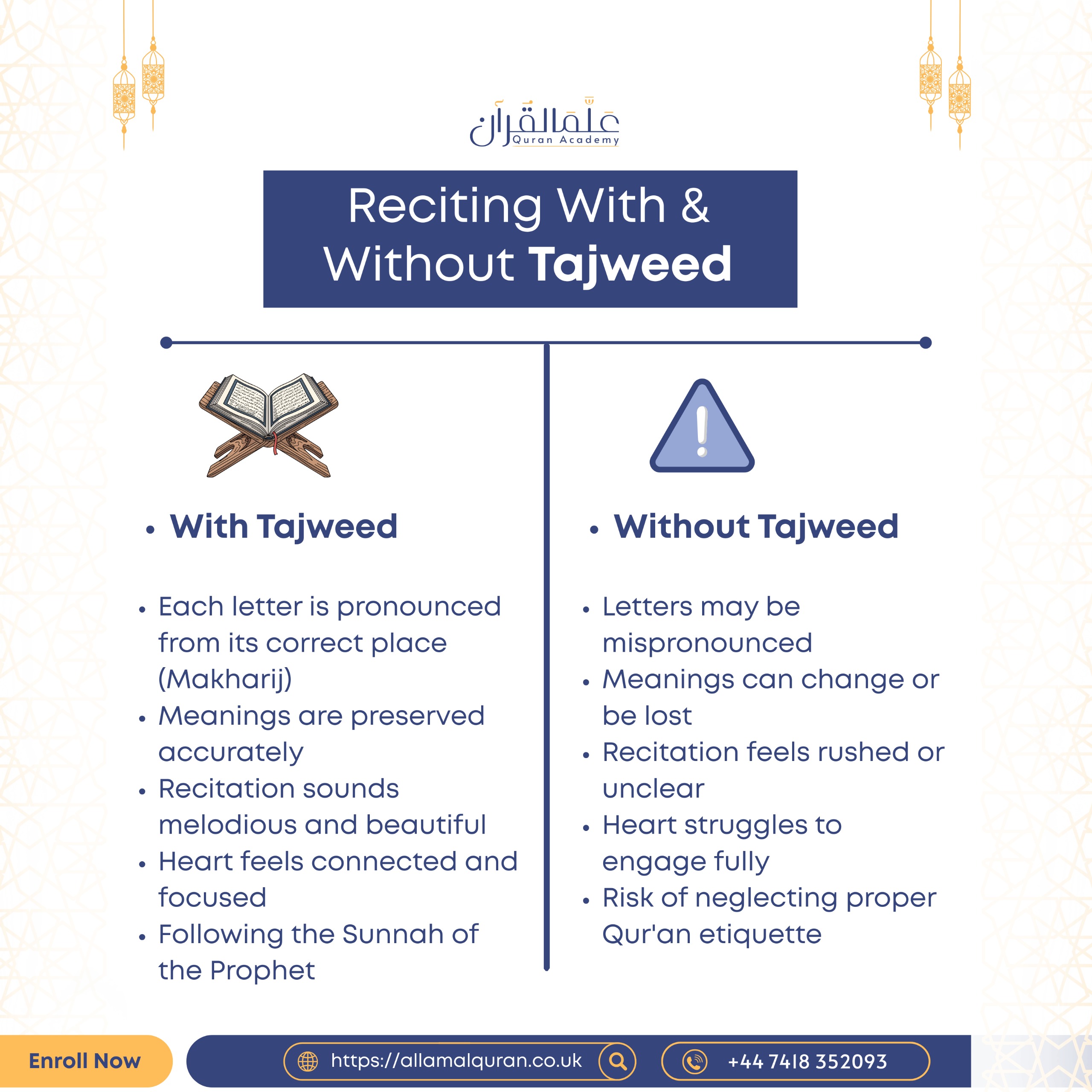
The Holy Quran is the literal, uncreated word of Allah. Because of this, reading it is not like reading any other book. There is a massive, fundamental difference between Reciting with & without Tajweed.
Tajweed means to "make beautiful" or "perfect." It is the set of rules governing the exact pronunciation of Arabic letters. When a believer reads without these rules, they risk committing *Lahn* (mistakes in recitation).
There are two types of mistakes. *Lahn Jali* is a major mistake, such as changing a letter or a vowel. This type of mistake can completely alter the meaning of Allah's words, which is strictly prohibited (Haram). *Lahn Khafi* is a minor mistake, like ignoring the rules of nasalization (Ghunnah) or elongation (Madd).
To truly preserve the divine meaning of the verses found on platforms like Quran.com, studying these exact pronunciation rules is an absolute necessity for every Muslim.
Many Muslims wonder if the effort required to learn Arabic pronunciation is truly worth it. The gap between Reciting with & without Tajweed affects both your spiritual reward and your literal understanding of the text.
Here are 7 powerful reasons why mastering these rules transforms your relationship with the Quran:
How do we guide our families to understand the deep importance of Reciting with & without Tajweed?
Final Reflection: The journey of perfecting your voice is a lifelong act of worship. When you bridge the gap between Reciting with & without Tajweed, you elevate your prayer from a simple routine into a beautiful, melodic conversation with Allah. Start your learning journey today, and may Allah make your tongue fluent in His glorious words. Ameen.