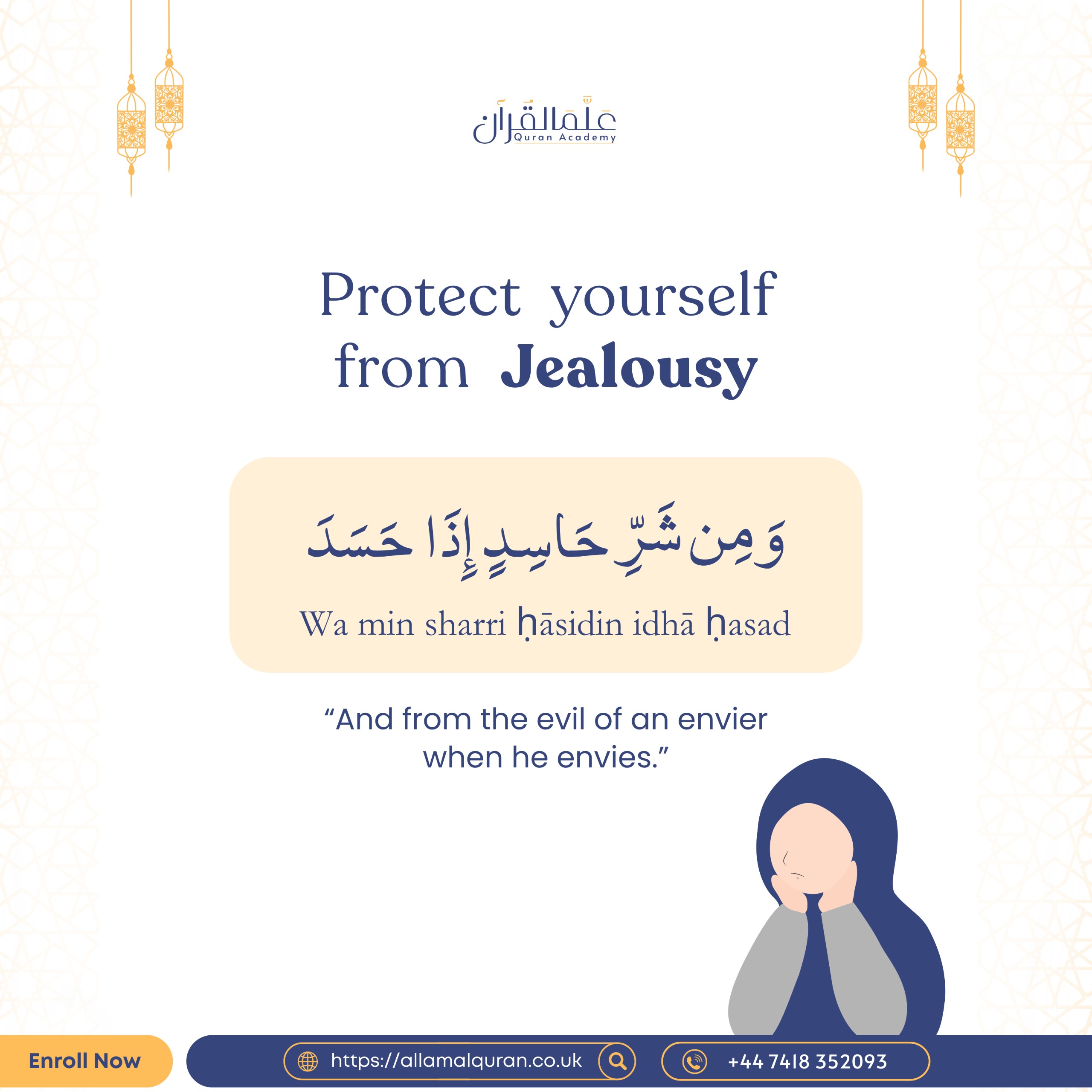
“Wa min sharri ḥāsidin idhā ḥasad” — And from the evil of an envier when he envies. A timeless spiritual and psychological shield against the harm of envy.
Jealousy (hasad) is an ancient affliction of the soul—one that transcends cultures, religions, and eras. It is the burning desire for another person’s blessings to vanish, paired with inner resentment. Unlike admiration, envy corrodes both the envier and the one targeted. Modern psychology confirms that chronic envy triggers stress, anxiety, and even physical ailments. The verse from Surah Al-Falaq (113:5) teaches us to seek refuge in the Divine from the evil of the envier at the peak of his envy. This is not merely a passive prayer but a profound strategy: awareness, spiritual fortification, and practical action.
⚡ Key insight: Envy can manifest as the evil eye (‘ayn) in traditional teachings, causing unintended harm. But protection is multi-layered — strengthening faith, practicing gratitude, maintaining privacy, and reciting prophetic supplications. Scientific studies on “emotional contagion” also show that negative intentions can impact wellbeing. Hence, the Qur’anic guidance is holistic.
In our hyperconnected world, comparison culture fuels jealousy like never before. Social media, professional rivalries, and even family dynamics become breeding grounds. But awareness is the first step. Knowing that envy harms the envier first (by eroding contentment) helps you reframe. The believer’s toolkit includes consistent morning/evening remembrances (adhkar), charity, and maintaining strong tawakkul (reliance on God). The beautiful synergy of faith and emotional intelligence creates an impenetrable fortress.
Consistent recitation of Surah Al-Falaq, An-Nas, Ayat-ul-Kursi and authentic supplications build spiritual insulation.
Gratitude repels envy. Recognize blessings, and the envier’s fire loses fuel. Count gifts openly to Allah.
Avoid flaunting blessings. Share successes modestly and give charity silently — it extinguishes evil looks.
Praying for the one who envies you (“O Allah, bless him/her”) neutralizes harm and softens hearts.
No harm touches without Allah’s permission. Tawakkul brings peace — jealousy loses its sting.
In addition to these pillars, scholars emphasize reading Surah Al-Falaq and An-Nas with sincerity, blowing over oneself and family. It is also recommended to frequently recite “Hasbunallahu wa ni’mal wakeel” (Allah is sufficient for us and the best disposer of affairs). Protection becomes a lifestyle: regular charity, seeking refuge in Allah’s perfect names, and maintaining strong ties with the Qur’an. Remember, the Prophet (peace be upon him) himself sought protection from the evil eye, teaching us that even the best of creation took practical precautions.
Teacher Umm Hajar: "Children understand emotions deeply. Use storytelling: 'Jealousy is like a tiny weed that tries to stop flowers from growing. When we feel happy for others, we water our own garden.' Teach them to say 'MashaAllah' when seeing beauty, and to make du’a for friends. Reassure them that Allah protects us when we remember Him. Role-play and consistent duas like 'A’oodhu bi kalimatillahi tammah' make it tangible without fear."
Senior Islamic Studies TeacherParent Counselor & Teacher Mr. Khalid: "Firstly, validate their feelings—it's real. Encourage them to recite Surah Al-Falaq, Al-Nas, and Ayat-ul-Kursi before leaving home. Advise discretion: not all achievements need to be broadcasted. Also, teach them to respond with kindness: when they sense envy, they can silently pray for the envier's guidance. Remind them that people's envy often reflects their own inner struggles. Creating a supportive circle and boosting self-esteem reduces impact."
Youth Mentor & EducatorTeacher Fatima Al-Zahra: "Surah Al-Falaq (113) and Surah An-Nas (114) are the ultimate shields—recite each three times in the morning and evening. Add Ayat-ul-Kursi (Surah Al-Baqarah 2:255) once, plus Surah Al-Ikhlas, Al-Falaq, An-Nas three times and blow over yourself and children. The Prophet (peace be upon him) said these protect from everything. Also reciting ‘Bismillah alladhi la yadurru ma’a ismihi shay’un fil ardi wa la fis-sama’ wa huwa as-sami’ul alim’ three times every morning and evening is highly protective."
Qur’an & Tafsir SpecialistPrincipal & Teacher Mrs. Iman: "Schools can normalize gratitude circles: each week children share one blessing and celebrate peers. Explicitly teach ‘hasad vs. admiration’ through stories of the Prophets. Display posters with ‘wa min sharri hasid’ and its meaning. Integrate morning supplication time where students recite short surahs together. Role-playing conflict resolution when jealousy arises helps build emotional intelligence. Parents should reinforce the same at home, creating a consistent shield."
Character Education DirectorThe verse specifies "idha hasad" (when he envies) — because the harm is most potent when the feeling is active. Scholars explain that seeking refuge at the moment of envy blocks its effect. Furthermore, the envier himself suffers from spiritual sickness: discontentment, backbiting, and malice. For the one envied, responding with patience, increased charity, and remembrance transforms a trial into elevation. Psychologically, envy activates the brain's pain centers; thus the divine remedy is to reconnect with the Almighty. By internalizing Tawheed (Oneness of God), we realize that all blessings come from Allah and no envier can alter His decree without His will.
Prophetic wisdom: “Protect yourself from envy, for envy consumes good deeds just as fire consumes wood.” (Sunan Abi Dawud). The antidote includes giving sadaqah (charity) regularly — it extinguishes the heat of envy and brings barakah. Modern studies reveal altruistic acts reduce social comparison and increase personal happiness. Align with sunnah: increase charity especially when you sense enmity.
Additionally, a strong community bond mitigates envy. When we genuinely love for our brothers and sisters what we love for ourselves, jealousy cannot thrive. The Prophet ﷺ taught that none of you truly believes until he desires for his neighbor what he desires for himself. This golden rule cultivates abundance mindset rather than scarcity. Implementing this in families, workplaces, and social circles creates a supportive environment where everyone flourishes.
These steps combined create a complete framework: spiritually grounded, psychologically empowering, and socially aware. The timeless Qur’anic guidance provides peace beyond temporary fixes.