Prophetic tradition & spiritual ease — seeking Allah’s blessings for a harmonious union
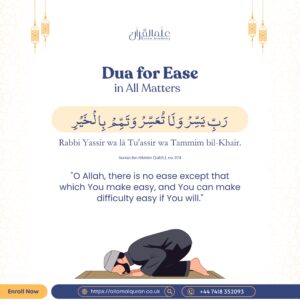
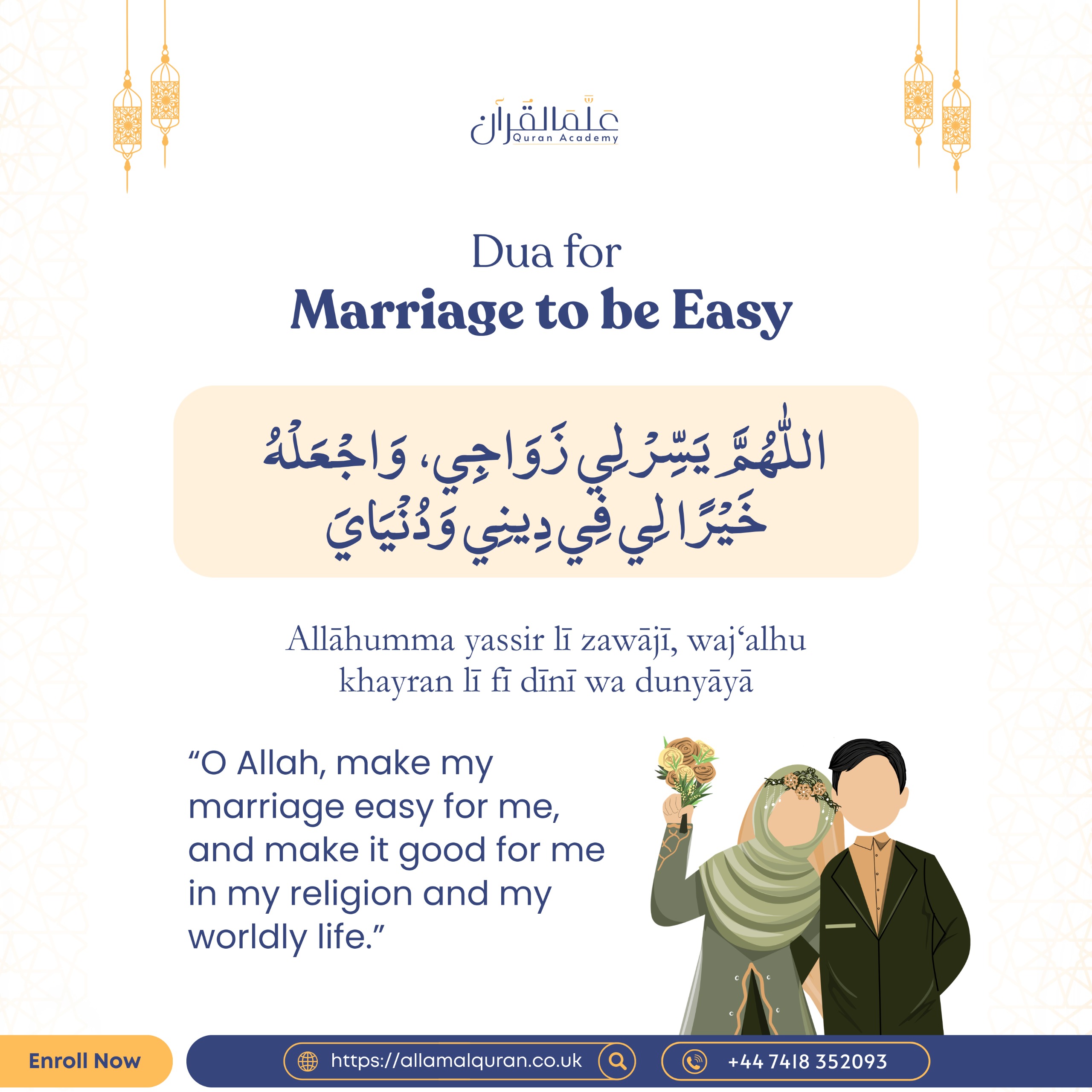
Translation: “O Allah, make my marriage easy for me, and make it good for me in my religion and my worldly life.”
Alternative narration: “zawājī” – both forms are accepted with the same profound meaning.
Marriage (Nikah) is a sacred covenant in Islam, described as half of faith. The journey toward finding a righteous spouse and establishing a peaceful home can feel overwhelming. This beautiful supplication, “Allāhumma yassir lī nikāḥī…” encapsulates a believer’s absolute reliance on Allah. The dua contains two essential requests: ease in the process and goodness in both religious and worldly matters. When recited with sincerity, it transforms anxiety into tawakkul (trust in Allah). Scholars emphasize that adding this dua to your daily routine, especially after prayers, aligns your heart with divine facilitation.
Beyond seeking a compatible partner, the phrase “khayran lī fī dīnī wa dunyāya” highlights that a blessed marriage must nurture one’s faith (dīn) and provide tranquility in this life (dunyā). It’s not merely about ease in wedding logistics but about spiritual and emotional compatibility. The primary color #36467C represents stability and wisdom, while the secondary golden #ffbd59 symbolizes the light and barakah (blessing) that this dua brings into marital life. Reciting this dua regularly is a sunnah-inspired practice that opens doors to halal provisions and contentment.
Islamic scholars recommend combining this supplication with sincere efforts: improving character, performing Salat al-Istikhara when a proposal arrives, and maintaining strong family ties. The dua is a powerful tool to surrender outcomes to Allah, knowing that He is the best of planners. By integrating this invocation into pre-marital preparations, couples experience reduced stress and increased clarity. Furthermore, parents are encouraged to recite it for their children, reinforcing the concept that ease in marriage comes from both practical steps and spiritual reliance.
Answer from Ustadh Abdur Rahman: Begin by explaining the meaning word-by-word. Connect it to real-life scenarios: before marriage talks, after Fajr prayer, and during moments of worry. Encourage writing it on a card or keeping it on a phone wallpaper. Role-play with gentle reminders that this dua is not magical but a heartfelt conversation with the Creator. Reinforce consistency rather than quantity.
Response from Mrs. Fatima (Parent Coach): As a parent, I’d advise her to recite it at least 3 times after each obligatory prayer, especially during tahajjud. The key is to combine with positive action: networking with trustworthy families and maintaining a positive mindset. Also, parents should recite this dua for their children during Friday (Jumu’ah) hours. Ease comes through patience and the sincere belief that Allah hears every call.
Shaykh Ibrahim explains: This dua focuses on “ease and goodness” in marriage, while Salat al-Istikhara is for seeking guidance when making a specific choice. Both are complementary: recite this dua regularly to open doors, and when a proposal arrives, perform Istikhara. The dua for ease aligns your heart toward what’s best, and Istikhara provides clarity. Use them together for a holistic spiritual approach.
Parenting & Spiritual Advisor: The last third of the night (tahajjud) is unmatched. Also, between Adhan and Iqamah, on Fridays, and after Asr prayer. Encourage your son to give charity (sadaqah) while making this dua. The combination of charity and heartfelt dua is powerful. Keep reminding him that delays are often a form of divine protection or preparation for something greater. Trust in Allah’s timing is essential.
Reciting the “Dua for Marriage to be Easy” should be paired with tangible steps: refining character, maintaining halal interactions, and involving trustworthy mentors. Scholars from various schools highlight that the phrase “yassir” (make easy) asks Allah to remove hidden obstacles, misunderstandings, and financial burdens. Meanwhile “khayran” (goodness) ensures that the marriage becomes a source of sakinah (tranquility). Many renowned Islamic teachers recommend forming a habit of reciting this dua 100 times daily during the period of searching — with focused presence. Write it in a beautiful frame in your home to serve as a constant reminder that Allah is the ultimate matchmaker.
In contemporary contexts, marriage challenges include cultural differences, high expectations, and compatibility issues. This supplication serves as a spiritual anchor. When parents and future spouses unite in reciting it, the collective barakah multiplies. The widget you’re reading contains structured guidance and authentic transmission of the dua; ensure you learn the correct pronunciation from a qualified source. A study circle (halaqa) focusing on duas for family life can also help internalize the meaning. Embrace the primary and secondary color theme: steadfastness (deep blue) and divine mercy (golden glow). May Allah grant every seeker a righteous spouse and a union that elevates their faith.
Remember, the beloved Prophet Muhammad (peace be upon him) encouraged making duas that encompass both spiritual and worldly benefit. This dua perfectly mirrors that prophetic wisdom. Let it be a cornerstone of your pre-marital journey. Even for those already married, reciting this dua can bring renewed blessings, ease marital tensions, and enhance mutual love. True ease lies in aligning our desires with what Allah has decreed — and this supplication is the bridge between hope and divine facilitation.