Sadaqah

Sadaqah
Sadaqah: The Growing Seed | Article Widget
Sadaqah: The Infinite Seed of Barakah
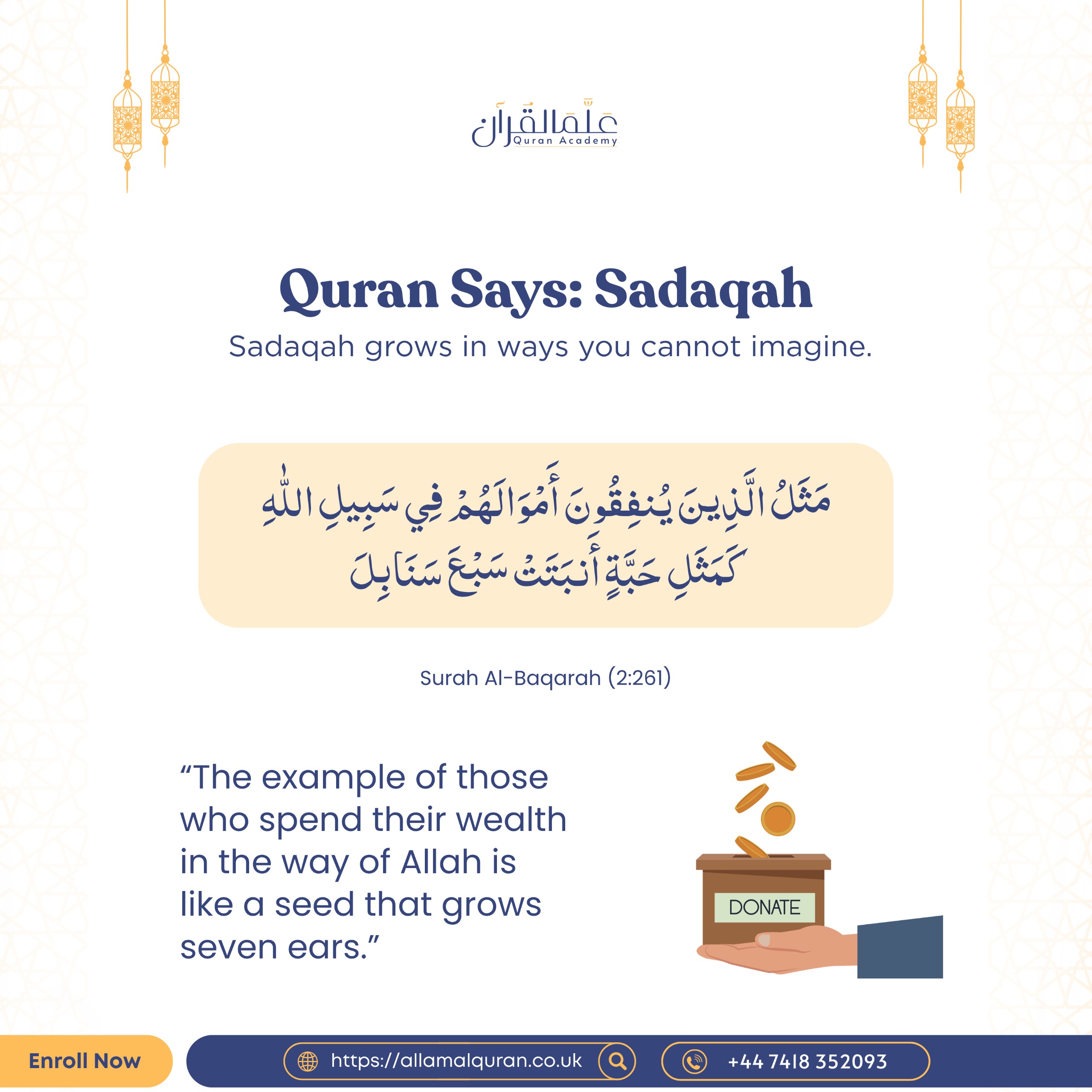
“The example of those who spend their wealth in the way of Allah is like a seed that grows seven ears, in each ear a hundred grains. And Allah multiplies for whom He wills.”
Surah Al-Baqarah (2:261)

Sadaqah is not merely charity—it is a profound act of faith that multiplies blessings in this life and the next. Rooted in the Arabic word Sidq (truthfulness), Sadaqah reflects sincere devotion, generosity that transcends obligatory zakat, and a voluntary giving that nourishes the soul. The Qur’an illustrates its power with an extraordinary agricultural metaphor: a single seed yielding seven hundred grains. This divine multiplication signifies that every act of kindness, every financial help, and every smile given for Allah’s sake expands exponentially, beyond human reckoning.

مَّثَلُ ٱلَّذِينَ يُنفِقُونَ أَمْوَٰلَهُمْ فِى سَبِيلِ ٱللَّهِ كَمَثَلِ حَبَّةٍ أَنۢبَتَتْ سَبْعَ سَنَابِلَ فِى كُلِّ سُنۢبُلَةٍۢ مِّائَةُ حَبَّةٍۢ ۗ وَٱللَّهُ يُضَـٰعِفُ لِمَن يَشَآءُ ۗ وَٱللَّهُ وَٰسِعٌ عَلِيمٌۭ
Surah Al-Baqarah, Ayah 261 — The parable of those who spend their wealth in Allah’s way is that of a grain that sprouts seven ears, each bearing a hundred grains. Allah multiplies abundantly for whom He wills. And Allah is All-Encompassing, All-Knowing.

The Spiritual Ecosystem of Sadaqah

When you give Sadaqah, you are planting seeds in a sacred ground. The verse uses the word “kamaṯali” (likeness) to help humans grasp the unseen multiplication. Seven ears, each containing one hundred grains, total seven hundred times the original seed. Scholars explain that this metaphor reflects Allah’s promise to reward even the smallest charity manifold — not only in the afterlife but also by increasing provision, peace, and protection from calamities. The Prophet Muhammad (peace be upon him) said: “Sadaqah extinguishes sin as water extinguishes fire” (Tirmidhi). Also, “Give charity without delay, for it stands in the way of calamity.” Every act of Sadaqah becomes a shield, purifies wealth, and softens hearts.

700xMinimum divine multiplication
24/7Ongoing Sadaqah Jariyah
Reward without reduction

Beyond Money: The True Scope of Sadaqah

Sadaqah is incredibly inclusive. The Prophet (peace be upon him) taught: “Every joint of a person must perform a charity each day the sun rises: to act justly between two people is a charity; helping a man with his mount is a charity; a good word is a charity; every step taken to prayer is a charity, and removing a harmful thing from the road is a charity.” (Bukhari, Muslim). Thus, a smile to your brother, giving water to a thirsty animal, planting a tree, or sharing knowledge — all of these are Sadaqah that grow like the abundant harvest. The primary color (#36467C) symbolizes trust, wisdom, and the depth of divine promise, while secondary (#ffbd59) echoes the golden harvest, the light of generosity. This dynamic interplay invites believers to invest in eternal returns.


Teachers & Parents Dialogue: Nurturing Generosity

Q1: Teacher Amina: "How can I explain the 'seven hundred grains' concept to young children without making it about numbers only?"
A: Parent Sarah: "That’s beautiful. Relate it to a tiny mango seed growing into a huge tree that gives hundreds of fruits each year. The seed looks small, but Allah makes it big. Similarly, our small good deeds grow bigger than we expect — especially when we give secretly and sincerely. Children understand nature's miracles, so link Sadaqah to 'spiritual gardening'."
Q2: Parent Bilal: "Sometimes kids feel reluctant to give away their toys. How to encourage voluntary Sadaqah without forcing?"
A: Teacher Fatima: "Wonderful point, Bilal. We model first. Create a family 'Sadaqah jar' where each member adds coins or small items weekly. Then together choose a cause — like donating toys to orphanages. Let the child witness joy of recipients. The Prophet loved giving, and when children see joy in giving, their hearts soften naturally. Also narrate stories of Sahaba’s generosity."
Q3: Teacher Zayd: "How does Sadaqah relate to modern challenges like online charity fatigue? Parents are confused about authenticity."
A: Parent Amal: "Great concern. Sadaqah isn't limited to money: volunteering time, tutoring a struggling student, or even advocating for good causes counts. For financial Sadaqah, verify organizations and teach teens to research transparency. Allah values the intention, and giving even $1 with clean heart brings reward. Small consistent Sadaqah is beloved to Allah."
Q4: Parent Ibrahim: "Does Sadaqah decrease wealth? I worry about budget constraints."
A: Teacher Khadija: "On the contrary, the Prophet said: 'Wealth does not decrease because of charity.' (Muslim). Sadaqah brings barakah (blessings) in the remaining wealth, opens doors of unseen provision, and protects from losses. It's an investment with Allah, the best of providers. Start small — even half a date, as the hadith states — and trust the divine economy."
Q5: Teacher Yusuf: "What are the best age-appropriate Sadaqah habits for elementary students in the classroom?"
A: Parent Hana: "Classroom Sadaqah box for collective projects (buying stationery for underprivileged). Also, 'acts of kindness wall' — every good deed like helping a friend, cleaning, or sharing lunch counts as Sadaqah. This makes the concept tangible. Plus you can read Surah Baqarah 261 during circle time and ask children to draw seeds growing into giant plants."
Q6: Parent Rana: "Is Sadaqah only for Muslims? Can we give to non-Muslims as well?"
A: Teacher Omar: "Absolutely. The Qur’an encourages kindness to all. In Sahih Bukhari, the Prophet gave charity to a Jewish family. Sadaqah purifies the giver's soul, supports community ties, and reflects universal mercy. The reward remains with Allah regardless of the recipient's faith. However, Zakat has specific eligibility, but Sadaqah is unconditional."

Sadaqah Jariyah: A Perpetual Harvest

Among the most powerful forms is Sadaqah Jariyah — ongoing charity that continues to benefit people long after the giver has passed away. The Prophet said: “When a person dies, his deeds come to an end except for three: ongoing charity, beneficial knowledge, or a righteous child who prays for him.” (Muslim). Building a well, planting a tree, establishing a library, or contributing to a masjid's water cooler is a seed that never stops yielding rewards. Every time someone benefits, the donor’s record of good deeds multiplies. Imagine the weight of such a harvest — spiritual abundance across generations.

Practical ways to plant your Sadaqah today

Sponsor an orphan, feed a fasting person, help a neighbor, teach a skill, remove harm from pathways, visit the sick, give sincere advice, or donate to educational projects. Even a heartfelt prayer for others is Sadaqah. Start with what you have, and watch how Allah expands it beyond measure.

Surah Baqarah 2:261 - The eternal promise

The primary color #36467C reflects the steadfastness of faith and the deep ocean of divine mercy, while the secondary golden #ffbd59 reminds us of the radiant ears of grain ready to be harvested. Each dirham, each act, each moment of compassion is a seed planted in the vast garden of Allah’s acceptance. The question is not whether you can afford to give, but what immense reward you cannot afford to miss.

© Reflection on Surah Al-Baqarah 2:261 — inspired by Tafsir Ibn Kathir and authentic hadith. Sadaqah is a sunnah that illuminates hearts & communities.