Hadith (Covering Others Faults)
A powerful Islamic reminder about mercy, privacy, forgiveness, and protecting the dignity of fellow Muslims.
Hadith (Covering Others Faults) teaches Muslims to protect the honor of others instead of exposing their mistakes. Islam does not encourage gossip, public shaming, or spreading private sins.
This beautiful hadith reminds us that when a believer covers another Muslim's fault with sincerity, Allah rewards that mercy with protection on the Day of Judgment.
Hadith (Covering Others Faults) in English
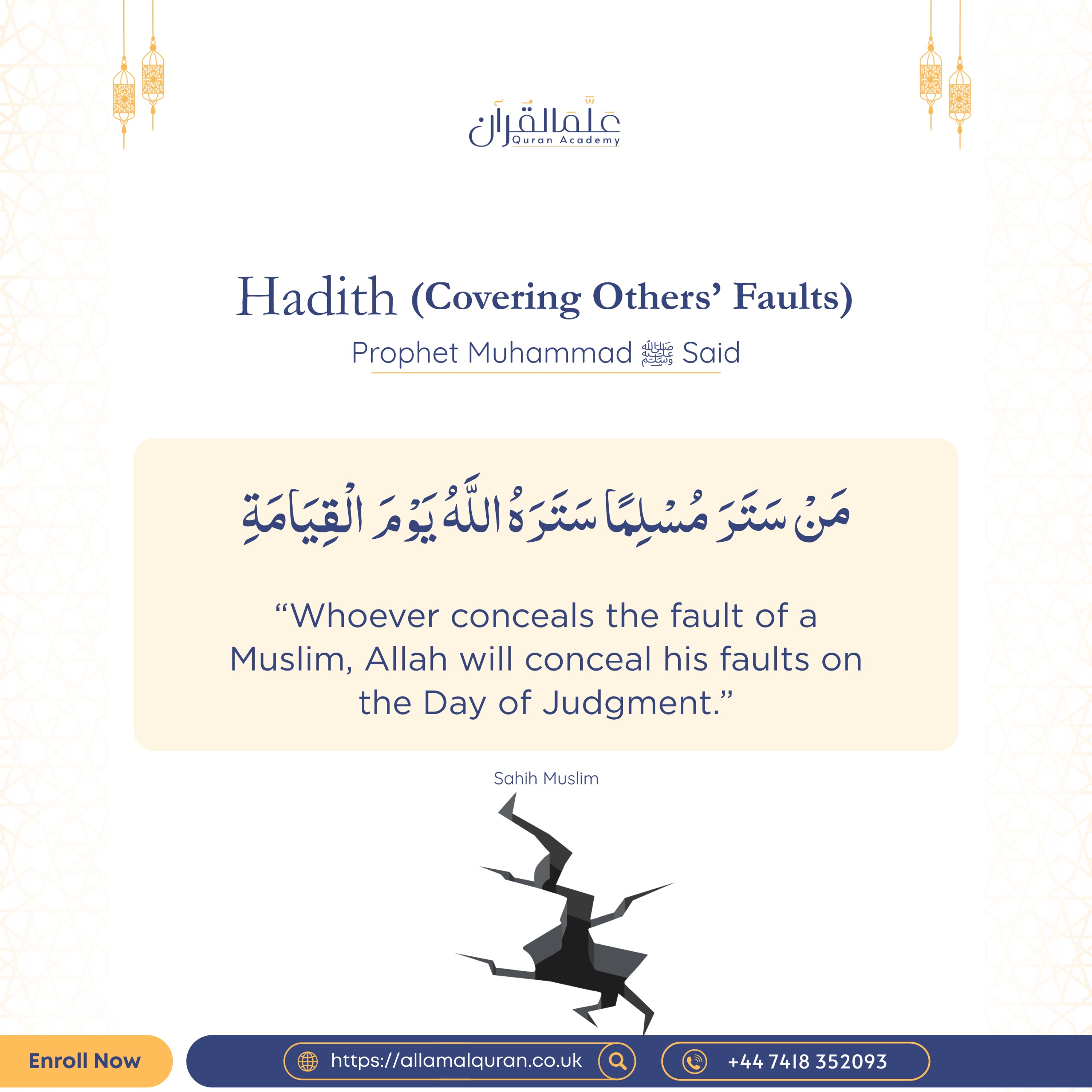
"Whoever covers the faults of a Muslim, Allah will cover his faults on the Day of Resurrection."
Source
Sahih Muslim, a trusted collection of authentic hadith.
Main Meaning
Protect another person's dignity when no public harm is involved.
Daily Practice
Avoid gossip, private screenshots, mockery, and public embarrassment.
5 Powerful Lessons from Hadith (Covering Others Faults)
These lessons help children, parents, teachers, and students build a kinder Islamic character.
Protect Dignity
A Muslim's honor is valuable. Do not expose someone's private mistake for attention or entertainment.
Avoid Gossip
Talking about people's faults weakens the heart and damages trust inside the community.
Correct with Wisdom
Covering a fault does not mean ignoring sin. It means advising gently and privately when advice is needed.
Seek Allah's Mercy
The hadith connects our mercy toward people with Allah's mercy toward us.
Teach Children Kindness
Children should learn not to laugh at mistakes, spread secrets, or embarrass classmates.
Build Safe Homes
Families become stronger when members correct each other without humiliation.
How to Apply Hadith (Covering Others Faults)
This hadith becomes powerful when it changes daily habits at home, school, online, and in the community.
- Do not share someone's private mistake in family groups or social media.
- Speak privately if sincere advice is needed.
- Do not make jokes about someone's weakness, sin, or embarrassing moment.
- Teach children to protect secrets and avoid classroom teasing.
- If someone may harm others, report it responsibly to the right person instead of spreading gossip.
Covering a fault is not silence against harm. It is mercy without humiliation and advice without public shame.
Teacher and Parent Q&A on Hadith (Covering Others Faults)
Parents and teachers can use this hadith to help children understand privacy, kindness, and responsible correction.
Should every mistake be hidden?
No. If someone is harming others, safety comes first. Tell a trusted adult or authority responsibly.
Can we advise someone?
Yes. Advice should be sincere, gentle, and private whenever possible.
How can children practice it?
They can avoid laughing at mistakes, sharing secrets, and embarrassing classmates.
Authentic References for Hadith (Covering Others Faults)
You can read the hadith meaning in authentic collections at Sunnah.com Sahih Muslim. You can also reflect on Quranic guidance about avoiding suspicion and backbiting at Quran.com 49:12.
Final Reflection on Hadith (Covering Others Faults)
Hadith (Covering Others Faults) is a reminder that every Muslim needs Allah's covering, forgiveness, and mercy. When we protect the dignity of others, we hope Allah will protect us on the Day when every soul will need His mercy.