Dua of Prophet Nuh عليه السلام

Dua of Prophet Nuh عليه السلام

Dua of Prophet Nuh عليه السلام

The Ultimate Supplication for Forgiveness, Parents, and Believers

Dua of Prophet Nuh عليه السلام

The Authentic Text of the Dua of Prophet Nuh عليه السلام

The Prophets of Allah experienced unimaginable trials, yet their absolute reliance on the Creator never wavered. Among the most profound prayers recorded in the Quran is the Dua of Prophet Nuh عليه السلام.

After enduring 950 years of preaching to a stubborn and disobedient nation, the floodwaters finally began to rise. In this monumental moment of divine decree, Prophet Nuh turned to his Lord.

He did not just pray for himself. The Dua of Prophet Nuh عليه السلام is deeply moving because it asks for the forgiveness of his own soul, his parents, and every believing man and woman until the end of time.

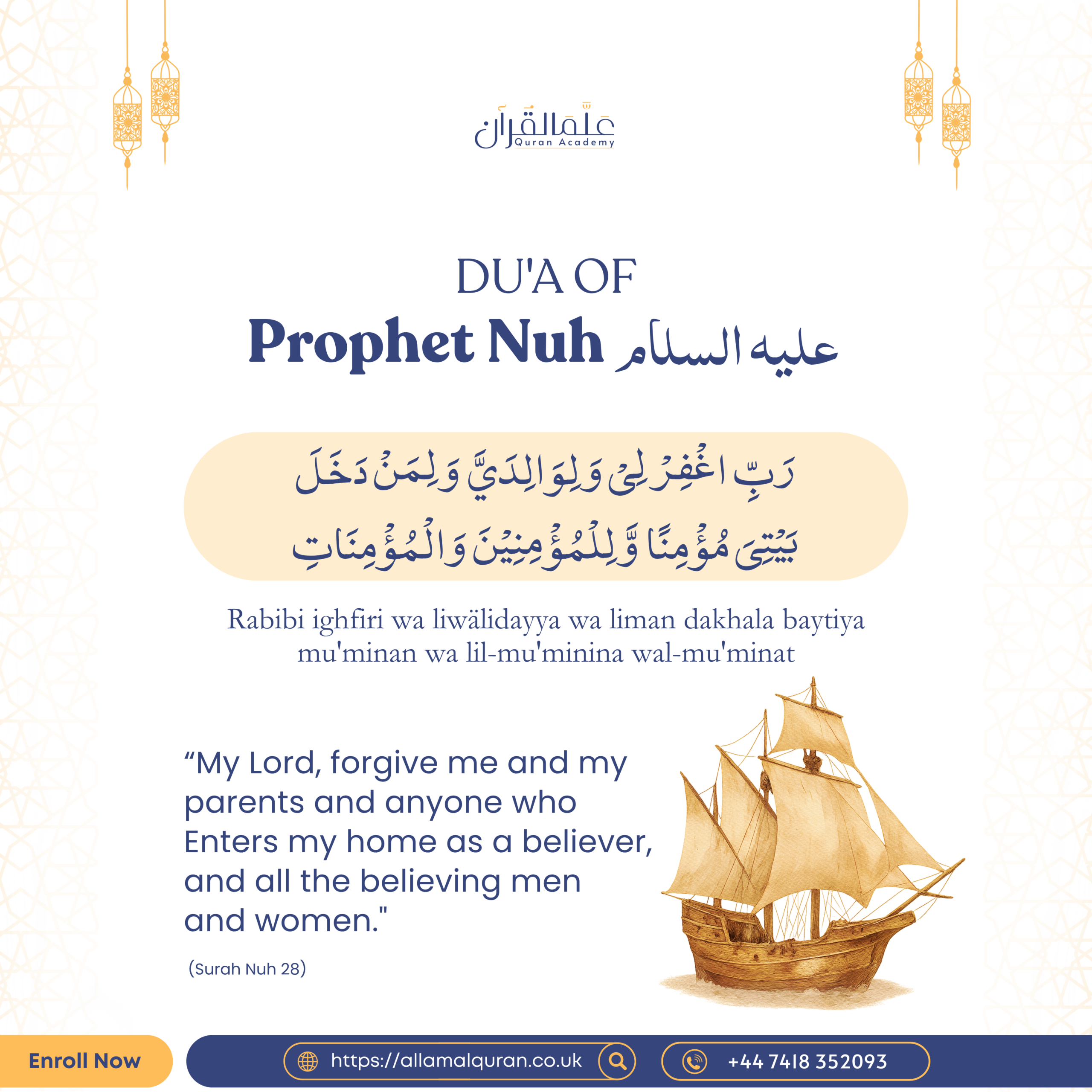
رَّبِّ اغْفِرْ لِي وَلِوَالِدَيَّ وَلِمَن دَخَلَ بَيْتِيَ مُؤْمِنًا وَلِلْمُؤْمِنِينَ وَالْمُؤْمِنَاتِ
Transliteration: Rabbighfir li wa li-walidayya wa liman dakhala baytiya mu'minan wa lil-mu'minina wal-mu'minat.

“My Lord, forgive me and my parents and whoever enters my house a believer and the believing men and believing women.”

This beautiful and comprehensive supplication is preserved eternally in Surah Nuh (71:28). It serves as a masterclass in how a believer should format their prayers.

7 Powerful Spiritual Secrets of the Dua of Prophet Nuh عليه السلام

Understanding the Arabic text is important, but internalizing the meaning is what transforms the heart. When you regularly recite the Dua of Prophet Nuh عليه السلام, you unlock incredible spiritual blessings.

Here are 7 profound lessons we can extract from this beautiful Quranic prayer:

  • Starting with the Self: Before praying for others, Prophet Nuh said "forgive me." We must recognize our own flaws and seek personal purification first.
  • Honoring Parents: He immediately followed his own forgiveness with a prayer for his parents. This shows the unmatched rank of parents in Islam.
  • Blessing the Home: By praying for "whoever enters my house a believer," he ensured his home remained a sanctuary of faith and peace.
  • Global Brotherhood: He included all "believing men and believing women," teaching us to never be selfish in our daily duas.
  • Millions of Rewards: The Prophet Muhammad ﷺ said whoever seeks forgiveness for all believers will receive a good deed for every single one of them.
  • Humility in Trial: Despite being a mighty Prophet chosen by Allah, he still humbly begged for his own forgiveness.
  • Legacy of Compassion: The Dua of Prophet Nuh عليه السلام proves that the hearts of the Prophets were full of immense love for their followers.

Expert Q&A: Teaching the Dua of Prophet Nuh عليه السلام

How do we actively explain the profound selflessness found in the Dua of Prophet Nuh عليه السلام to our children? Read our expert advice below.

Q1 Parent: "My children only make dua for toys or good grades. How can I change this habit?"
Teacher's insight: Introduce them to the Dua of Prophet Nuh عليه السلام! Explain that the best Muslims always pray for their mom, dad, and friends before asking for toys. It teaches them empathy and connects them to the global Ummah.
Q2 Parent: "Can I recite this specific dua during my regular Salah?"
Teacher's strategy: Absolutely. Because it is a direct quote from the Holy Quran, it is highly recommended to recite this supplication during Sujood (prostration) or right before the final Salam in your daily prayers.
Q3 Both: "How do we deeply connect our family to the stories of the Prophets?"
Shared Goal: Reading translation is a great start, but understanding the actual Arabic brings the stories to life. To help your family connect deeply with these verses, we highly encourage you to enroll in the expert-led Islamic and Quranic courses at Allamalquran Academy.

Final Reflection: The Dua of Prophet Nuh عليه السلام is a timeless masterpiece of humility and love. Make it a daily habit to recite these words. By doing so, you honor your parents, bless your home, and earn billions of good deeds by praying for the entire Ummah. May Allah forgive us, our parents, and all believers. Ameen.