
Seeking Ultimate Protection and the Night of Decree (Laylatul Qadr)

The Holy month of Ramadan is beautifully divided into three distinct parts, known as Ashras. While the first brings mercy and the second brings forgiveness, the 3rd Ashra of Ramadan holds a profound and urgent spiritual purpose: seeking refuge from the Hellfire (Nijat). Spanning from the 21st day until the sighting of the Eid moon, these final ten days represent the peak of spiritual devotion for Muslims around the world.
During this critical period, believers intensify their worship. The Prophet Muhammad (peace be upon him) used to strive harder in worship during these last ten days than at any other time of the year. He would stay awake at night, awaken his family, and tighten his lower garment as a symbol of his sheer dedication and preparation.
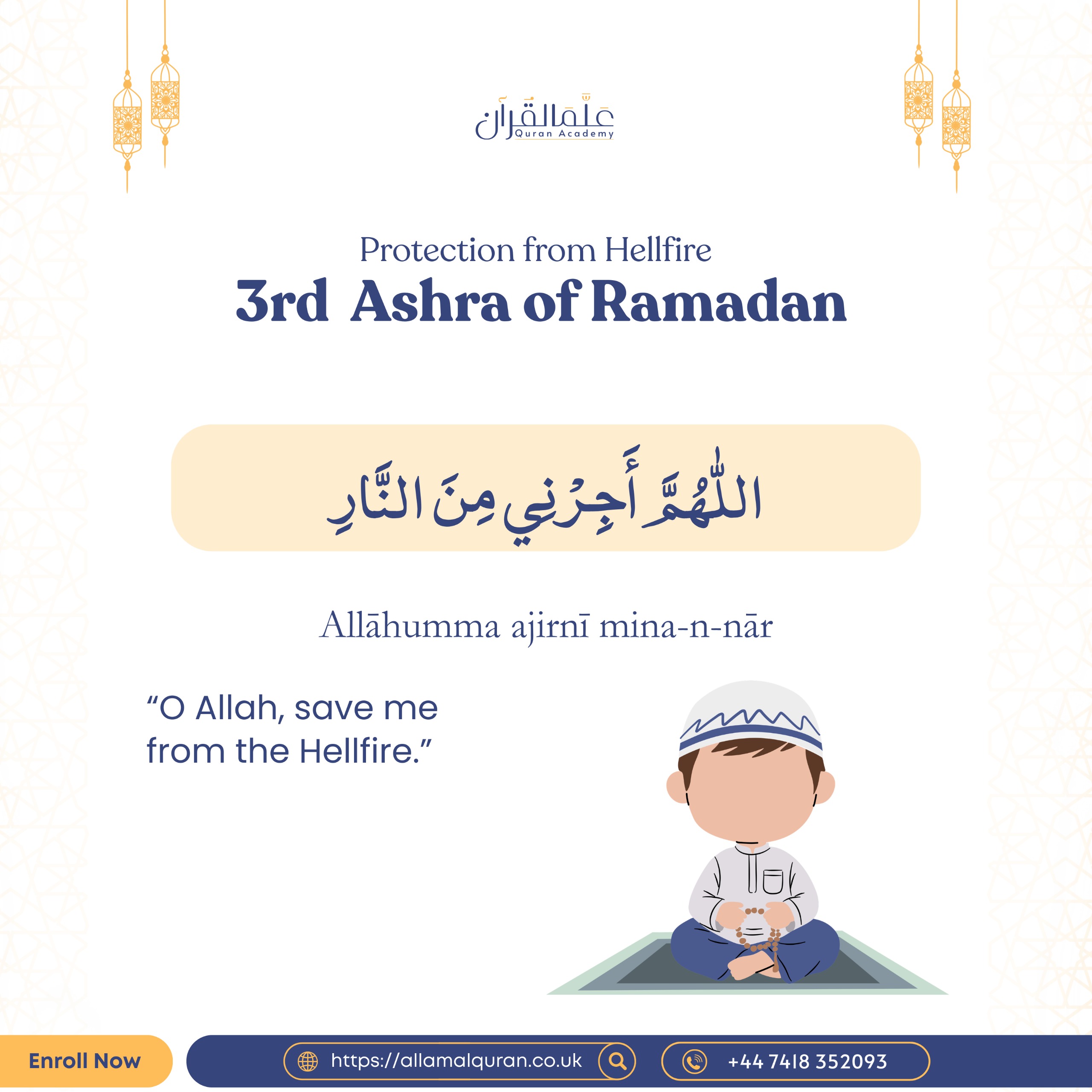
The core theme of the 3rd Ashra of Ramadan is emancipation from the Fire. To align with this spiritual goal, Muslims frequently recite a specific, powerful supplication taught by the Prophet ﷺ.
“O Allah, save me from the fire (Jahannam).”
It is highly recommended to recite this beautiful dua repeatedly, especially after the Fajr and Maghrib prayers. By constantly seeking refuge, a believer acknowledges their dependence on Allah's ultimate mercy. For further authentic narrations on seeking refuge, you can explore collections on Sunnah.com.
What makes the 3rd Ashra of Ramadan truly exceptional is the hidden presence of Laylatul Qadr (The Night of Decree). The Quran states that this single night is better than a thousand months of worship. It falls on one of the odd-numbered nights (21st, 23rd, 25th, 27th, or 29th).
A practical guide for families navigating the spiritual intensity of the 3rd Ashra of Ramadan with children.
A Final Thought: The 3rd Ashra of Ramadan is the grand finale of the most blessed month. Do not let fatigue rob you of these fleeting moments. Beg Allah for His immense mercy, seek out the Night of Power, and secure your emancipation from the Fire. May Allah accept our fasting, our standing in prayer, and grant us ultimate success in the Hereafter. Ameen.