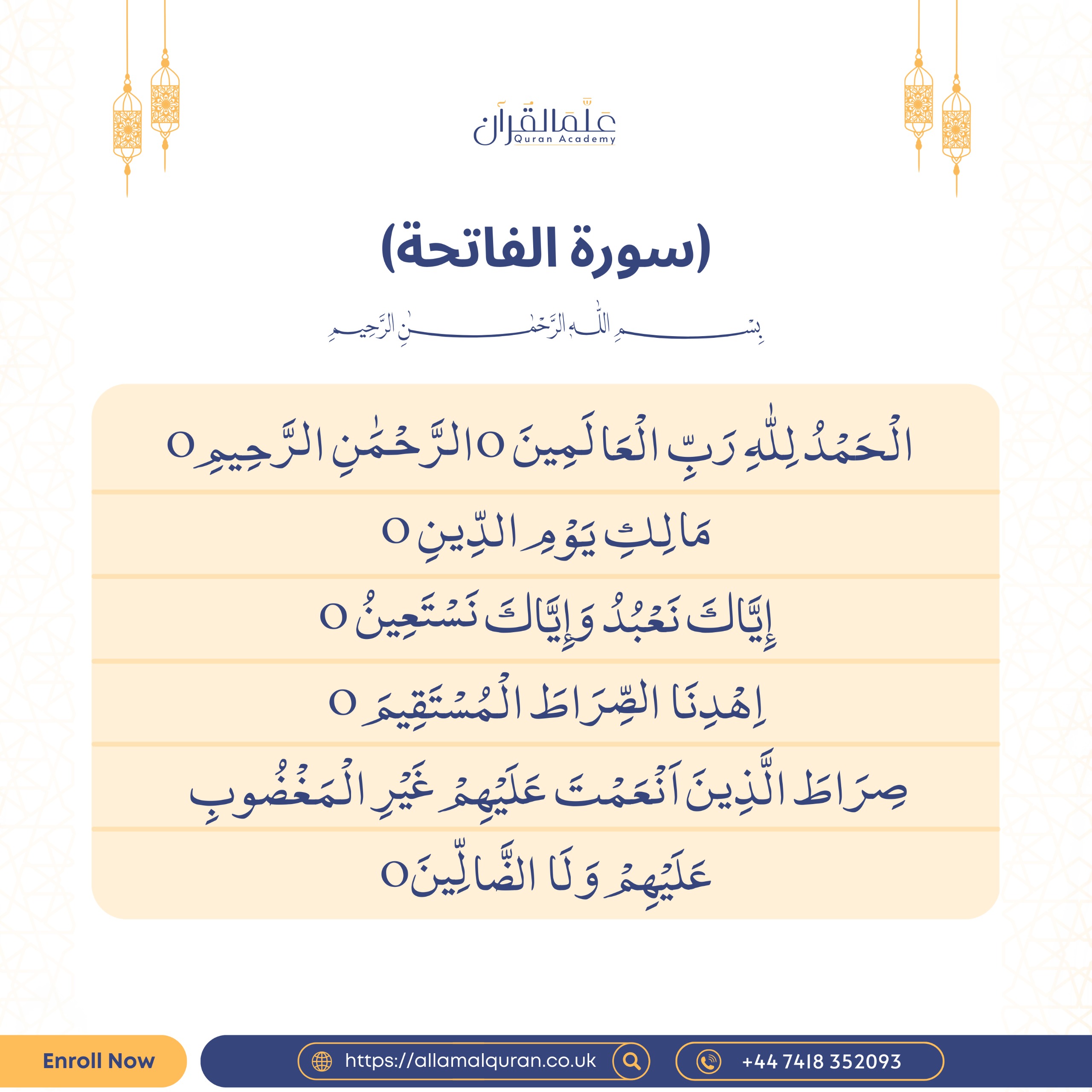
Surah Al-Fatiha is the first chapter of the Qur’an, comprising seven verses that encapsulate the entire message of Islam: praise, mercy, sovereignty, worship, and guidance. Muslims recite it in every unit of prayer (rak‘ah), making it the most repeated passage in a believer’s life. Its dual nature as both supplication and statement creates a direct dialogue between the servant and Allah.
The Surah is a profound “conversation” — the first half is Allah speaking about His attributes, and from “Iyyāka na‘budu” the servant responds with commitment and petition. This interactive dynamic is why scholars call it “the dialogue of prayer.”
Names & Virtues
Known as Umm al-Qur’an (essence of the Qur’an), Al‑Sab‘ al‑Mathānī (the seven oft‑repeated), and Ash‑Shifā’ (the cure). The Prophet ﷺ said: “It is the greatest Surah in the Qur’an.” Its words contain praise, mercy, justice, and the straight path.
Parent & Teacher dialogue
Understanding Al-Fatiha through conversation
Why do we say “Āmīn” after Al-Fatiha in prayer?
Teacher: Āmīn means “O Allah, answer.” It’s a seal to the supplication. The Prophet said: if a person’s “Āmīn” coincides with the angels’, their past sins are forgiven.
My child asked: in “Iyyāka na‘budu” why switch from third person to direct address?
Teacher: Beautiful observation! Verses 1–4 describe Allah (He), but when we reach “You alone we worship” we turn to intimate conversation. It trains us to feel Allah’s presence.
Is Al-Fatiha a cure (ruqyah) as some say?
Parent: Absolutely. The Prophet ﷺ called it ruqyah. It heals hearts by affirming tawḥīd, and physical ailments by Allah’s permission when recited with conviction.
What does “maliki yawmid-din” teach children?
Teacher: It instills accountability: Allah is the Master of Judgment Day. It balances hope and fear, encouraging good deeds.
The Straight Path
“Ihdinaṣ-ṣirāṭal-mustaqīm” is the most comprehensive prayer. It asks for guidance to the path of those blessed — not the misguided. In this widget, you can click here to see how the secondary color highlights key concepts.