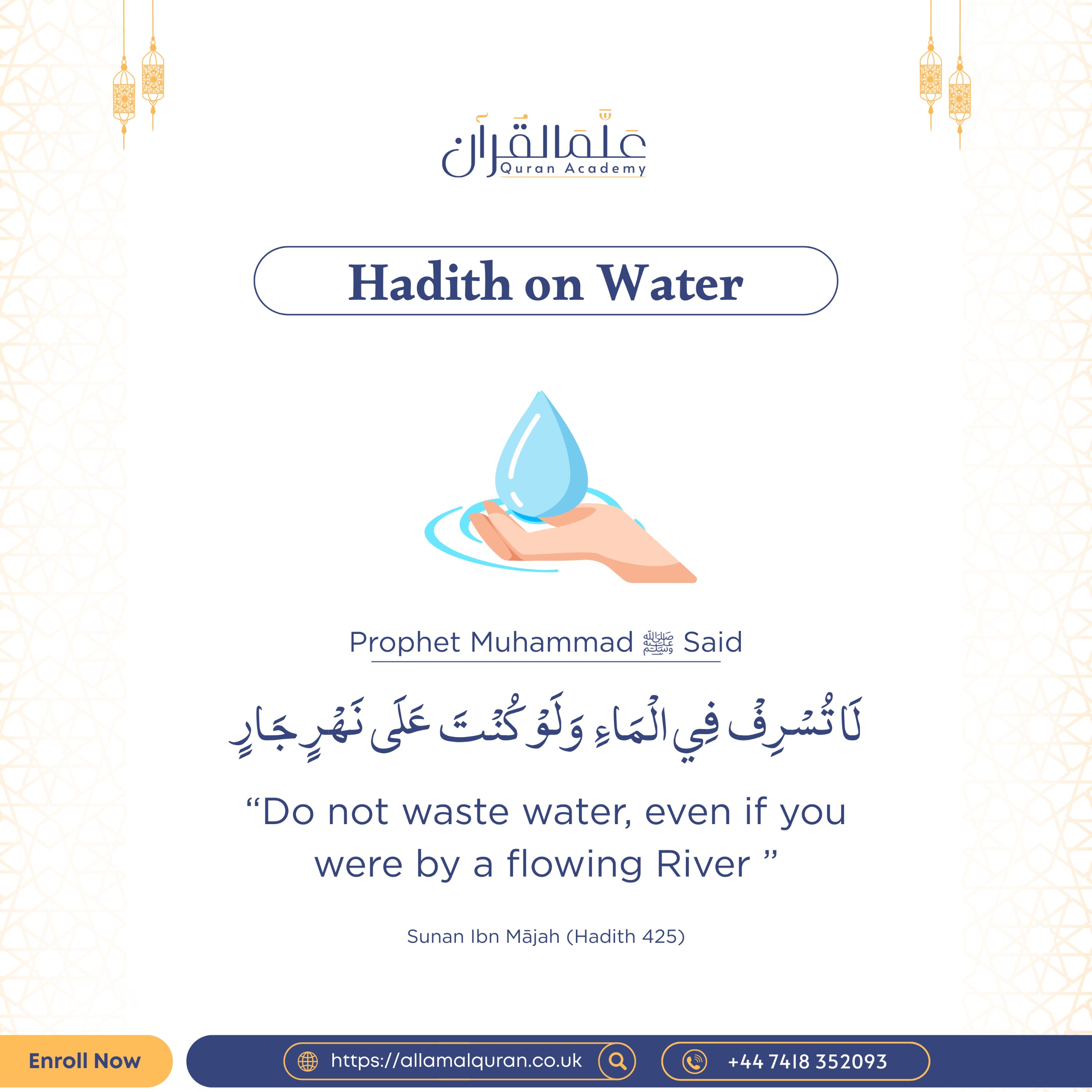
لَا تُسْرِفْ فِي الْمَاءِ وَلَوْ كُنْتَ عَلَى نَهْرٍ جَارٍ
"Do not waste water, even if you were by a flowing river."
Sunan Ibn Mājah (Hadith 425)
The Timeless Wisdom of Conservation
In an era where environmental concerns dominate global discourse, the teachings of Prophet Muhammad (peace be upon him) offer profound guidance that transcends centuries. The hadith about water conservation represents not merely a religious instruction but a comprehensive ethical framework for sustainable living. This teaching, delivered over 1400 years ago, anticipates modern environmental principles and establishes water as a sacred trust rather than a limitless commodity.
The specificity of the instruction—mentioning even the scenario of being by a flowing river—emphasizes that abundance does not justify wastefulness. This principle challenges the common human tendency to conserve only when resources appear scarce, urging instead a constant consciousness of responsibility regardless of apparent plenty.
Theological and Ecological Significance
Water in Islamic Cosmology
The Quran describes water as the origin of all life: "We made from water every living thing" (21:30). This ontological significance elevates water beyond physical necessity to spiritual symbolism. The Prophet's prohibition against wastefulness thus operates on multiple levels: practical conservation, spiritual discipline, and cosmic reverence for the source of creation.
The Concept of Israf (Excess)
The Arabic term used in the hadith relates to 'israf' or wasteful extravagance, which Islam prohibits in all matters. Water waste represents a microcosm of broader ethical concerns about resource management, consumption patterns, and the balance (mizan) that characterizes Islamic ethics. This teaching connects individual action to systemic environmental responsibility.
Questions from Parents, Answers from Scholars
How do we practically implement this teaching with children who see water as endlessly available from taps?
Begin with education about the water cycle and the energy required for purification and delivery. Use measurable containers during wudu (ablution) to demonstrate appropriate quantities. Share stories of communities facing water scarcity to build empathy. Most importantly, model mindful water use consistently, as children learn more from observation than instruction.
Answered by Islamic Studies Teacher, Alima Fatima Khan
Does this hadith apply to businesses and farms that require large water usage for legitimate purposes?
The principle applies proportionally. Legitimate need is distinguished from waste. Farms should implement drip irrigation rather than flood irrigation. Businesses should audit water usage and fix leaks promptly. The key is optimizing use rather than minimizing necessary consumption. The Prophet encouraged efficiency even in acts of worship—this extends to livelihood activities.
Answered by Environmental Ethics Scholar, Dr. Ahmed Hassan
How does this teaching relate to modern environmental movements?
This hadith establishes Muslims as pioneers of environmental consciousness. The Prophet's teaching predates modern ecology by centuries yet aligns perfectly with sustainable development goals. Muslims should engage with environmental initiatives not as novel concepts but as continuity of Islamic tradition. The flowing river example specifically addresses the "tragedy of the commons" where shared resources are overused.
Answered by Community Imam, Sheikh Yusuf Abdullah
What about during ritual purification where water use is required?
The Prophet gave specific quantities for ablution and warned against excess even in worship. Using more water than needed does not increase reward. Contemporary scholars suggest that recycling wudu water for gardens or using low-flow fixtures in mosques fulfills both ritual and conservation obligations. The principle remains: necessity does not negate mindfulness.
Answered by Fiqh Specialist, Ustadha Maryam Ahmed
Contemporary Applications and Challenges
In the 21st century, this hadith speaks directly to pressing global issues. With climate change altering precipitation patterns and groundwater depletion affecting millions, the Prophetic warning gains urgent relevance. Muslim communities worldwide are implementing this teaching through:
- Mosque retrofitting with water-saving devices
- Educational programs linking Islamic teachings to conservation
- Rainwater harvesting initiatives in Muslim-majority regions
- Advocacy for equitable water policies based on Islamic principles of distribution