
The Prophetic Wisdom of Silence: A Comprehensive Analysis
The Narration
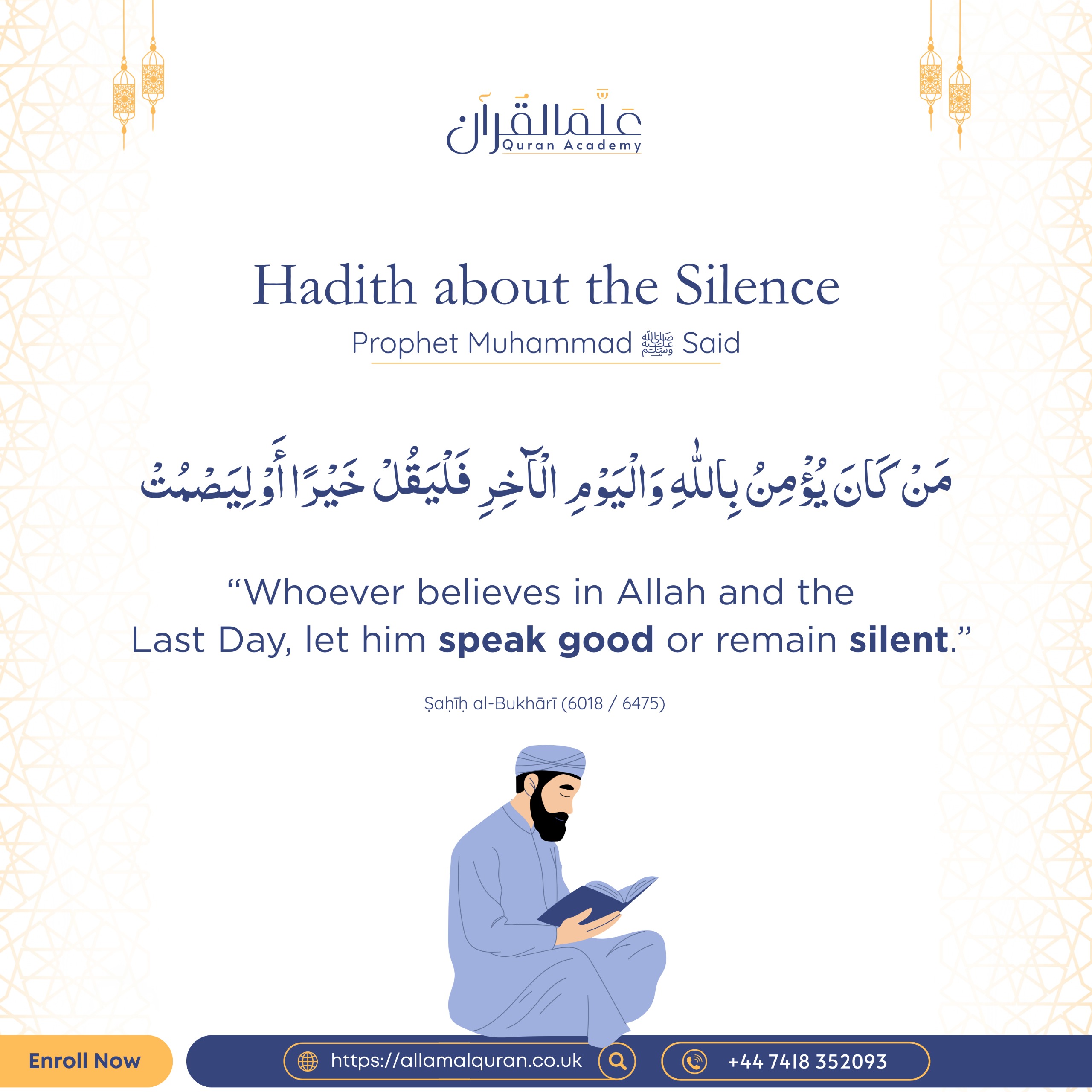
مَنْ كَانَ يُؤْمِنُ بِاللّٰهِ وَالْيَوْمِ الْآخِرِ فَلْيَقُلْ خَيْرًا أَوْ لِيَصْمُتْ
Translation
"Whoever believes in Allah and the Last Day, let him speak good or remain silent."
Understanding the Hadith
This profound teaching from Prophet Muhammad (peace be upon him) establishes a fundamental principle for Muslim conduct and communication. The hadith connects genuine faith with disciplined speech, creating a direct relationship between one's belief system and their verbal expressions.
The instruction presents a binary choice for believers: either speak what is good (khayr) or maintain silence. This simplicity in directive belies the depth of its application in daily life, social interactions, and spiritual development.
Key Dimensions of the Teaching
Theological Foundation
The hadith explicitly links speech ethics with core Islamic beliefs – faith in Allah and the Hereafter. This connection elevates speech from mere social etiquette to an act of worship and faith manifestation.
Preventive Wisdom
Silence serves as a protective barrier against numerous spiritual and social harms: backbiting, lying, false speech, arguments, and verbal abuse that plague communities.
Positive Command
The directive isn't merely prohibitive; it actively encourages "good speech" – truth, kindness, beneficial knowledge, reconciliation, and words that strengthen relationships.
Psychological Insight
Modern psychology confirms what this hadith taught centuries ago: controlled speech reduces stress, prevents regret, and leads to more thoughtful communication and better relationships.
Common Questions About Speech Ethics
Question from Parent:
"How can I teach this concept of 'speak good or remain silent' to my children in practical ways?"
Teacher's Response:
Begin with concrete examples appropriate to their age. For younger children: "If you can't say something nice about someone's drawing, just smile." For teenagers: "Before criticizing a friend's choice, ask: Is this helpful? Is it true? Is it necessary?" Implement a "thinking pause" rule – waiting three seconds before responding in emotional situations. Model this behavior consistently, and acknowledge when you yourself choose silence over unnecessary speech. Create family reminders, perhaps a note on the refrigerator that says: "Our words build or break – choose wisely."
Question from Parent:
"Does 'remaining silent' mean we shouldn't speak against injustice or correct wrong information?"
Teacher's Response:
Absolutely not. The hadith emphasizes "speaking good," which includes speaking truth against falsehood and justice against oppression. The key distinction lies in intention and manner. Speaking against injustice with the goal of establishing truth and preventing harm IS "good speech." However, the methodology matters: it should be done with wisdom, appropriate timing, and proper channels. The silence referred to here is about frivolous, harmful, or useless speech – not about conscientious silence in the face of wrongdoing. Prophet Muhammad himself spoke against injustice constantly, but always with purposeful, measured words.
Question from Parent:
"In the digital age, how does this apply to texting, social media, and online comments?"
Teacher's Response:
The principle extends directly to digital communication. Before posting, sharing, or commenting, apply the same filter: "Is this good speech?" If it's not beneficial, truthful, and necessary – don't send it. Digital silence can be more challenging because typing feels less consequential than speaking aloud, but the spiritual impact is identical. Teach children that online words are permanent and have real-world consequences. A practical exercise: compose responses in heated discussions but don't send them immediately. Revisit after an hour – you'll often choose silence or rewrite with more wisdom. The anonymity of online spaces doesn't exempt us from accountability before Allah.
Practical Application in Daily Life
Morning Intention
Begin each day with the intention to guard your speech, consciously remembering this hadith during interactions.
Three-Question Filter
Before speaking, ask: Is it true? Is it beneficial? Is it necessary? If any answer is no, choose silence.
Evening Reflection
Review daily conversations, acknowledge slips, and seek forgiveness while planning improved communication.
Deepen Your Understanding of Islamic Teachings
Join our structured courses to comprehensively study hadith, Quranic interpretation, and Islamic ethics with qualified scholars.
Website: https://allamalquran.co.uk | Phone: +44 7418 352093