
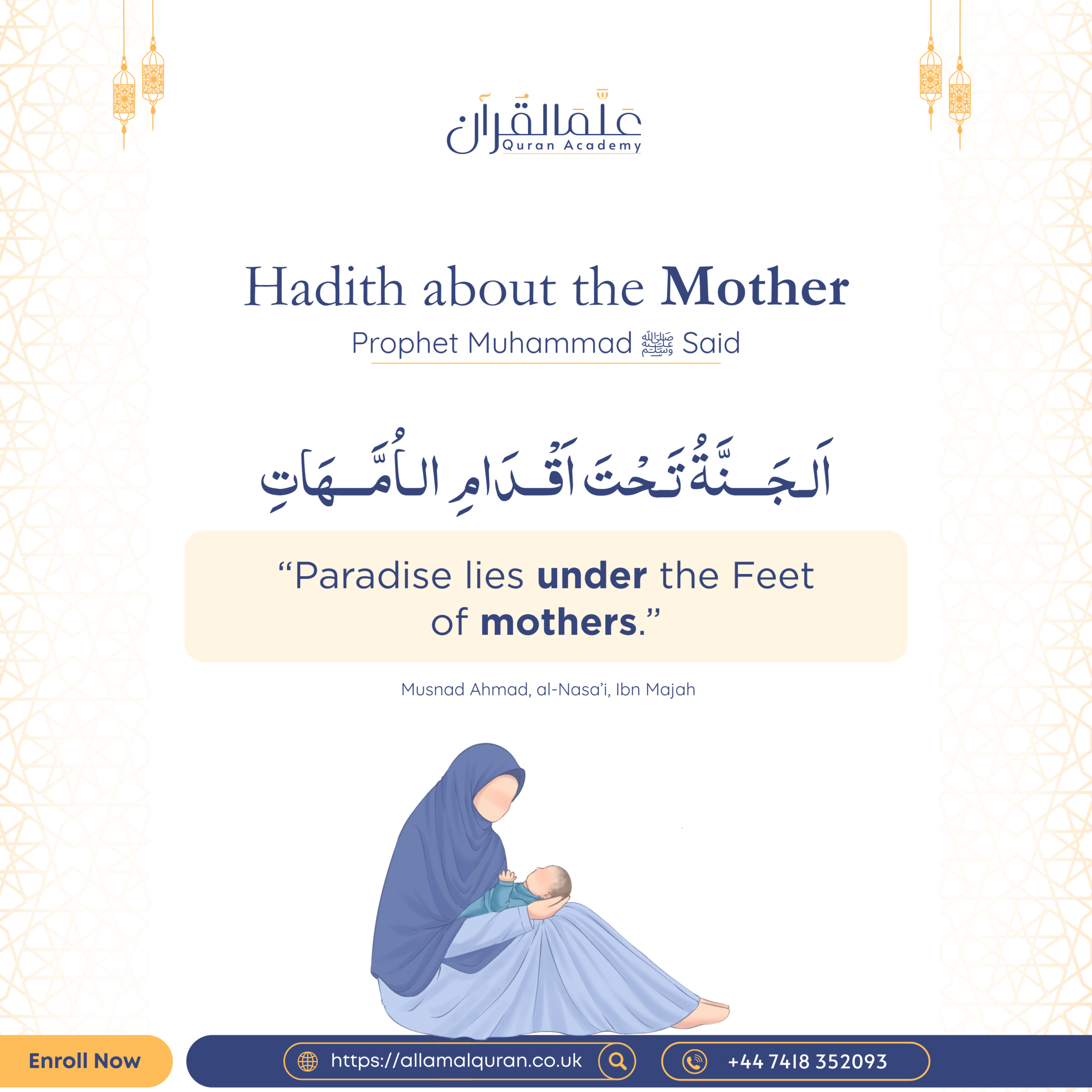
The Paramount Importance of Mothers
In Islamic teachings, the status of the mother is elevated to the highest degree of honor and respect. The profound hadith of Prophet Muhammad ﷺ, "Paradise lies under the feet of mothers," encapsulates the essence of this reverence. This statement is not merely metaphorical but carries deep spiritual and practical implications for Muslims worldwide.
This comprehensive article explores the meaning, context, and application of this significant hadith, providing insights for parents and educators seeking to understand Islamic values regarding maternal respect and filial piety.
Interpretation and Significance
The hadith conveys that the pathway to Paradise is through honoring, respecting, and serving one's mother. The phrase "under her feet" symbolizes submission, humility, and service—qualities that children should demonstrate toward their mothers.
Spiritual Significance
This teaching emphasizes that obedience and kindness to mothers is a means of attaining divine pleasure and ultimate reward in the Hereafter.
Social Implications
The hadith establishes a foundational principle for family structure and intergenerational relationships in Muslim societies.
Practical Application
It provides guidance on daily conduct, reminding believers that even mundane acts of service to mothers carry spiritual weight.
Questions and Answers: Teachers and Parents Discussion
Teachers can integrate this teaching through age-appropriate lessons on family values, storytelling sessions about Prophet Muhammad's ﷺ respect for mothers, and practical projects where students document acts of kindness toward their mothers. In Islamic studies, dedicated modules can explore Quranic verses and hadiths about parental rights, with special emphasis on the mother's elevated status.
Children can demonstrate respect through everyday actions: speaking kindly, offering physical assistance, being attentive to their mothers' needs, and showing gratitude. For younger children, this might involve simple tasks like helping with household chores. For older children and adults, it extends to emotional support, financial care when needed, and seeking their mothers' advice and prayers. The Prophet Muhammad ﷺ emphasized consistent kindness, not just on special occasions.
In contemporary society where family structures are evolving, this hadith reaffirms the timeless value of maternal respect. It addresses modern challenges by providing an ethical compass: regardless of changing social norms, the mother's right to honor remains constant. For parents, it offers a teaching tool to instill gratitude and respect in children. For mothers, it validates their sacrifices and reinforces their vital role. The teaching also reminds extended families and communities to support mothers in their demanding roles.
Islamic scholars clarify that while obedience to parents is highly emphasized, it does not supersede obedience to Allah. If a mother requests something that contradicts Islamic principles, the child should respectfully decline while maintaining kindness and proper conduct. The hadith encourages respect and service in matters that are permissible, not in sinful actions. This balance preserves both religious integrity and family harmony, following the Quranic principle of "no obedience to the creation in disobedience to the Creator."
Islamic teachings emphasize honoring any woman who fulfills a maternal role. While the biological mother holds a unique position, kindness and respect extend to stepmothers, grandmothers, aunts, and other maternal figures who contribute to a child's upbringing. The Prophet Muhammad ﷺ taught respect for "those who are like mothers," expanding the circle of honor. This inclusive approach strengthens community bonds and ensures that all caregivers receive appropriate recognition for their nurturing roles.
Conclusion: Integrating the Teaching into Daily Life
The hadith "Paradise lies under the feet of mothers" offers more than theological insight—it provides a practical framework for family life and spiritual development. By honoring mothers with our words, actions, and attitudes, we cultivate the humility and gratitude that characterize true faith. This teaching transcends cultural boundaries and historical periods, remaining profoundly relevant for contemporary Muslims navigating the complexities of modern life while maintaining traditional values.
For educators and parents, this hadith serves as a cornerstone for character education, emphasizing that the pathway to divine reward begins with the simplest acts of kindness within the family. Its implementation fosters compassionate societies where respect for caregivers becomes a shared community value.