
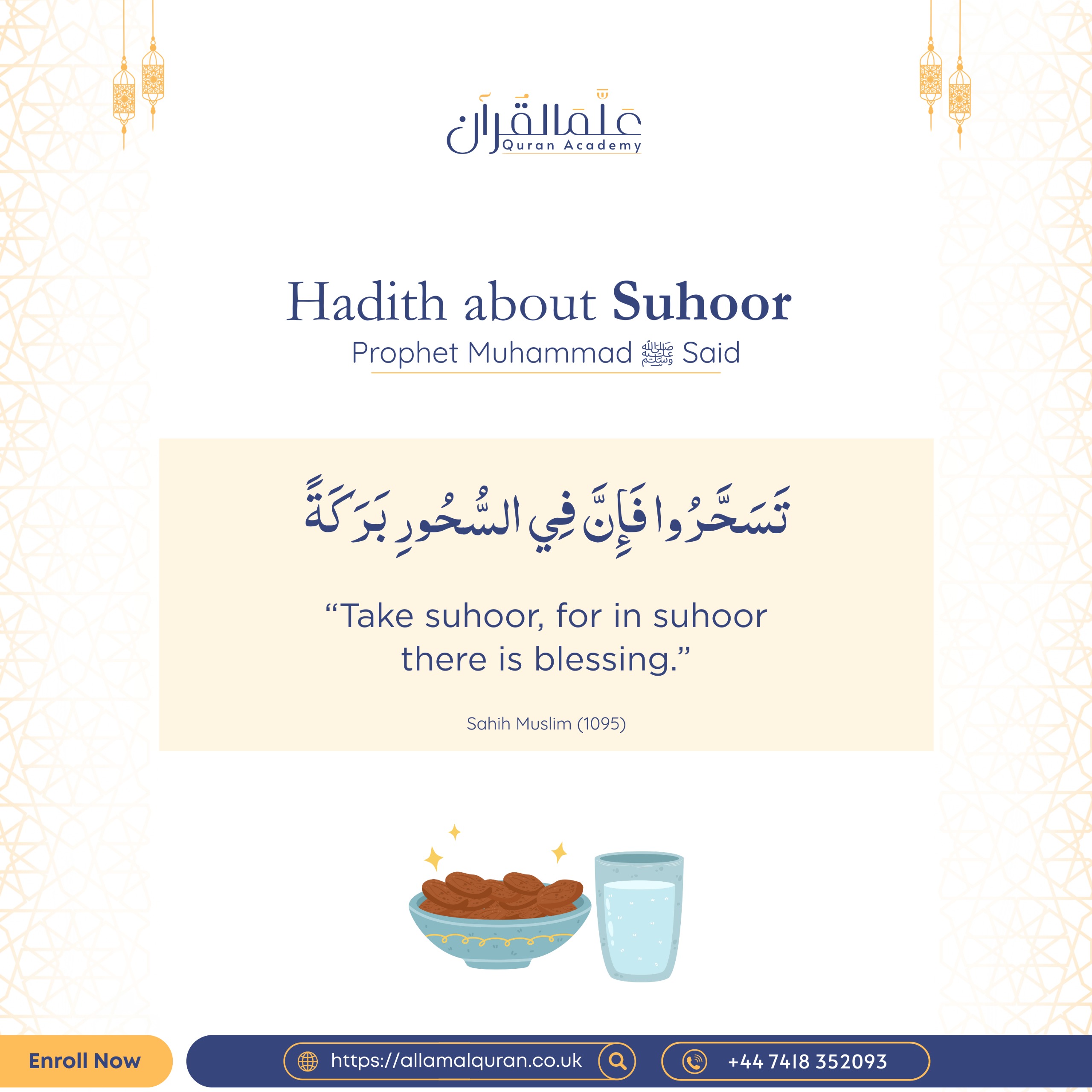
The practice of Suhoor, the pre-dawn meal before fasting, holds profound significance in Islamic tradition. Rooted in the direct guidance of Prophet Muhammad (peace be upon him), this meal transcends mere physical nourishment, embodying spiritual, communal, and health dimensions that enrich the fasting experience.
This concise yet profound statement from the Prophet Muhammad (peace be upon him) was delivered as part of his comprehensive guidance on fasting during Ramadan. The command to partake in Suhoor distinguishes Islamic fasting from some other forms of abstinence, emphasizing moderation rather than extreme asceticism.
The Arabic term "barakah" (blessing) mentioned in the Hadith encompasses multiple dimensions: divine grace, spiritual benefit, physical well-being, and communal harmony. This blessing manifests in both tangible and intangible forms throughout the fasting day.
The blessing in Suhoor is not singular but multidimensional, affecting various aspects of a believer's life:
Suhoor time occurs during the blessed last third of the night, a period particularly favored for prayers and divine connection. Waking for Suhoor naturally leads to engaging in night prayers (Tahajjud), increasing spiritual receptivity.
A balanced Suhoor provides sustained energy throughout the fasting day, maintaining blood sugar levels and preventing extreme fatigue, enabling productive engagement in worship and daily responsibilities.
Families gathering for Suhoor strengthens familial bonds. The shared experience of waking together, preparing food, and beginning the fast as a unit fosters unity and mutual support in worship.
The Prophet mentioned that Suhoor distinguishes Muslim fasting from that of People of the Book. This differentiation establishes a unique Islamic identity in worship practices.
Begin by explaining the spiritual significance rather than focusing solely on the meal. Share the Hadith and its blessings. Practically, involve them in preparing the Suhoor meal the night before. Create a pleasant atmosphere with gentle waking methods, perhaps with a favorite light food. Gradually adjust sleep schedules in the days approaching Ramadan. Most importantly, lead by example and make it a family activity rather than a solitary obligation.
The Prophet Muhammad (peace be upon him) recommended dates as an excellent food, saying "How excellent are dates as the believer's Suhoor." Complex carbohydrates like whole grains provide sustained energy. Include protein sources and hydrating foods like watermelon or cucumber. Avoid excessive salt, sugar, and fried foods that increase thirst. Spiritually, the intention is crucial. Even a few dates or a glass of water with the right intention fulfills the Sunnah. The meal should be moderate—neither too little nor excessive.
Absolutely. The blessing (barakah) mentioned in the Hadith is not contingent on the quantity consumed. The Prophet (peace be upon him) said, "The Suhoor is blessed, so do not neglect it even if one of you only takes a sip of water." The essence is in following the guidance and making the effort. Even minimal consumption with sincere intention secures the spiritual reward and distinguishes your fast. The act of waking with remembrance of Allah and intention to fast is itself a profound worship.
The Sunnah is to delay Suhoor until the last portion of the night, as close to Fajr as reasonably possible. The Companions would allow such a gap between finishing Suhoor and the call to prayer that one could recite 50 verses of the Quran (approximately 15-20 minutes). Modern timetables provide accurate Fajr times. Set an alarm for 30 minutes before Fajr to begin Suhoor, aiming to finish 5-10 minutes before the actual Fajr time. This balances following the Sunnah of delaying while ensuring the fast is not invalidated. Use this time for Quran recitation or supplication.
The Hadith about Suhoor offers timeless wisdom applicable across generations and cultures. Its instruction contains both spiritual depth and practical guidance for physical well-being. By incorporating Suhoor into our fasting practice, we connect with the Sunnah, obtain divine blessings, strengthen family bonds, and approach fasting with balanced preparation.
This teaching exemplifies the comprehensive nature of Islamic guidance—addressing soul, body, individual, and community simultaneously. The "blessing" promised encompasses both immediate benefits during Ramadan and lasting spiritual growth that extends beyond the month.
© Islamic Educational Resource. This article is based on authentic Hadith sources and scholarly interpretations. For educational purposes.
Primary Reference: Sahih Muslim, Book of Fasting, Hadith 1095. Secondary references: Sunan Abi Dawud, Sunan An-Nasa'i.