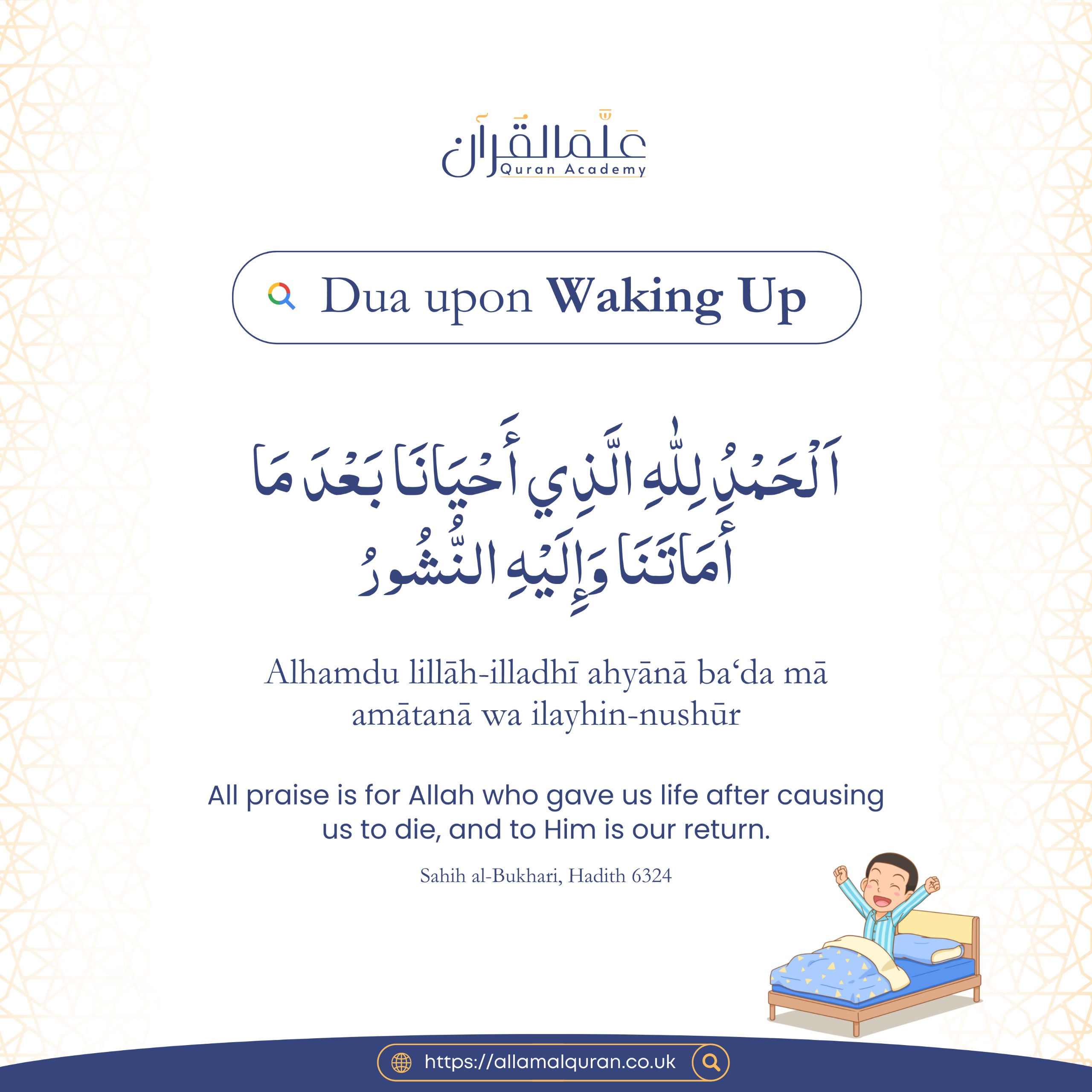
Dua Upon Waking Up
Starting Your Day with Gratitude and Remembrance of Allah
اَ لْحَمْدُ لِلّٰهِ الَّذِي أَحْيَانَا بَعْدَ مَا أَمَاتَنَا وَإِلَيْهِ النُّشُورُ
Alhamdu lillah-il-ladhi ahyana ba'da ma amatana wa ilayhin-nushur
"All praise is for Allah who gave us life after causing us to die, and to Him is our return."
Source: Sahih al-Bukhari, Hadith 6324
The Significance of the Morning Dua
The dua upon waking up is one of the most profound supplications in Islam, serving as a daily reminder of our ultimate purpose and dependence on Allah. This beautiful prayer acknowledges the miracle of life that Allah grants us each morning, recognizing that sleep is a minor form of death from which Allah resurrects us.
When we recite this dua immediately upon waking, we begin our day with gratitude, consciousness of Allah, and awareness of the Hereafter. This sets a spiritual tone for the entire day, aligning our intentions and actions with Islamic principles from the very first moments of consciousness.
Every morning is a new opportunity for forgiveness, blessings, and spiritual growth through remembrance of Allah.
Benefits of Reciting the Waking Dua
Spiritual Awareness
Begins the day with consciousness of Allah and gratitude for the gift of life
Protection Throughout the Day
Seeks Allah's protection and blessings for whatever the day may bring
Mindfulness of the Hereafter
Reminds us of death and resurrection, keeping worldly matters in perspective
Positive Start
Sets a positive, faith-centered tone for the entire day's activities
Common Questions About the Waking Dua
Parent: When exactly should we teach our children to recite this dua?
Teacher: Children should be taught this dua as soon as they can speak in complete sentences, typically around 3-4 years old. Start by reciting it for them when they wake up, then gradually encourage them to say it with you. Make it a natural part of their morning routine, just like brushing teeth or washing hands.
Parent: What if we forget to say the dua immediately upon waking?
Teacher: If you forget when first waking up, you can still recite it when you remember. The important thing is the intention and consistency. Allah is Most Merciful and understands our human limitations. The best practice is to try to make it your first conscious thought upon waking.
Parent: Should the dua be recited in Arabic only, or can we use translations?
Teacher: While reciting in Arabic is preferred as these are the exact words from the Hadith, understanding the meaning is crucial. Teach children both the Arabic pronunciation and the English meaning. For non-Arabic speakers, start with the translation to ensure they understand what they're saying, then gradually introduce the Arabic.
Parent: Are there other recommended morning supplications we should teach?
Teacher: Yes, there are several beautiful morning adhkar. After this waking dua, you can teach "Bismillah" before any action, the morning remembrance "Subhanallah wa bihamdihi" and specific duas for protection. However, focus on mastering this primary waking dua first before introducing additional ones to avoid overwhelming children.
Parent: How can we make this practice engaging for young children?
Teacher: Use creative methods like making a "Morning Dua Chart" with stickers for each day they remember, sing the dua melodiously, or create a simple story explaining how sleep is like a small death and waking up is like a mini-resurrection. Positive reinforcement and making it a joyful family activity works best.
How to Practice the Waking Dua
1
Immediate Recitation: Make this dua your first conscious thought upon waking, before checking your phone or engaging in other activities.
2
Understand the Meaning: Reflect on the profound meaning - acknowledging that Allah has returned your soul to your body after taking it during sleep.
3
Family Practice: Recite it together as a family, creating a beautiful spiritual routine that strengthens family bonds.
4
Consistent Reminder: Place gentle reminders near beds or use phone alarms until the practice becomes natural and automatic.
The Deeper Meaning Behind the Words
This dua contains profound theological wisdom. By describing sleep as "causing us to die" and waking as "giving us life," it reminds us of the greater reality: the temporary nature of this worldly life and the certainty of actual death and resurrection. Each morning becomes a rehearsal for the Day of Judgment.
The phrase "to Him is our return" reinforces tawhid (monotheism) and keeps our ultimate destination in mind. This daily reminder helps prioritize our actions throughout the day, encouraging us to make choices that please Allah and benefit our eternal life in the Hereafter.