
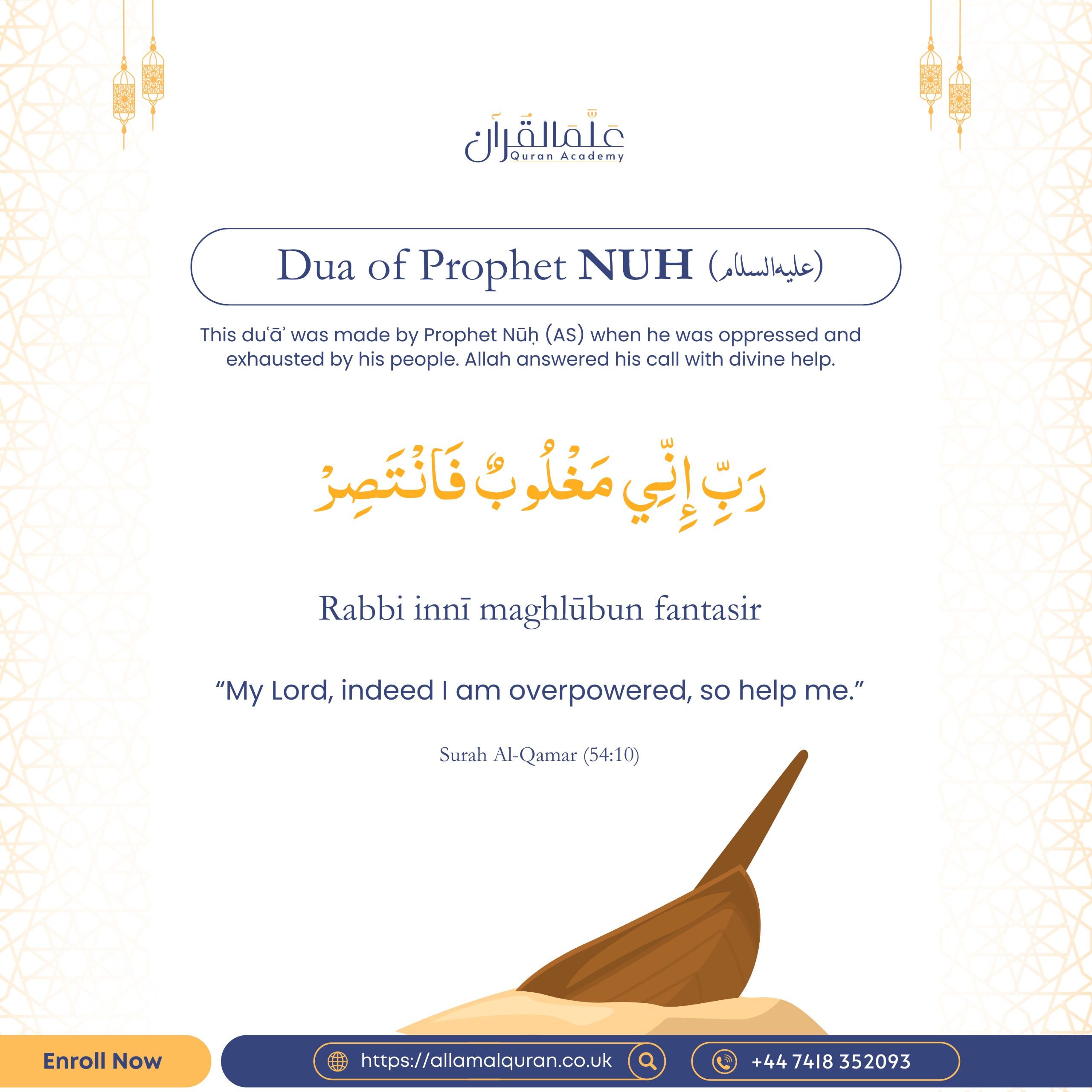
In the annals of prophetic history, the story of Prophet Nuh (AS) stands as a testament to unwavering patience, relentless dedication, and ultimate reliance upon Allah. After centuries of preaching to his people with minimal success, facing rejection, mockery, and oppression, Prophet Nuh (AS) turned to Allah with a powerful, concise supplication that encapsulates the essence of turning to God in times of overwhelming difficulty.
The Dua of Prophet Nuh (عليه السلام)
Historical Context and Significance
Prophet Nuh (AS) spent approximately 950 years calling his people to the worship of One God, facing relentless opposition and persecution. His people not only rejected his message but inflicted harm upon him and his followers. This dua represents the culmination of centuries of patience—a moment of complete surrender and acknowledgment of human limitation coupled with absolute trust in divine power.
The depth of this supplication lies in its simplicity and profound theological implications. By stating "I am overpowered", Prophet Nuh (AS) acknowledges his human limitations without despair. By immediately following with "so help me", he affirms that true strength and victory come only from Allah. This dua serves as a model for believers facing seemingly insurmountable challenges.
Spiritual Lessons from the Dua
This concise supplication teaches several crucial spiritual principles. First, it demonstrates the importance of honest acknowledgment before Allah—admitting one's weakness, vulnerability, and need. Second, it shows that turning to Allah should be the immediate response to feeling overwhelmed. Third, it illustrates that supplication need not be lengthy or elaborate to be effective; sincerity carries more weight than verbosity.
Moreover, the dua reflects the Islamic concept of tawakkul (reliance on God). Prophet Nuh (AS) did everything humanly possible for centuries before making this supplication. His dua represents the final, essential component of effort followed by trust in divine assistance. The subsequent divine response—the flood that cleansed the earth of corruption—demonstrates Allah's promise to aid those who sincerely seek His help.
Questions & Answers: Understanding the Dua
Key Spiritual Takeaways
- Authenticity in Supplication: Prophet Nuh's dua demonstrates that Allah values honesty about our limitations more than eloquent expressions of false strength.
- The Balance Between Effort and Reliance: Centuries of effort preceded this dua, teaching that we must exhaust human means before seeking divine intervention.
- Divine Response Timing: Allah's help came in a comprehensive, transformative manner—reminding believers that divine assistance may differ from human expectations in both form and timing.
- Universal Application: Despite originating in prophetic experience, the dua addresses fundamental human experiences of vulnerability applicable across times and cultures.
- Pedagogical Value: The simplicity of the dua makes it accessible while containing profound theological depth—a model for Islamic teaching methodology.
Contemporary Applications
In today's rapidly changing world, where individuals face unprecedented personal, professional, and societal pressures, the Dua of Prophet Nuh (AS) offers a spiritual anchor. Professionals feeling overwhelmed by workplace demands, students facing academic pressures, caregivers experiencing burnout, or activists confronting societal injustices—all can find resonance in this supplication. Its brevity makes it easily memorizable and recitable in moments of acute stress, serving as an immediate connection to divine support.
The dua also provides a framework for community response to collective challenges. When communities face natural disasters, social unrest, or existential threats, collective recitation and embodiment of this dua can foster unity, resilience, and constructive action grounded in spiritual consciousness rather than mere reaction.
Deepen Your Understanding of Quranic Supplications
Join our structured courses to explore the profound wisdom of prophetic supplications and their application in contemporary life. Our expert instructors provide historical, linguistic, and spiritual insights into Quranic teachings.
Enroll in Quranic Studies