
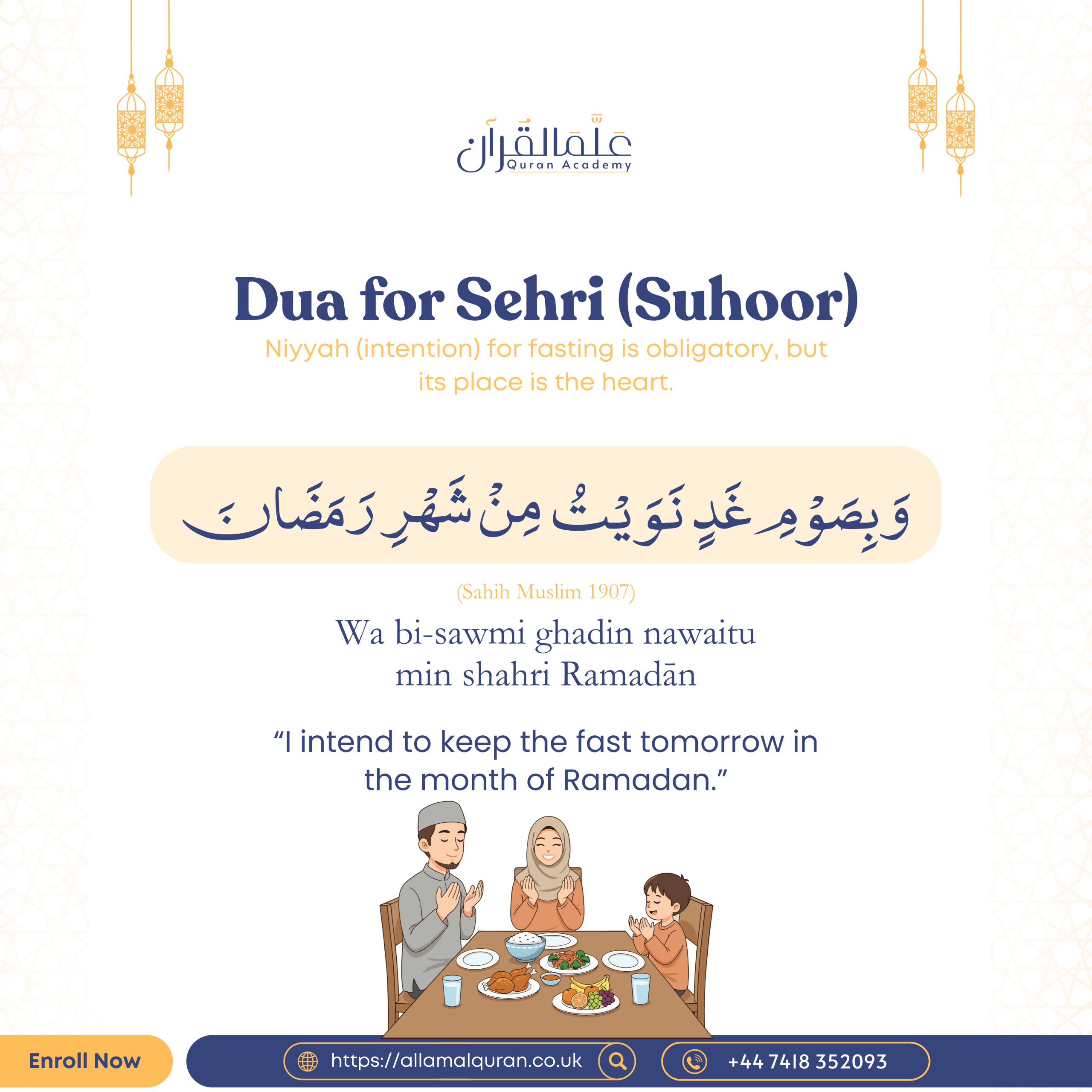
In Islamic tradition, the act of fasting during Ramadan encompasses both physical abstinence and spiritual elevation. While abstaining from food and drink from dawn to sunset is the outward manifestation, the inner dimension begins with the intention (niyyah) and supplication at Sehri time. The Prophet Muhammad (peace be upon him) emphasized the importance of this pre-dawn meal, calling it "the blessed meal" and encouraging its observance.
The dua for Sehri serves multiple purposes: it formally articulates the intention to fast, seeks Allah's acceptance of the fast, and invokes divine assistance in maintaining the physical and spiritual discipline required throughout the day. This supplication transforms an ordinary morning meal into an act of worship, connecting the believer's physical nourishment with spiritual sustenance.
Islamic scholars emphasize that the place of intention is the heart, as mentioned in Sahih Muslim (1907). While verbal articulation of the dua for Sehri is highly recommended and serves to reinforce and manifest the internal intention, the fundamental requirement is the sincere resolve within one's heart to fast for the sake of Allah. The verbal dua acts as both a confirmation of this inner state and a means of seeking divine assistance in fulfilling the commitment.
Note: The timing for reciting the Sehri dua extends from the moment one wakes for Suhoor until the beginning of Fajr (dawn) prayer. While it is ideal to recite it after completing the Sehri meal, it can be said at any point during the pre-dawn period. The essential requirement is that the intention is made before Fajr begins.
The collective recitation of this dua by millions of Muslims worldwide during Ramadan creates a powerful spiritual synchrony—a global community united in intention and devotion. This shared practice reinforces the sense of Ummah and mutual support during the month of fasting.
Teaching children the Sehri dua represents an important aspect of Islamic parenting during Ramadan. This practice accomplishes several educational objectives: it familiarizes them with essential Ramadan rituals, teaches them basic Arabic supplications, and instills the concept of setting spiritual intentions. For younger children, simplified versions or translations can be used initially, gradually introducing the complete Arabic text as they grow older.
Family recitation of the Sehri dua together creates lasting spiritual memories and strengthens familial bonds through shared worship. This collective practice transforms the pre-dawn meal from a solitary act into a communal family ritual that reinforces Islamic identity and values across generations.
The dua for Sehri serves as a spiritual bridge between the physical nourishment of Suhoor and the spiritual discipline of fasting. By consciously articulating this intention, Muslims worldwide commence each fasting day with purposeful devotion, transforming an entire month of abstinence into a continuous journey of spiritual elevation and divine connection.
This article provides educational information about Islamic practices. For specific religious rulings, please consult with qualified Islamic scholars.