
In Islamic tradition, supplication (dua) serves as a direct communication channel between the believer and Allah. Among the many profound prayers taught by the Prophet Muhammad (peace be upon him), the dua for Rizq (sustenance) and Knowledge holds special significance for Muslims seeking both material and spiritual prosperity. This comprehensive guide explores the depth, meaning, and application of this powerful supplication in daily life.
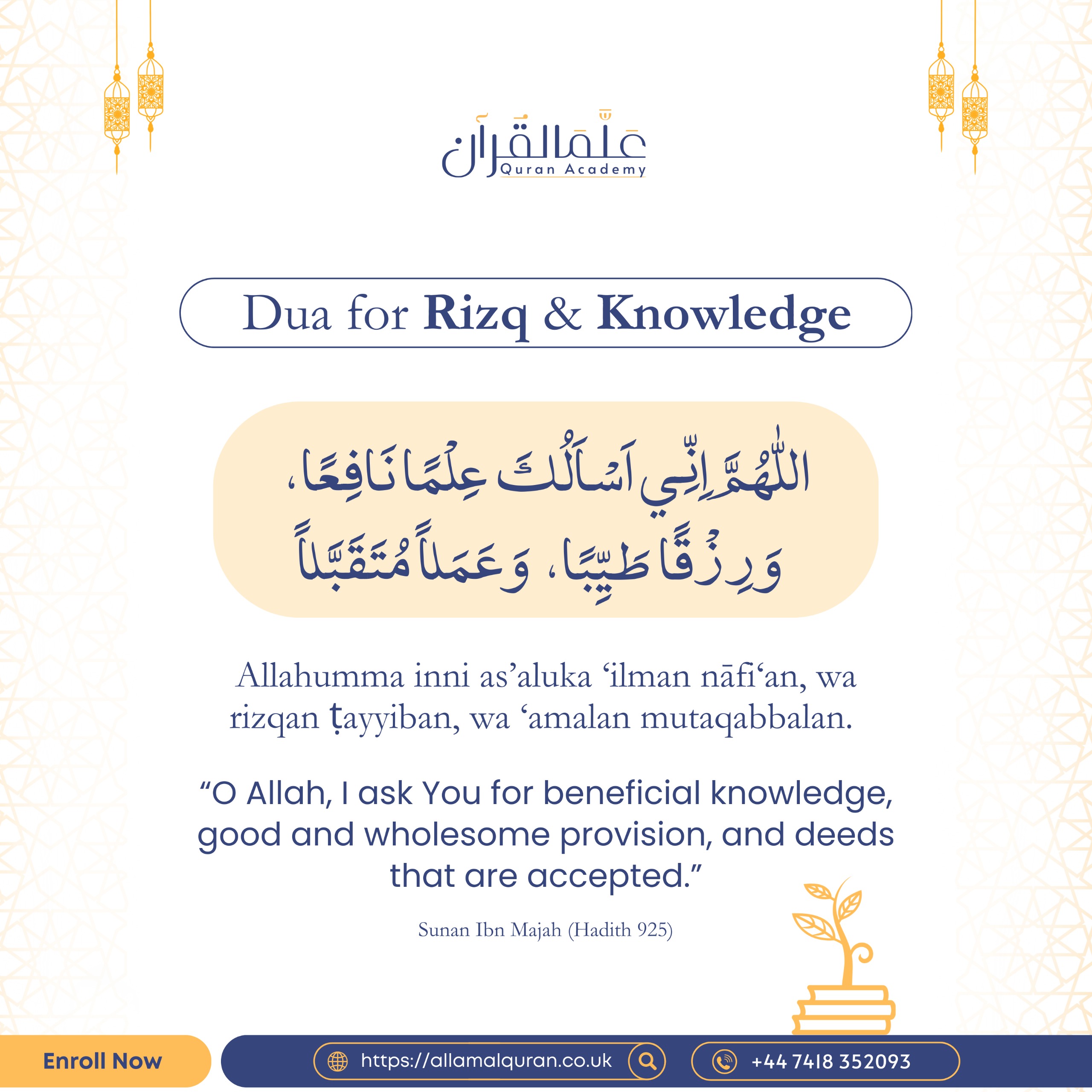
اللّٰهُمَّ اِنِّـي اَسْاَلُكَ عِلْمًا نَافِعًا، وَرِزْقًا طَيِّبًا، وَعَمَلاً مُتَقَبَّلاً
Allahumma inni as'aluka 'ilman nafi'an, wa rizqan tayyiban, wa 'amalan mutaqabbalan
"O Allah, I ask You for beneficial knowledge, good and wholesome provision, and deeds that are accepted."
Sunan Ibn Majah (Hadith 925)The prayer begins with a request for beneficial knowledge, emphasizing quality over quantity. In Islamic tradition, knowledge that doesn't benefit the individual or society is considered a burden. This component of the dua reminds believers to seek understanding that strengthens faith, improves character, and contributes positively to the community.
The request for "good provision" encompasses both material and spiritual sustenance. Rizq in Islam is not limited to financial wealth but includes health, time, relationships, and all forms of lawful blessings. The emphasis on "tayyib" (wholesome, pure) highlights the importance of seeking provision through halal (permissible) means that align with Islamic principles.
The concluding request focuses on the acceptance of deeds, recognizing that human efforts alone are insufficient without divine acceptance. This element instills humility and dependence on Allah while motivating believers to perform actions with sincerity (ikhlas) and in accordance with the Sunnah of the Prophet Muhammad (peace be upon him).
This dua integrates spiritual, intellectual, and material dimensions of success, providing a balanced framework for comprehensive personal development according to Islamic teachings.
Regular recitation reinforces the proper hierarchy of needs: beneficial knowledge first, then wholesome provision, followed by the hope for acceptance of deeds.
By specifically requesting "beneficial" knowledge, believers seek protection from information that may lead to confusion or deviation from correct Islamic understanding.
Teacher: Children can begin learning short duas as early as age 3-4 through repetition. For this specific dua, age 6-7 is ideal when they can comprehend the basic concepts of knowledge, provision, and good deeds. Make it part of their morning routine alongside other morning supplications.
Incorporate gentle explanations about each component: "We ask Allah for useful knowledge like what you learn at school, for good food and things we need, and for Allah to accept our good actions like sharing and helping others."
Teacher: Consistency is key in Islamic practices. Establish specific times for this dua: after Fajr prayer, before leaving for work/school, or during family gatherings. Create visual reminders around the home, perhaps with the Arabic text and translation artistically displayed.
Share stories of how the dua has impacted your life or historical examples from Islamic tradition. Most importantly, children learn through observation, so ensure they see you regularly reciting and valuing this supplication.
Teacher: This is an important understanding in Islamic spirituality. Remember that Allah's response to dua comes in three forms: immediate granting, delayed granting for a better time, or substitution with something better for the believer. Rizq (provision) encompasses much more than financial wealth - it includes health, peace of mind, family harmony, and spiritual contentment.
Additionally, duas are most effective when combined with appropriate action (asbab). While praying for beneficial knowledge, one must also attend classes and study. While praying for wholesome provision, one must work hard through lawful means. The dua is not a substitute for effort but a complement to it.
Teacher: Absolutely. This dua is particularly powerful for such situations because it addresses multiple dimensions simultaneously. Before an exam, you're asking for beneficial knowledge (the information you studied), good provision (the opportunity and means to take the exam), and accepted deeds (your effort and intention).
For job interviews, the same applies: knowledge to answer questions wisely, provision through the job opportunity, and acceptance of your efforts in the interview process. Teach children to recite it before tests and important activities, linking the dua's components to their immediate circumstances.
Join our comprehensive program on the Daily Duas and their practical applications in modern life. Learn the meanings, proper pronunciations, and implementation strategies for over 50 essential supplications from authentic Islamic sources.
Explore Islamic Learning ResourcesContact: +44 7418 352093
To fully benefit from this dua, integrate it into your daily routine with conscious reflection. Recite it each morning with presence of mind (hudur al-qalb), contemplating each of the three requests. Pair your supplication with concrete actions: seek beneficial knowledge through structured learning, pursue wholesome provision through ethical work, and perform deeds with sincerity and correctness.
The power of this supplication lies not only in its words but in the transformation it inspires within the believer. By regularly asking for beneficial knowledge, we become more discerning in what we learn. By requesting wholesome provision, we become more conscientious in our earning and spending. By praying for accepted deeds, we become more intentional in our actions.