
Connecting with Allah before resting your soul
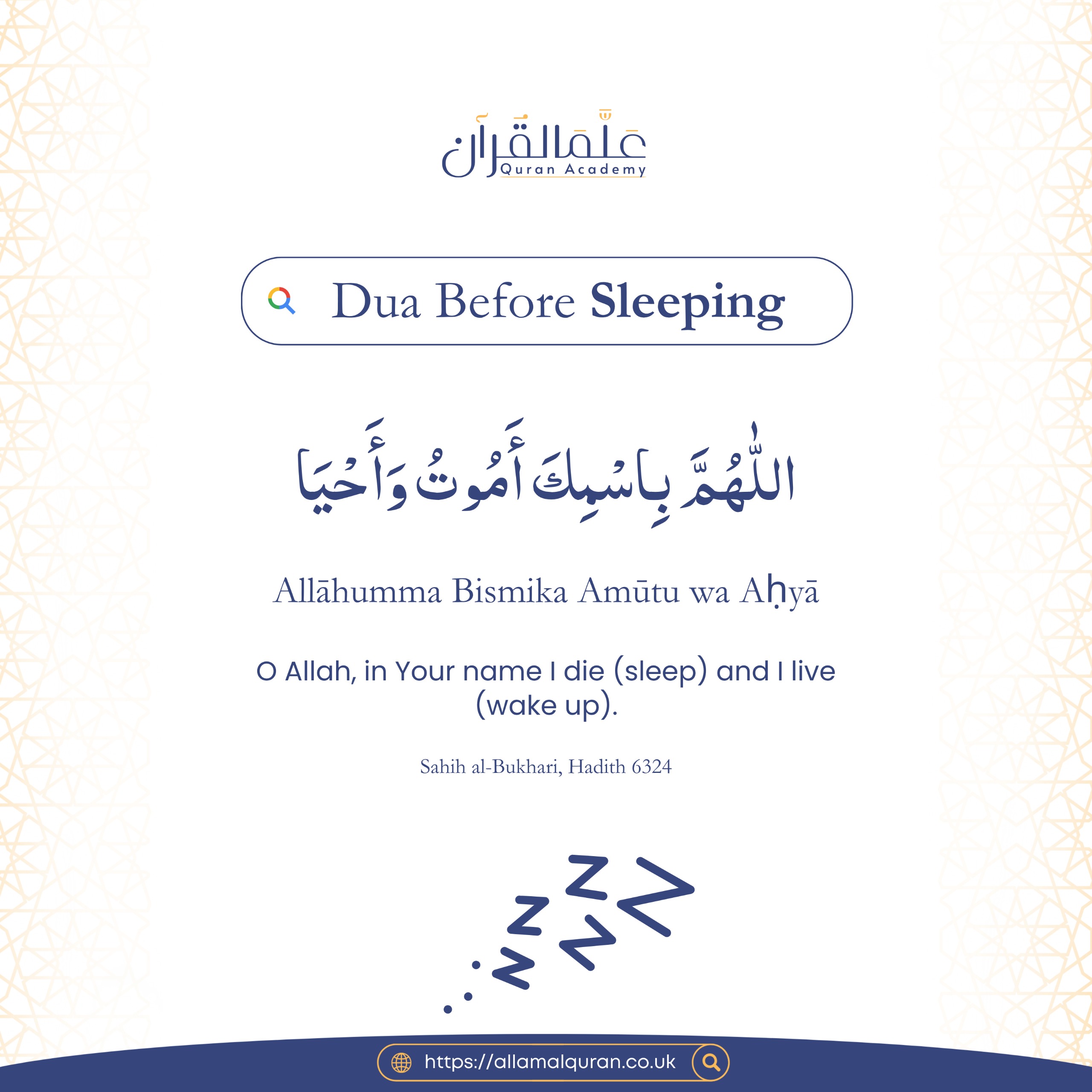
"Allahumma Bismika Amūtu wa Ahya" - "O Allah, in Your name I die (sleep) and I live (wake up)."
This powerful dua before sleeping acknowledges that our sleep is a minor form of death, and our awakening is a form of resurrection. By reciting this prayer, we place our trust in Allah's protection throughout the night and recognize His power over life and death.
This dua serves as a spiritual shield, seeking Allah's protection throughout the night when we are most vulnerable. It invites angels to watch over us and keeps harmful influences at bay.
By acknowledging that sleep is a form of death and awakening is a form of resurrection, this prayer reinforces our belief in the afterlife and Allah's ultimate power over life and death.
Reciting this dua with sincerity can help calm the mind and soul, leading to more restful and peaceful sleep. It reminds us that we are under divine care, alleviating anxiety and worry.
Making this dua a nightly habit ensures that the last words before sleep are remembrance of Allah, strengthening our connection with our Creator and ending the day on a spiritual note.
My child has trouble remembering the dua. What's the best way to teach it to them?
Answer from Teacher Aisha
Start by saying the dua together every night. Children learn through repetition and modeling. You can also create a visual aid with the Arabic text, transliteration, and translation. Make it part of a bedtime routine that includes other Islamic practices like reciting Ayat-ul-Kursi. Praise your child when they remember it on their own, and be patient - consistency is key.
Is there a specific time to recite this dua, or can we say it anytime before sleep?
Answer from Teacher Omar
The optimal time is right before you actually fall asleep, when you are in bed and ready to sleep. However, the most important aspect is consistency. If reciting it earlier in your bedtime routine helps you remember, that is better than not reciting it at all. The Prophet Muhammad (peace be upon him) taught us to remember Allah at all times, especially at transitional moments like entering and leaving the home, eating, and sleeping.
What if we don't know the proper Arabic pronunciation? Is the dua still accepted?
Answer from Teacher Fatima
Allah is Most Merciful and understands our intentions. If you are making a sincere effort to learn the correct pronunciation but struggle, your dua is still valid and accepted. However, we should strive to improve our recitation over time. Consider listening to audio recordings of the dua by qualified reciters and practice regularly. The effort itself is an act of worship.
Are there other duas or practices recommended before sleeping?
Answer from Teacher Ibrahim
Yes, there are several Sunnah practices before sleeping. These include reciting Ayat-ul-Kursi (Quran 2:255), the last two verses of Surah Al-Baqarah, Surah Al-Ikhlas, Al-Falaq, and An-Nas. You can also blow lightly into your hands after reciting the last three surahs and wipe them over your body. Dusting your bed with the edge of your garment three times while reciting Bismillah is also recommended. However, if you can only manage one dua, the one mentioned in this article is an excellent choice.
Children learn best by observing. Make sure you consistently recite the dua yourself every night.
Place beautiful Islamic art with the dua in bedrooms or common areas as gentle reminders.
Incorporate the dua into a consistent bedtime routine that includes other Islamic practices.
Help children understand the profound meaning behind the words to deepen their connection.
Reciting the dua before sleeping is a simple yet profound practice that connects us with our Creator at the vulnerable time of sleep. By making this a consistent habit, we not only seek Allah's protection but also strengthen our faith and remind ourselves of the temporary nature of this world and the permanence of the Hereafter. May Allah accept our efforts and grant us peaceful nights under His protection.