
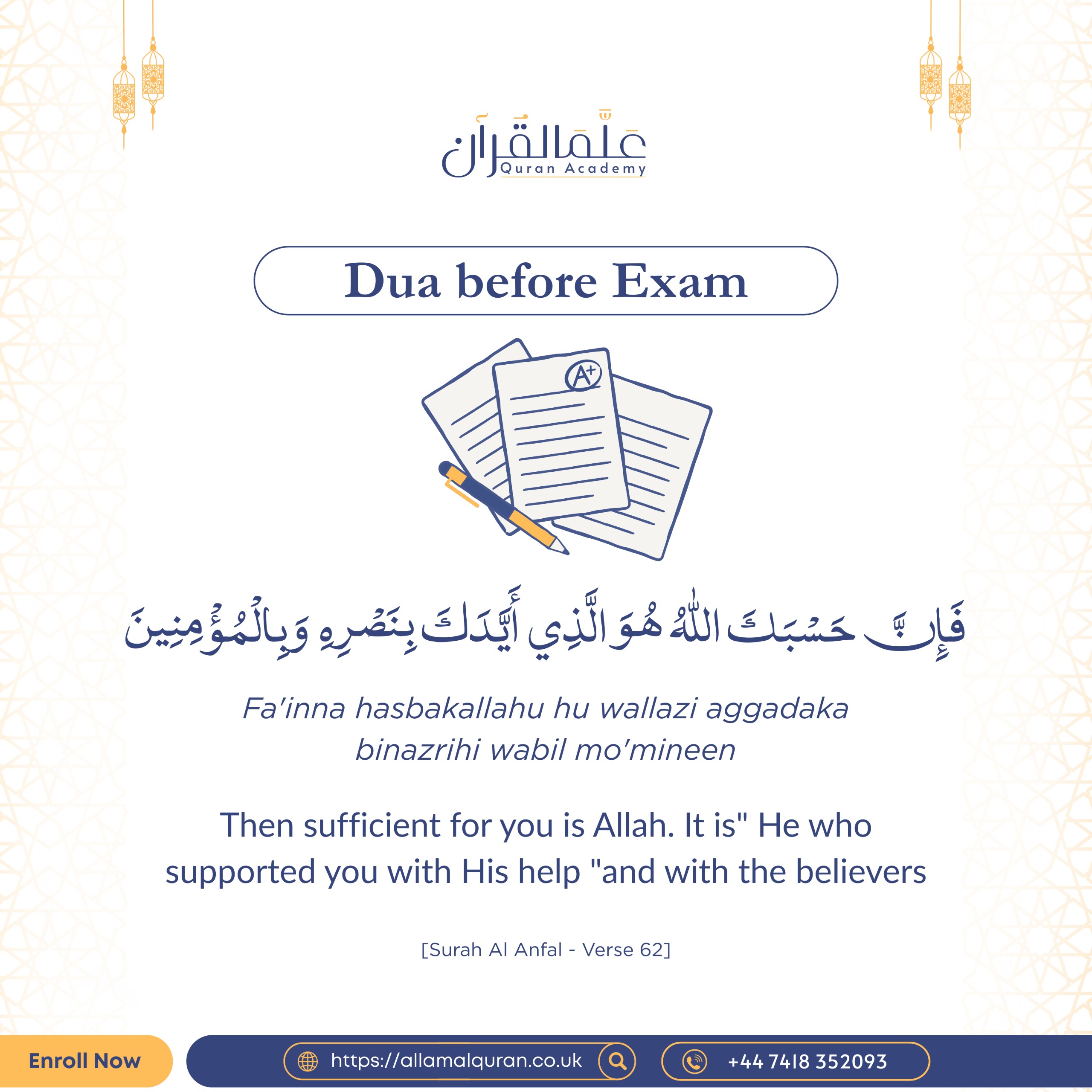
In the journey of education and academic pursuit, students face moments of anxiety, pressure, and uncertainty. The Dua before Exam serves as a powerful spiritual tool that connects the believer with Allah's infinite wisdom and support. This practice isn't merely a ritual; it's a profound psychological and spiritual preparation that aligns the heart and mind for success.
The verse from Surah Al-Anfal reminds us that Allah's sufficiency is all-encompassing. When students approach their examinations with this consciousness, they transform their perspective from one of mere academic testing to an opportunity for spiritual growth and trust in divine decree.
Modern educational psychology confirms what Islamic tradition has long understood: mindset matters. When students engage in dua before their examinations, they experience:
The act of making dua creates a cognitive shift where students acknowledge their effort while recognizing that ultimate outcomes rest with Allah. This balanced perspective prevents both arrogance in success and despair in perceived failure.
Teacher Response: Integrate dua naturally into the study routine. Suggest they begin each study session with a short dua for understanding, and end with a dua for retention. Make it a family practice where you share exam-related duas together. The key is consistency, not duration. Even a one-minute sincere connection with Allah before opening textbooks sets the right intention.
Parent Response: We emphasize that dua and effort are two wings of the same bird. I share the Prophetic example of tying one's camel AND trusting Allah. We create study plans that include specific times for both revision and spiritual preparation. When children see dua as PART of their preparation, not a replacement, they understand the holistic approach Islam teaches.
Teacher Response: Yes, several Prophetic supplications address anxiety. "Allahumma inni a'udhu bika minal-hammi wal-hazan" (O Allah, I seek refuge in You from worry and grief) is particularly beneficial. However, also teach them that the verse from Surah Al-Anfal you mentioned - "Then sufficient for you is Allah" - is a powerful reminder that Allah's support is complete. Practice deep breathing while reciting these phrases to combine spiritual and physiological calming techniques.
Educational institutions that respect religious diversity can incorporate moments of quiet reflection before examinations. This isn't about imposing religious practice but allowing space for spiritual preparation according to each student's beliefs. For Muslim students, this time can be used for personal dua, connecting them to the centuries-old tradition of seeking knowledge as an act of worship.
The digital age offers new opportunities too. Apps with exam duas, online study groups that begin with supplication, and virtual communities where students share spiritual encouragement all represent how this timeless practice adapts to contemporary educational environments.
Join our Quranic studies program to explore how Islamic principles enhance modern learning approaches. Our teachers combine traditional knowledge with contemporary educational methods.
Explore Our ProgramsTrue success in examinations - and in life - comes from balanced preparation. The Islamic model teaches us to:
When students internalize the message of "hasbakallahu" - Allah is sufficient for you - they carry into the examination hall not just knowledge, but peace, perspective, and profound trust. This transforms the exam experience from a stressful trial to a meaningful step in their educational and spiritual journey.