
A comprehensive guide to the remembrance of Allah and its transformative benefits in daily life
Dhikr, or the remembrance of Allah, is a fundamental practice in Islam that involves the repetition of specific phrases and prayers to maintain spiritual awareness. This daily practice serves as a constant connection between the believer and the Creator, offering peace, guidance, and spiritual nourishment. In this article, we explore four essential daily dhikr phrases, their meanings, benefits, and practical implementation in modern life.
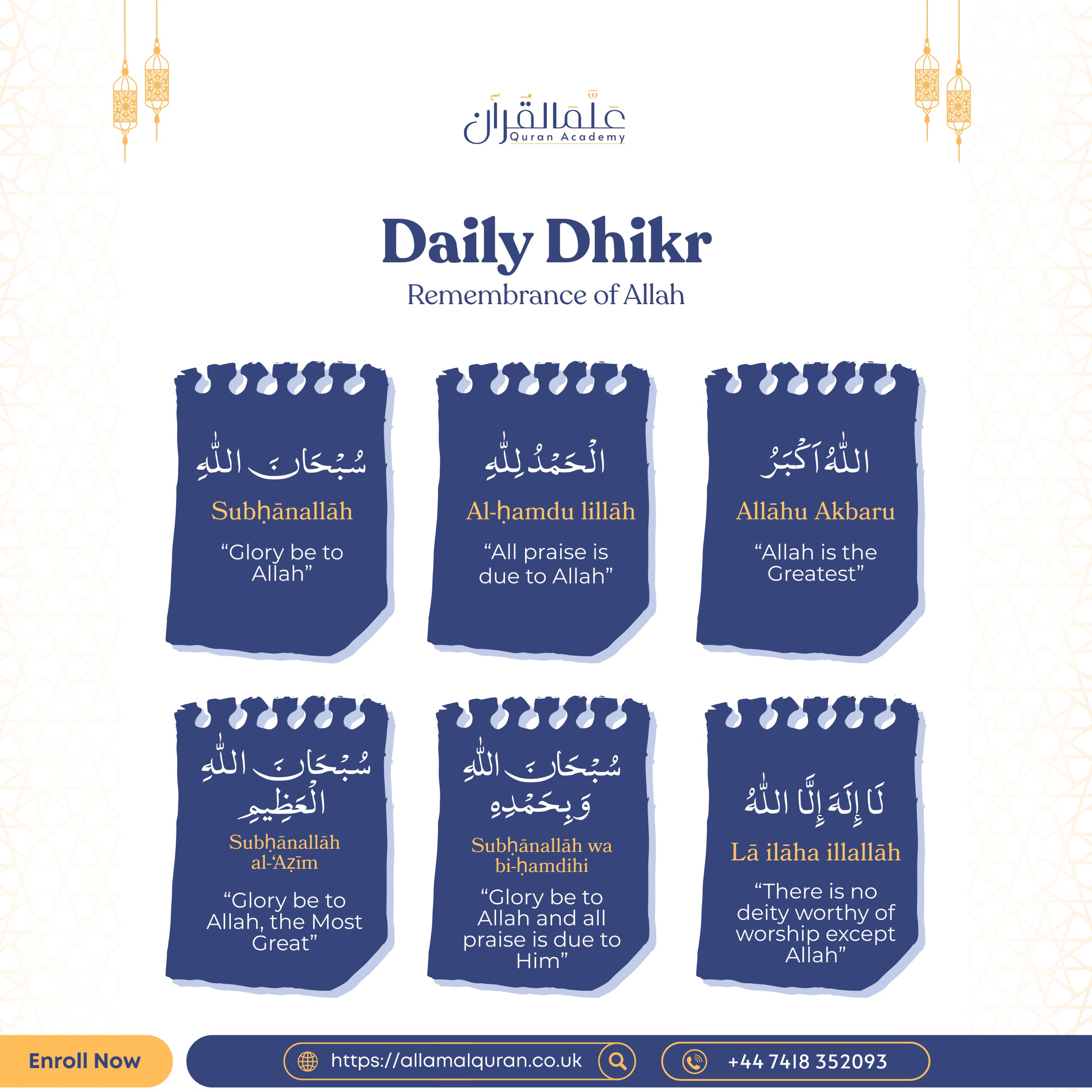
These four phrases form the foundation of daily remembrance in Islam. Incorporating them into your routine can transform your spiritual practice and bring you closer to Allah.
"All praise is due to Allah" - An expression of gratitude and acknowledgment that all praise belongs to Allah alone.
"Allah is the Greatest" - A declaration of Allah's supreme greatness above all creation.
"Glory be to Allah" - An expression of Allah's perfection and freedom from all deficiencies.
"There is no deity worthy of worship except Allah" - The fundamental declaration of Islamic faith (Tawheed).
Regular remembrance of Allah offers profound psychological, spiritual, and practical benefits that enhance every aspect of a believer's life.
Dhikr maintains and strengthens the bond between the believer and Allah, providing a constant source of spiritual nourishment and guidance throughout the day.
The repetition of sacred phrases has a calming effect on the heart and mind, reducing anxiety and stress while increasing contentment and peace.
Regular dhikr invites Allah's protection from harm and increases blessings in one's life, provision, and relationships.
Dhikr cleanses the heart from negative traits such as arrogance, envy, and greed, replacing them with gratitude, humility, and contentment.
Start by making dhikr a family activity. Set aside specific times, such as after prayers or before bedtime, for brief family dhikr sessions. Use visual aids like a "dhikr chart" where children can track their progress. Most importantly, lead by example - when children see parents consistently engaged in remembrance, they naturally want to participate. Keep it simple and positive, focusing on the love and connection with Allah rather than obligation.
While dhikr can be performed at any time, there are especially virtuous times: after obligatory prayers, during the last third of the night, at dawn, and before sleeping. However, the beauty of dhikr is its flexibility. You can remember Allah while commuting, during work breaks, while doing household chores, or whenever your heart feels the need for connection. Consistency matters more than specific timing - even a few minutes daily is better than occasional lengthy sessions.
Explain that repetition helps internalize meanings. Like physical exercise strengthens muscles through repetition, spiritual exercise strengthens the heart through consistent remembrance. Each repetition of "Alhamdulillah" deepens our gratitude. Each "Subhanallah" increases our awareness of Allah's perfection. The Prophet Muhammad (peace be upon him) repeated phrases hundreds of times, not out of ritual, but because each repetition brought him closer to Allah. Encourage children to think about the meaning as they recite.
Dhikr enhances focus and discipline - skills directly transferable to academic work. The calmness cultivated through regular remembrance reduces test anxiety and improves concentration. Socially, dhikr fosters empathy and patience, as remembering Allah increases awareness of His creation. Children who practice gratitude (through Alhamdulillah) show more positive social interactions. The self-regulation developed through this spiritual practice helps children navigate social challenges with wisdom beyond their years.
Start with just five minutes each day. Choose one phrase and reflect on its meaning as you repeat it. Notice the peace and clarity that enters your heart. Share this practice with family members and experience the spiritual transformation together.
Start Daily Dhikr Practice