
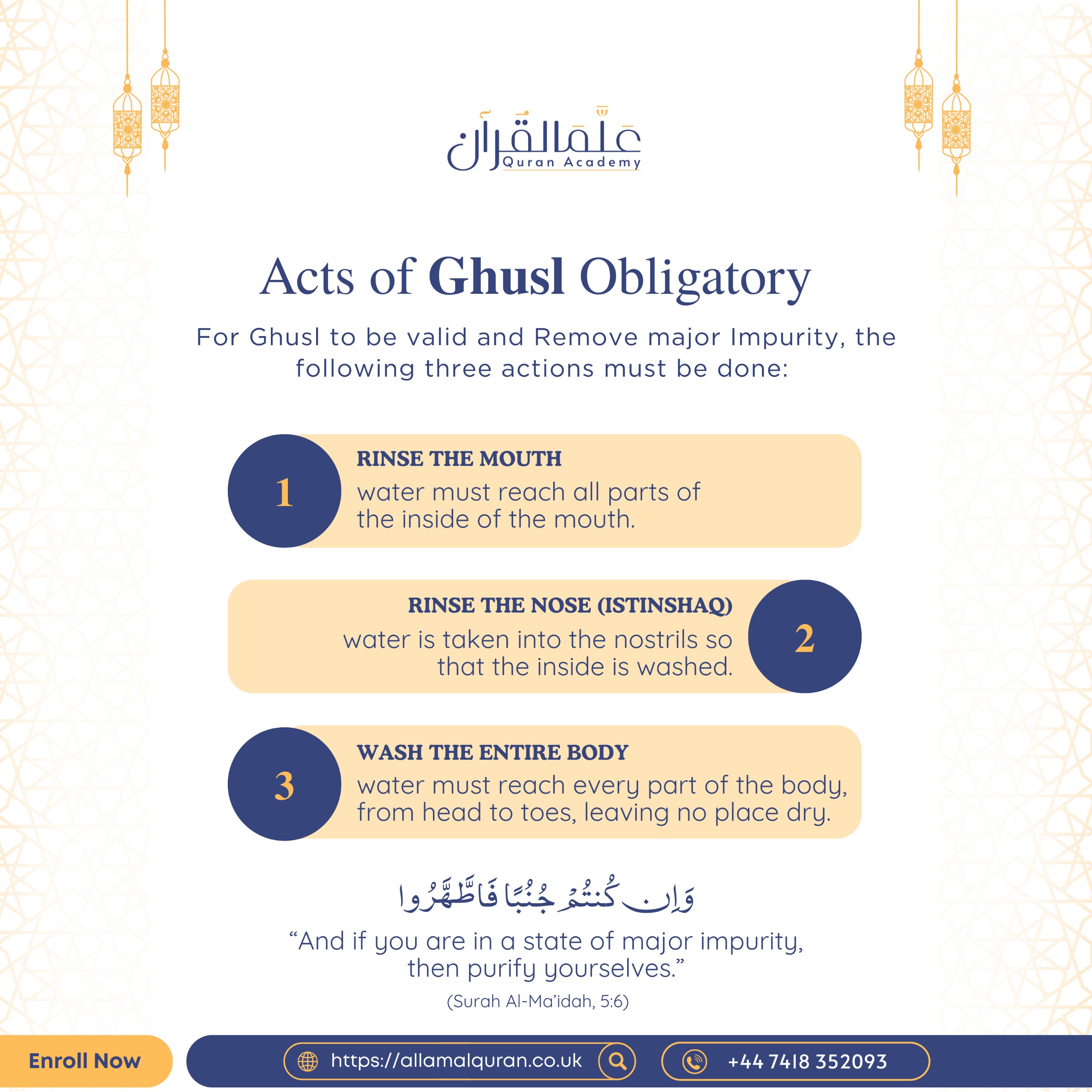
Understanding the three mandatory actions for valid ritual purification (Ghusl) in Islam, with detailed explanations and practical guidance.
Ghusl (ritual bath) is a fundamental act of purification in Islam required after major impurity (janabah) such as after marital relations, menstruation, or postpartum bleeding. For the ghusl to be valid and effectively remove the state of major impurity, three specific actions are obligatory (fard). These actions must be performed with intention and completeness, ensuring water reaches every required part of the body. This guide details these obligatory acts, their proper method, and addresses common questions.
Water must be taken into the mouth and swirled thoroughly so that it reaches all internal surfaces—the gums, roof, under the tongue, and between teeth. A simple sip is insufficient; intentional rinsing ensures complete coverage. For those with dental work, care must be taken to allow water to flow around any permanent fixtures.
Water must be inhaled into the nostrils deeply enough to cleanse the entire nasal cavity up to the nasal bridge (the bony part). This is followed by expelling the water (istinthar). This act purifies the respiratory passage involved in ritual purity. Those with health conditions requiring caution may use less water but must ensure the area is washed.
Every part of the body, from the hair roots to the soles of the feet, must be washed with water. This includes skin folds, behind ears, navel, and under nails. No part should remain dry. Hair must be thoroughly wet to the roots. For women, water must reach the base of braided or thick hair if it is not undoable without hardship.
This educational guide is based on classical Islamic jurisprudence. For specific personal situations, always consult a knowledgeable scholar. May Allah accept our acts of worship and purification.