
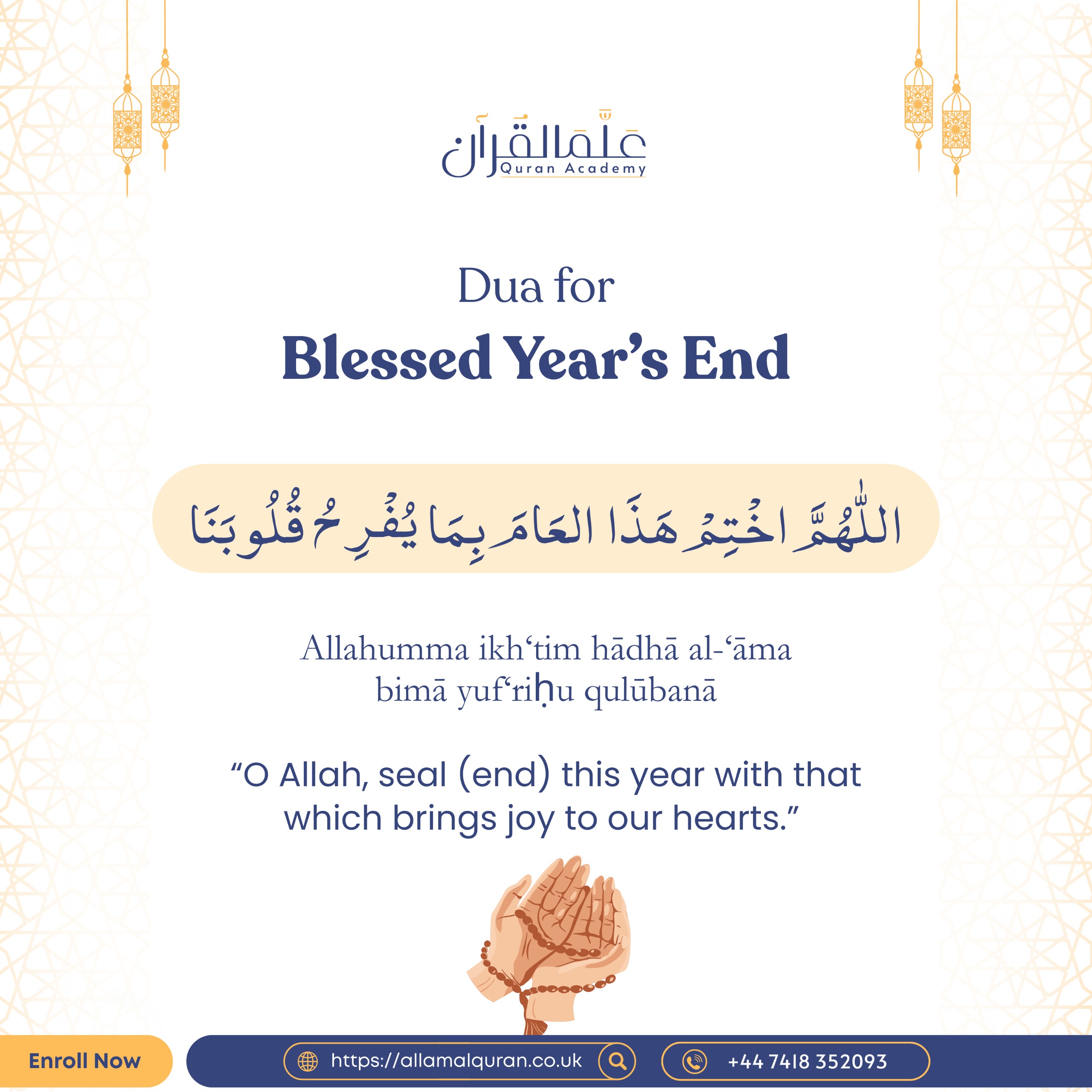
This supplication carries profound spiritual significance. The word "ikhtim" (seal) implies giving a final, defining character to something. By asking Allah to "seal" the year, we're requesting that the year's conclusion be marked with divine grace and blessings that overshadow any difficulties experienced throughout its months.
The phrase "bima yufrihu qulubana" (with that which brings joy to our hearts) recognizes that true contentment comes from Allah alone. It's not merely asking for material happiness but for spiritual relief, peace, and the kind of joy that settles in the heart regardless of external circumstances.
Primary Intent: Seeking divine closure to the year
Key Concept: Asking for heart-centered joy (farḥ)
Temporal Significance: Year-end transition period
Psychological Benefit: Emotional and spiritual closure
Theological Basis: Recognizing Allah as the source of all relief
While this specific wording isn't found in Hadith collections, the concept of making dua at transitional periods is deeply rooted in Islamic tradition. The Prophet Muhammad (peace be upon him) emphasized remembering Allah at all times, especially during significant moments like the changing of days, weeks, and years.
Islamic scholars note that such supplications align with the broader practice of seeking Allah's blessings at times of change and transition. The Quran repeatedly emphasizes turning to Allah in supplication: "And your Lord says, 'Call upon Me; I will respond to you.'" (Quran 40:60).
Teacher The year's end represents a natural milestone for reflection and transition. Islam encourages us to mark these transitions with remembrance of Allah. Making dua at this time helps us consciously acknowledge the passage of time as a blessing from Allah, reflect on our deeds throughout the year, and seek His mercy as we prepare for a new beginning. It's a practice that nurtures both gratitude and hope.
Teacher Start by explaining the meaning in simple terms - we're asking Allah to end our year with happiness. Create a family tradition around it, perhaps during the last family meal of the year. Write it on a beautiful card together, discuss what "joy in our hearts" means to each family member, and encourage children to think of one thing from the past year they're grateful for. Making it interactive and meaningful will help them internalize it.
Teacher Absolutely. While learning the Arabic wording is commendable and connects us to the tradition, Allah understands all languages. The essence of dua is the sincerity of the heart. You can certainly make this supplication in your native language. In fact, understanding what you're saying is crucial for presence of heart (khushu'). Start with what you know, and gradually learn the Arabic as you're able.
Teacher This dua complements resolutions but comes from a different orientation. Resolutions typically focus on what we will do differently. This dua acknowledges that true change and joy come from Allah's grace. It's a humble recognition that our efforts alone are insufficient without divine assistance. The dua sets the spiritual foundation, then resolutions can be our practical response to seeking that assistance through action.
Teacher While it's particularly meaningful at the year's end, the sentiment is timeless. You can adapt it for any transitional period - end of a month, completion of a project, or any significant closing in life. The core concept of asking Allah to seal any period with contentment is universally applicable. However, making it specifically at year's end connects you to a global moment of reflection shared by Muslims worldwide.
To fully benefit from this dua, consider these practices:
Join our structured courses to learn the meaning, context, and proper recitation of essential Islamic duas and prayers. Our qualified teachers provide both traditional knowledge and practical application for modern life.
Enroll NowContact: +44 7418 352093
The Dua for Blessed Year's End is more than just words recited at a particular time. It represents a holistic approach to time, transition, and spiritual growth. By asking Allah to seal our year with heart-centered joy, we acknowledge both our need for divine grace and our hope for continual spiritual improvement.
As you incorporate this dua into your year-end practices, remember that its power lies not in mere repetition but in the conscious connection it fosters between you and your Creator. May Allah accept our supplications and seal all our years with contentment, growth, and unwavering faith.