
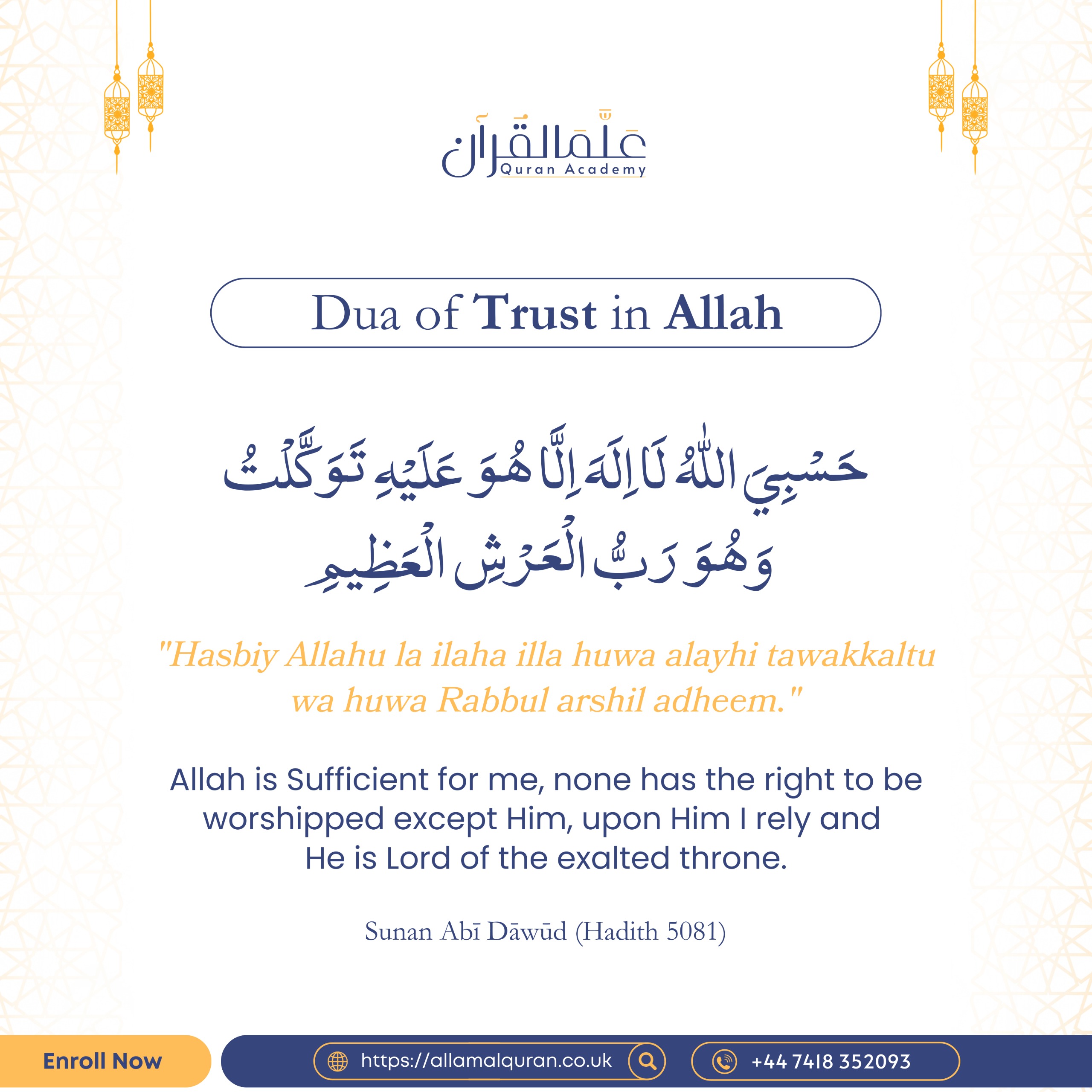
In times of difficulty, uncertainty, and need, Muslims turn to specific supplications taught by the Prophet Muhammad (peace be upon him) that encapsulate complete trust and reliance upon Allah. Among these powerful duas is the statement known as "Hasbiy Allahu la ilaha illa huwa" - a comprehensive declaration of faith and dependence.
This dua, found in Sunan Abī Dāwūd (Hadith 5081), serves as both a remembrance and a spiritual weapon for believers. It combines the affirmation of Allah's uniqueness with the practical application of tawakkul (reliance), creating a holistic approach to facing life's challenges.
Translation: "Allah is Sufficient for me, none has the right to be worshipped except Him, upon Him I rely and He is Lord of the exalted throne."
The Spiritual Significance of This Dua
This profound statement contains three essential components of faith:
- Hasbiy Allahu (Allah is Sufficient for me): A declaration that Allah alone is enough to handle all our affairs, protect us from harm, and provide for our needs.
- La ilaha illa huwa (None has the right to be worshipped except Him): The core testimony of Islamic monotheism (Tawhid), affirming Allah's exclusive right to worship.
- Alayhi tawakkaltu wa huwa Rabbul arshil adheem (Upon Him I rely and He is Lord of the exalted throne): The practical application of trust in the Lord of the greatest dominion.
When to Recite This Dua
The Prophet Muhammad (peace be upon him) taught this supplication as a comprehensive protection and source of strength. Scholars recommend its recitation:
- During moments of anxiety or distress
- When facing difficult decisions or challenges
- Morning and evening remembrance (adhkar)
- When feeling overwhelmed by worldly matters
- As protection against harm and evil
- When seeking Allah's assistance in important matters
Questions from Parents & Answers from Teachers
Important Note: While this dua is powerful, it should be accompanied by sincere faith and appropriate action. Tawakkul means taking the necessary means while trusting in Allah's decree, not passive inaction. The Prophet Muhammad (peace be upon him) exemplified this by taking all practical precautions while uttering such supplications.
Integrating the Dua into Daily Life
To make this dua a living part of your spiritual practice:
- Morning and Evening Routine: Recite it seven times each morning and evening, as some narrations suggest.
- Stress Response: Replace anxious thoughts with this dua whenever you feel worried.
- Teaching Moment: When children face challenges, remind them of "Hasbiy Allahu" as their spiritual tool.
- Visual Reminders: Place the dua in beautiful calligraphy in your home or workspace.
- Family Discussion: Share stories of how reliance on Allah brought peace during difficult times.