
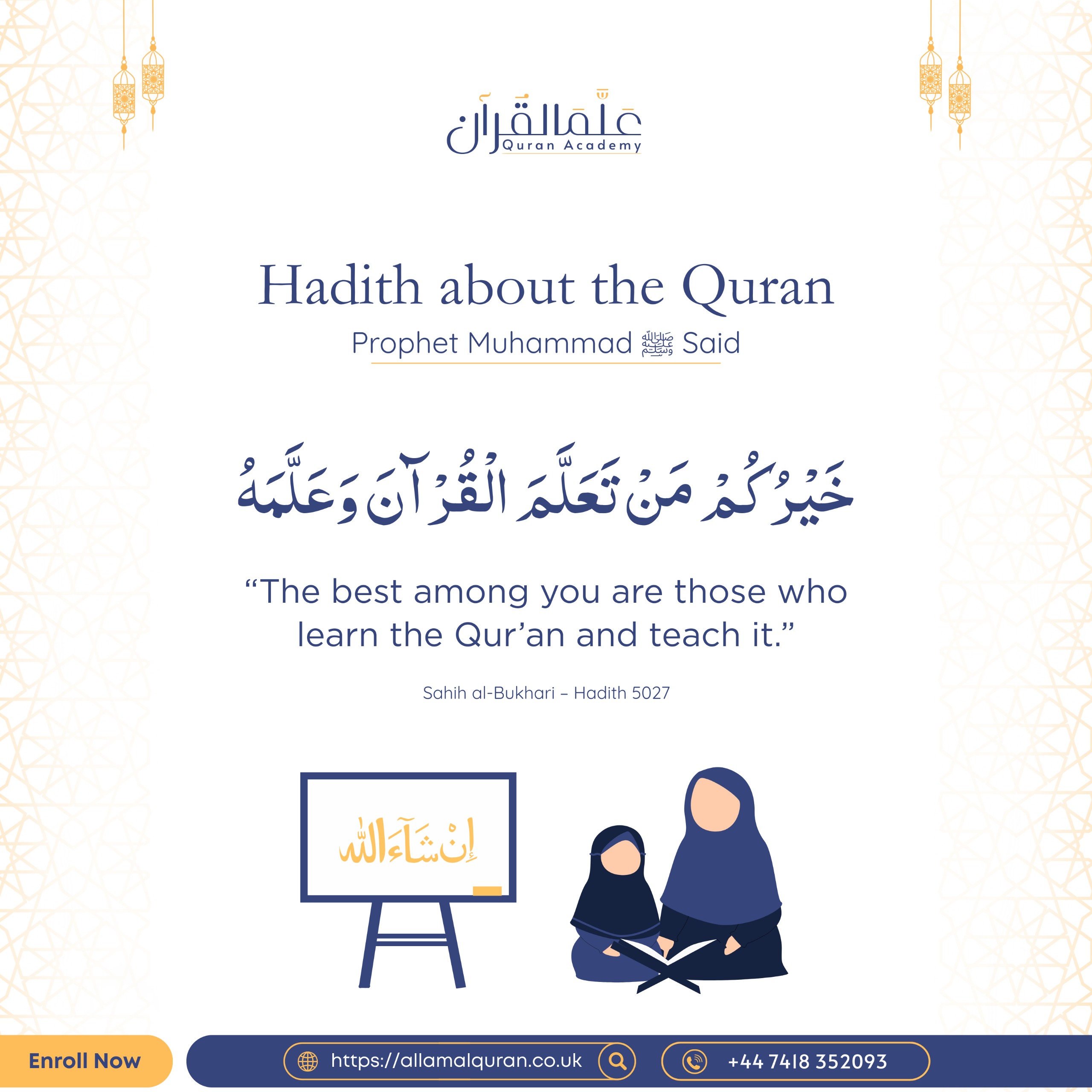
This profound statement from Prophet Muhammad (peace be upon him) establishes a foundational principle in Islamic education. It elevates the act of engaging with the Quran—both as a student and as a teacher—to the highest level of spiritual and social merit. The hadith does not merely praise recitation, but emphasizes a continuous cycle of acquisition and transmission of knowledge.
This teaching creates a community model where every Muslim is potentially both a learner and a teacher, breaking down hierarchies and fostering a culture of shared sacred knowledge.
In a world where knowledge is often pursued for worldly gain, this hadith reorients the objective. Learning the Quran is seeking closeness to Allah. Teaching it is an act of worship, charity (sadaqah), and a means of preserving the divine message for future generations.
How can Muslim families and communities embody this ideal today? It requires intentional effort and structure.
The "best" are not defined by wealth, status, or lineage, but by their relationship with the Book of Allah. This is a truly transformative and egalitarian Islamic value.
There is no specific "too young" age. The process begins with exposure and love. For infants and toddlers, this means playing Quran recitations softly in the home, especially during calm times. For ages 3-5, short, fun sessions involving memorizing simple surahs like Al-Fatihah, Al-Ikhlas, and Al-Falaq are ideal. The key is association: the Quran should be associated with love, attention, and positive reinforcement from the very beginning. Formal, structured learning with correct tajweed can gradually increase around age 6 or 7, depending on the child's readiness.
– Answered by Ustadha Amina, Early Childhood Islamic EducatorYour role is crucial and multifaceted. You may not teach the Arabic pronunciation directly, but you are the primary teacher of its meaning, value, and application. You teach by:
While knowledge of tajweed and memorization is technically essential, the most important quality is compassionate character (khuluq). The Prophet (peace be upon him) was described as a "walking Quran." A teacher must embody the manners of the Quran—patience, humility, gentleness, and sincerity. A student who loves their teacher will love what they teach. A harsh teacher can push a child away from the Quran for a lifetime. The teacher is not just transmitting sounds, but shaping a heart's relationship with the Word of Allah. Seek teachers who are known for their good character as much as their technical proficiency.
– Answered by Dr. Hassan, Director of Islamic Studies InstituteHave questions about Quran learning for yourself or your child? Our educators are here to guide you.
We typically respond within 24-48 hours. For urgent matters.
May Allah facilitate your journey of learning and teaching the Quran.
This article is based on the authentic hadith from Sahih al-Bukhari. It is intended for educational purposes to inspire reflection and positive action in Quranic education. May Allah make us among those who learn His Book and teach it.