
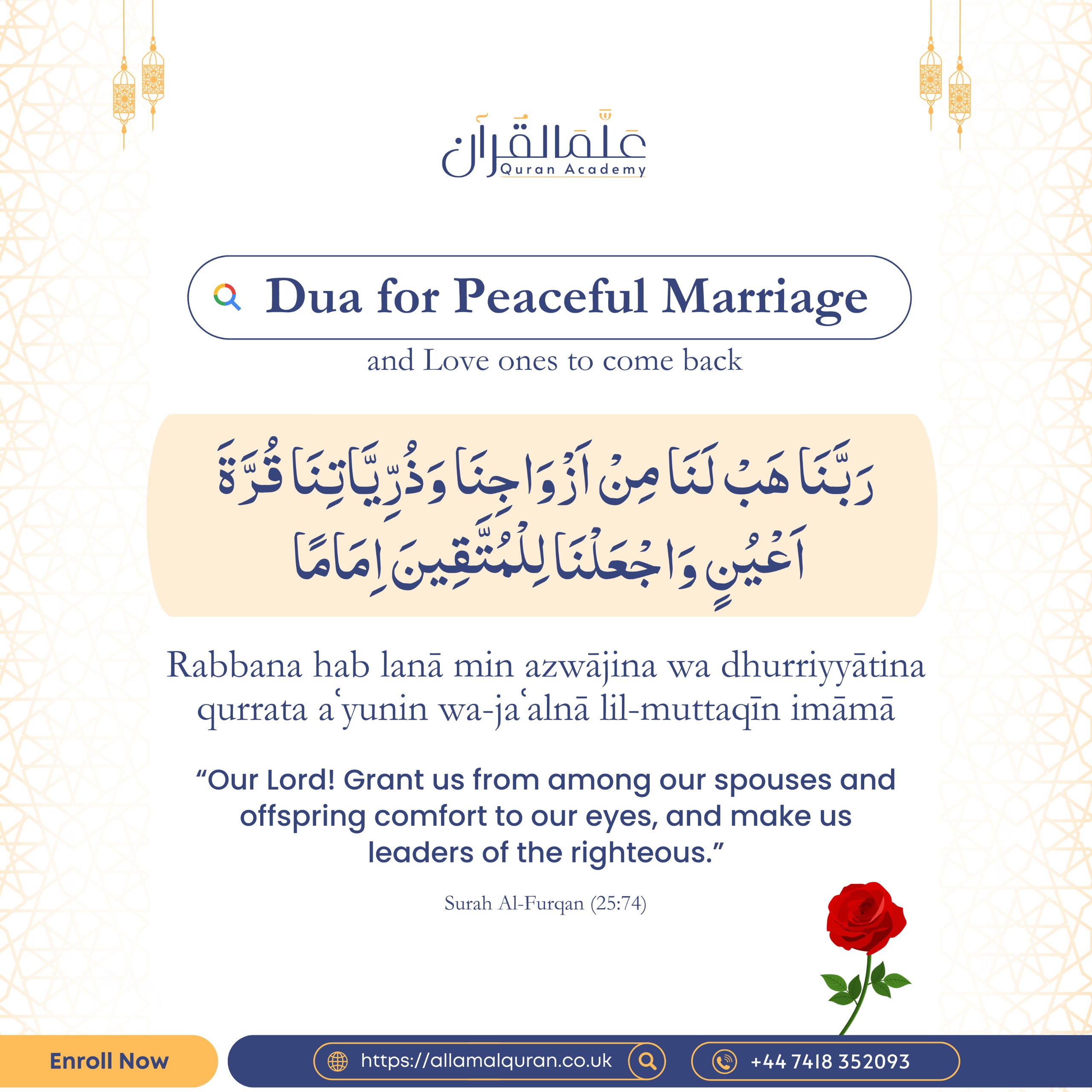
Exploring Surah Al-Furqan (25:74) and its profound application in modern life for nurturing relationships and inviting divine blessings into our homes.
In today's fast-paced world, maintaining peaceful marital relationships and harmonious family connections can be challenging. Many individuals seek spiritual guidance and divine intervention to heal rifts, restore love, and build households that are pleasing to both the heart and the soul. Islam offers profound supplications and verses that serve as spiritual anchors during such times, providing comfort, direction, and hope.
One of the most comprehensive and powerful prayers for family well-being is found in the Holy Quran, in Surah Al-Furqan. This verse is not merely a collection of words but a divine formula for achieving tranquility in our most important relationships.
This beautiful dua encompasses multiple dimensions of human aspiration: seeking joy in one's spouse and children, desiring righteous progeny, and asking for the honor of being exemplary in piety. It connects personal family happiness with broader spiritual leadership, recognizing that true peace at home forms the foundation for positive influence in the wider community.
The concept of "qurrata a'yun" (comfort to the eyes) is particularly profound. It refers to that deep, soul-satisfying joy and tranquility one experiences when looking at their loved ones—a joy that is peaceful, constant, and rooted in shared faith and righteousness, not merely superficial happiness.
Reciting this dua is more than a ritual; it is an act of conscious intention-setting before the Almighty. When we ask for our spouses and children to be the "coolness of our eyes," we are asking for relationships characterized by mutual respect, understanding, patience, and shared spiritual growth. We are asking for protection from the discord, neglect, and alienation that can sometimes seep into family life.
For those yearning for reconciliation with loved ones—whether a spouse, child, or other family member—this dua serves as a powerful spiritual tool. It is a means of entrusting our deepest relational desires to Allah's wisdom and mercy, while also committing ourselves to the behaviors and attitudes that foster harmony.
The second part of the supplication—"make us leaders of the righteous"—elevates the request. It acknowledges that a peaceful family is not an end in itself but a means to become better Muslims, better community members, and examples for others. A harmonious household becomes a miniature model of a righteous society.
Answer from Sheikh Ahmed: Absolutely. The phrase "dhurriyyatina" encompasses all our offspring, including adult children. When you make this dua, be sincere in your heart for their well-being, not just your comfort. Ask Allah to soften both your hearts, to grant you patience and wisdom in speech, and to restore love and respect. Combine this dua with proactive steps: reach out with kindness, listen more than you speak, and seek common ground. Remember, Allah responds to the sincere caller, but He also expects us to make the necessary worldly efforts (asbab).
Answer from Ustadha Maryam: Consistency is key in supplication. Make it a part of your daily dhikr, perhaps after your five daily prayers. The last third of the night, during tahajjud, is a specially blessed time when duas are readily accepted, as mentioned in numerous hadiths. However, do not underestimate the power of sincere dua at any moment. As you recite it, visualize the peace and understanding you desire. Furthermore, ensure your actions align with your prayer. The dua asks for your spouse to be the coolness of your eyes—strive yourself to be a source of comfort and peace for them. Work on your own character, and trust in Allah's timing and plan.
Answer from Imam Khalid: Yes, the wording "min azwajina" (from our spouses) is beautifully inclusive. It can be recited by those seeking marriage, asking Allah to grant them a spouse who will indeed be a source of joy and a partner in righteousness. It is a proactive and spiritual approach to marriage, setting the intention from the outset for a union based on faith and mutual tranquility, not just worldly compatibility. Combine this dua with the well-known dua for marriage from Surah Al-Furqan (25:74) and other Prophetic supplications for a righteous partner.
If you are seeking deeper understanding of this powerful supplication, wish to learn more about incorporating Islamic principles into your family life, or need spiritual counsel, do not hesitate to reach out. Our scholars and counselors are here to provide guidance based on the Quran and Sunnah.
Connect with us for personalized spiritual advice and resources to strengthen your familial bonds through faith.
Explore Spiritual ResourcesPhone: +44 7418 352093
To truly benefit from Surah Al-Furqan (25:74), make it a living part of your daily routine. Here is a practical approach:
This dua from the Quran is a timeless gift from the Creator, who understands the intricacies of human relationships better than anyone. By turning to Him with this sincere supplication, you are not merely reciting words; you are aligning your heart's deepest desires for love and peace with the ultimate source of all love and peace.
© 2023 Spiritual Family Guidance. This article is for educational purposes based on Islamic scripture. For specific personal situations, please consult with a qualified Islamic scholar.
Reference: Surah Al-Furqan (25:74), The Holy Quran.