
Understanding the sacred scriptures sent by Allah to guide humanity through different eras and prophets
Islamic tradition teaches that Allah sent guidance to humanity through various prophets, each accompanied by revelations suited to their time and people. These scriptures form a continuous chain of divine wisdom, culminating in the final revelation.
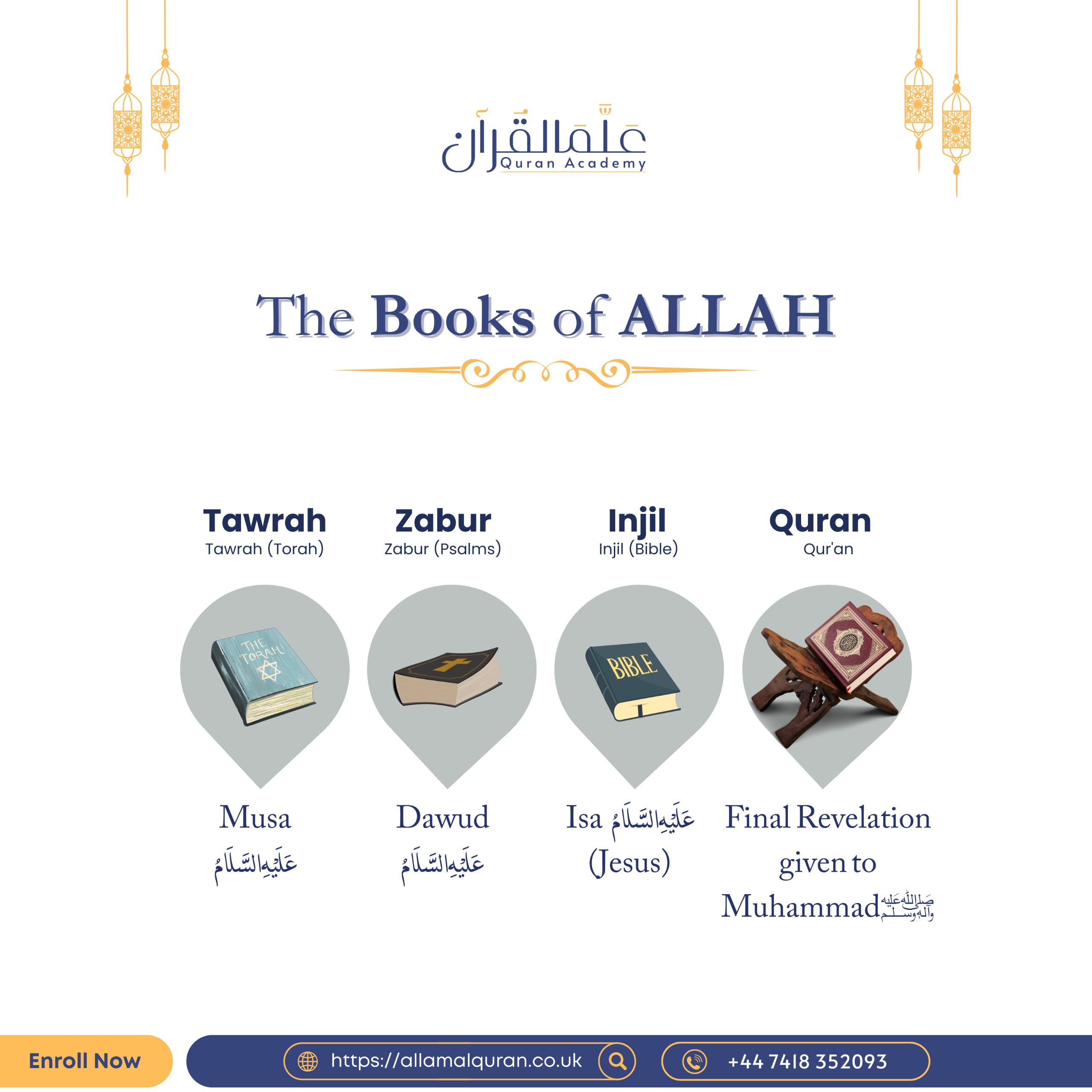
Revealed to Prophet Musa (Moses), the Tawrah contained guidance, laws, and commandments for the Children of Israel. It established foundational monotheistic principles and legal frameworks that would influence subsequent Abrahamic traditions.
Given to Prophet Dawud (David), the Zabur consisted primarily of hymns, prayers, and spiritual poetry. Unlike legal codes, it focused on worship, reflection, and the relationship between the Creator and creation through poetic expression.
Bestowed upon Prophet Isa (Jesus), the Injil emphasized spiritual teachings, ethical principles, and the continuity of Allah's message. It reinforced earlier revelations while introducing teachings specific to its historical context.
The final and preserved revelation sent to Prophet Muhammad (PBUH). The Quran confirms previous scriptures, corrects alterations that occurred over time, and provides complete guidance for all humanity until the end of time.
The Quran represents the culmination of divine communication. Revealed over 23 years to Prophet Muhammad (PBUH), it addresses spiritual, social, legal, and ethical dimensions of human existence. Its preservation through memorization and written records is considered miraculous, ensuring its message remains unchanged for over fourteen centuries.
Join our comprehensive courses to study the books of Allah, their historical context, and their relevance to contemporary life. Learn from qualified scholars in structured, accessible programs.
Enroll Now for Quranic StudiesHave questions? Contact us: +44 7418 352093