
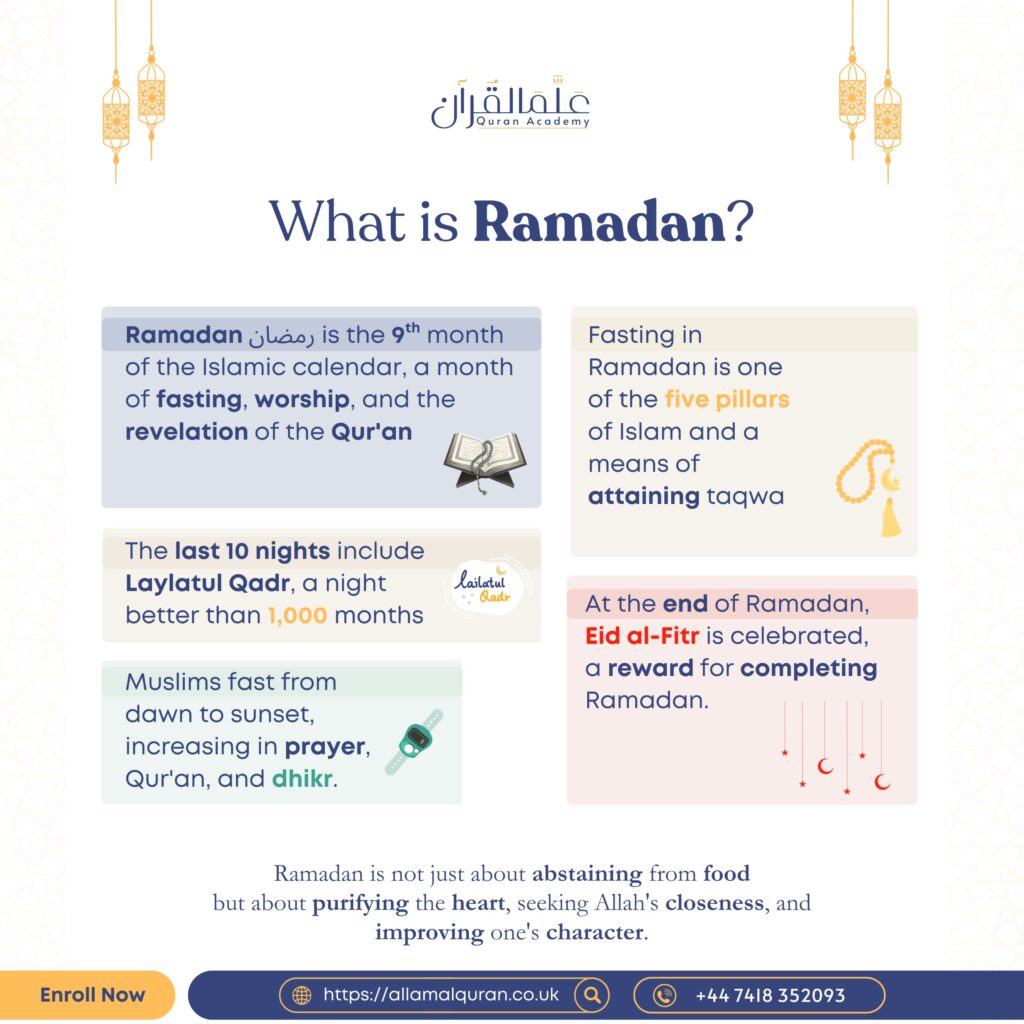
Ramadan is the ninth month of the Islamic calendar, observed by Muslims worldwide as a month of fasting, prayer, reflection, and community. It commemorates the first revelation of the Qur'an to Prophet Muhammad according to Islamic belief. This annual observance is regarded as one of the Five Pillars of Islam and lasts between 29 and 30 days, from one sighting of the crescent moon to the next.
Ramadan is not merely about abstaining from food and drink from dawn until sunset. It is a holistic spiritual journey that encompasses self-discipline, increased devotion, charity, and moral refinement. The Arabic word for fasting, "sawm," literally means "to refrain," and this refraining extends beyond consumption to include negative thoughts, harmful behaviors, and improper speech.
Declaration of faith
Prayer five times daily
Almsgiving to the needy
Fasting during Ramadan
Pilgrimage to Mecca
Muslims abstain from food, drink, smoking, and marital relations from dawn (Fajr) until sunset (Maghrib). The pre-dawn meal is called Suhoor, and the meal to break the fast is called Iftar.
Ramadan is the month in which the Qur'an was revealed. Muslims strive to read the entire Qur'an during this month, often completing one-thirtieth each day.
Falling within the last ten nights of Ramadan, this night is described in the Qur'an as "better than a thousand months." Muslims intensify worship during these nights seeking spiritual rewards.
Special nightly prayers called Tarawih are performed in congregation at mosques throughout Ramadan, with the complete Qur'an often recited over the month.
Fasting serves multiple purposes in Islam: it develops self-restraint, increases God-consciousness (taqwa), fosters empathy for the less fortunate, purifies the soul, and promotes spiritual growth. It is an act of worship that brings Muslims closer to Allah while developing discipline in all aspects of life.
Fasting is obligatory for all adult Muslims who are physically and mentally capable. Exemptions include children who haven't reached puberty, the elderly, those who are ill, pregnant or nursing women, travelers, and women during menstruation. Those with temporary exemptions are expected to make up missed fasts later.
Ramadan begins with the sighting of the new crescent moon, marking the start of the ninth month in the Islamic lunar calendar. Because the lunar year is approximately 11 days shorter than the solar year, Ramadan moves earlier each Gregorian year. Islamic scholars and moon-sighting committees announce the beginning and end of Ramadan based on lunar observations.
Eid al-Fitr (Festival of Breaking the Fast) marks the end of Ramadan. It begins with a special congregational prayer, followed by celebrations that include feasting, giving gifts (especially to children), wearing new clothes, and visiting family and friends. Muslims also give Zakat al-Fitr (charity) before the Eid prayer to ensure everyone can participate in the celebrations.
For educators and parents: Ramadan provides an excellent opportunity to teach children about religious diversity, self-discipline, empathy for those less fortunate, and cultural traditions. Many schools incorporate lessons about Ramadan to promote understanding and respect among students of different backgrounds.
The final ten nights of Ramadan hold special significance, with Muslims increasing their worship in search of Laylat al-Qadr (the Night of Power). This night, described in the Qur'an as "better than a thousand months," commemorates the night when the first verses of the Qur'an were revealed to Prophet Muhammad. While its exact date is not specified, it is commonly believed to fall on one of the odd-numbered nights during the last ten days of Ramadan (21st, 23rd, 25th, 27th, or 29th).