
Elevating the Quality of Your Prayer Through Intention, Understanding, and Presence
Salah represents the fundamental connection between a believer and Allah. It is not merely a ritual but a spiritual conversation that requires presence of heart, mind, and body. Improving your Salah transforms it from an obligation into a transformative experience that nourishes your soul and strengthens your faith.
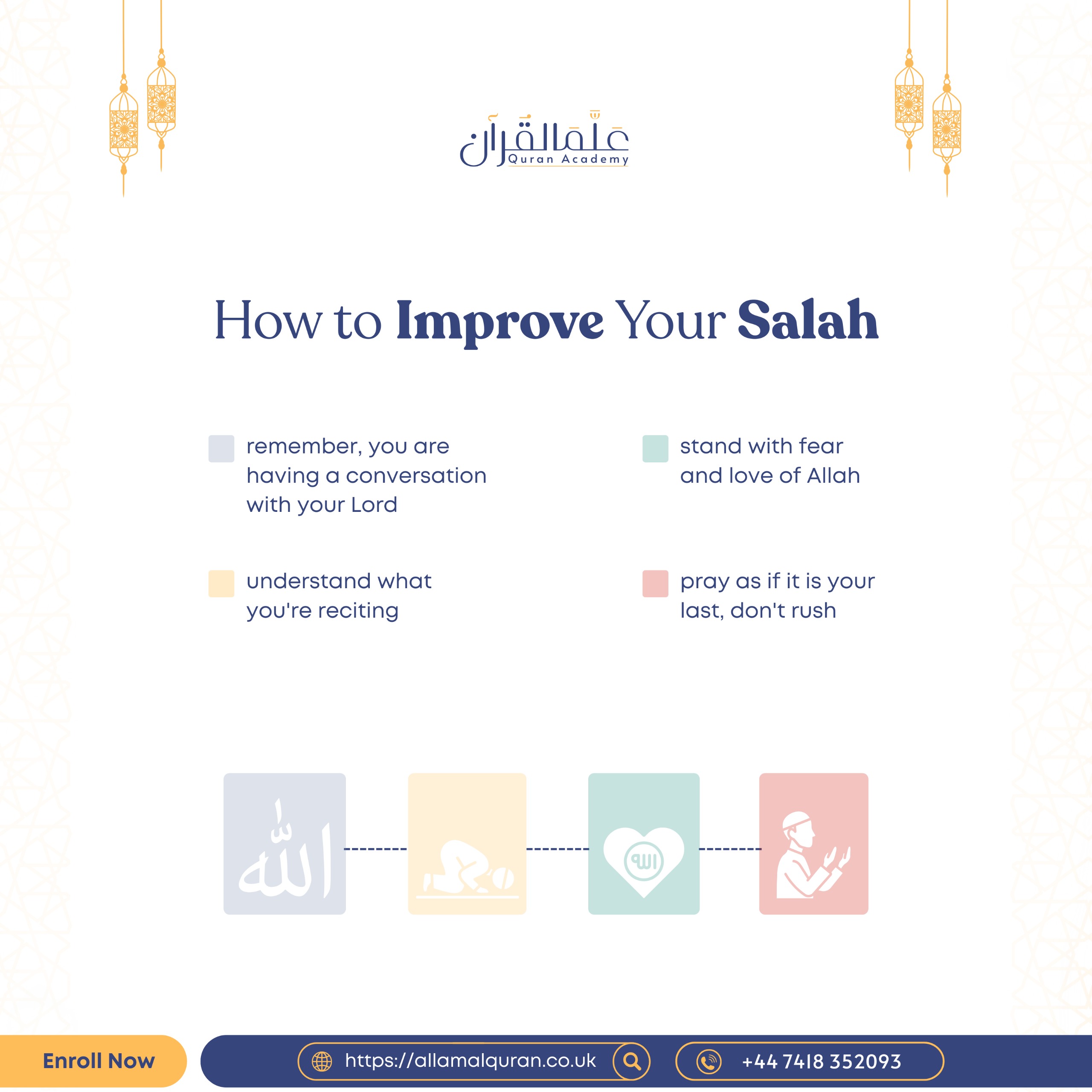
Approach Salah as a direct dialogue with Allah. This mental framework transforms each movement and recitation from ritual to communication. Remember that you are standing before the Creator of the universe—approach with both reverence and intimacy.
Balance khushoo' (devotion) with both awe and affection. The fear of Allah stems from recognizing His majesty, while love emerges from gratitude for His endless blessings. This emotional duality creates profound engagement in prayer.
Comprehension transforms recitation from phonetics to communication. Learn the meaning of Surah Al-Fatihah and the supplications you recite. Understanding cultivates deeper connection and prevents mechanical repetition.
This prophetic advice eliminates rushing and cultivates presence. Each Salah could be your final opportunity to stand before Allah—this consciousness dramatically improves focus, humility, and sincerity.
Transforming theoretical understanding into consistent practice requires systematic approach. Implement these actionable strategies to gradually enhance your prayer quality.
Begin improvement before the first takbir. Perform thorough wudu with presence of mind. Choose clean, dedicated space for prayer. Arrive early to the prayer mat, allowing time for mental preparation and clearing distractions.
Maintain physical stillness between movements. Focus on the meanings of each position: standing (qiyam) represents submission, bowing (ruku) signifies humility, and prostration (sujood) embodies ultimate closeness to Allah. Control your pace—especially during transitions.
After completing your prayer, remain seated briefly for dhikr and reflection. Assess your level of concentration during the prayer. Identify distractions that occurred and plan strategies to minimize them in future prayers.
Transforming your prayer requires intention, knowledge, and consistent practice. Start with one specific improvement this week—whether it's learning the meaning of a new surah, adding five minutes of preparation before prayer, or focusing on stillness during ruku. Small, consistent steps yield profound spiritual growth.
This article includes structured data markup to help search engines understand the content better.