
Understanding the Islamic obligation of wealth purification through charitable giving
Zakat, one of the Five Pillars of Islam, is a fundamental act of worship that involves giving a fixed portion of one's wealth to those in need. It serves not only as a means of wealth redistribution but also as a purification of the soul and wealth of the giver. The Arabic word "Zakat" literally means "purification" or "growth."
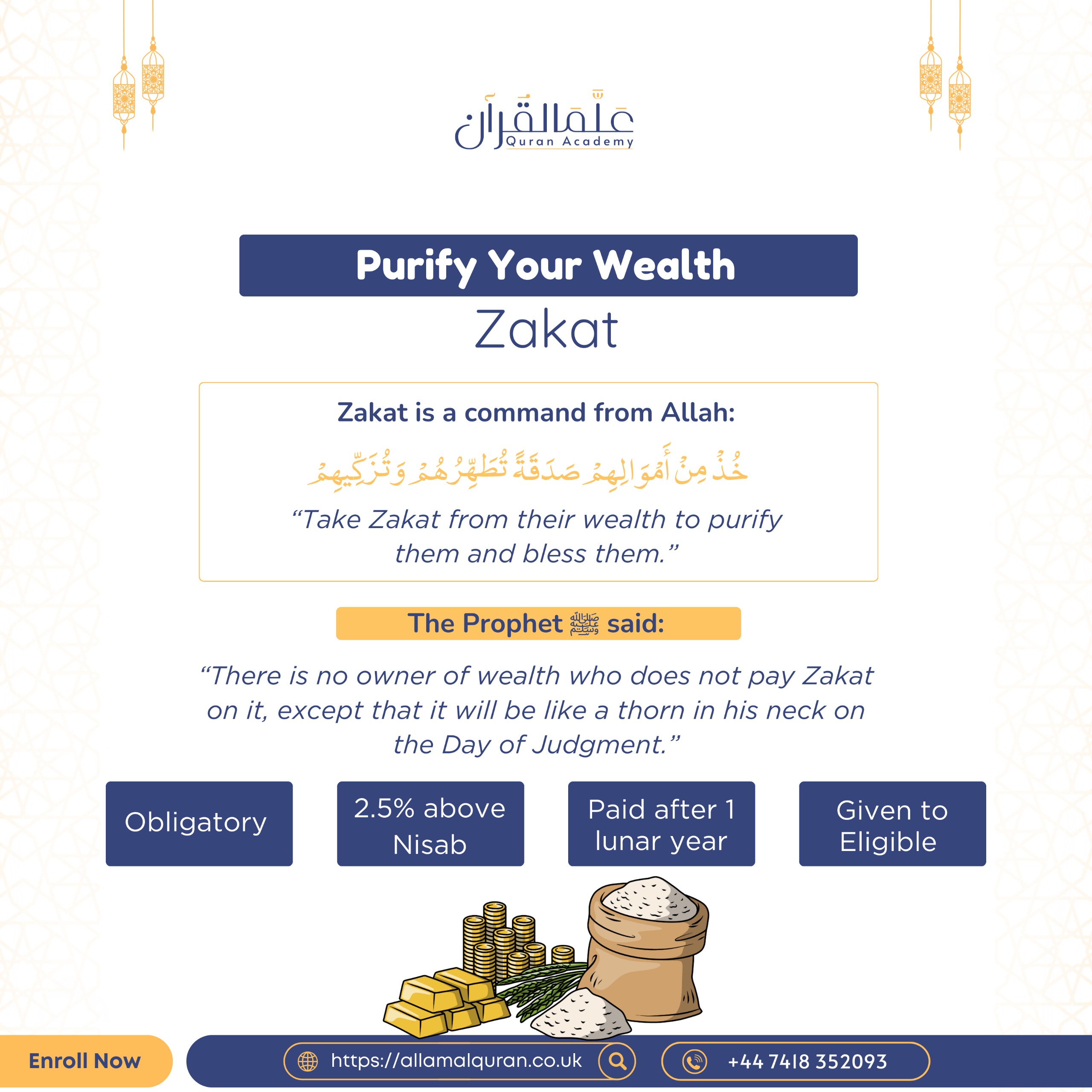
"Take Zakat from their wealth to purify them and bless them." (Quran 9:103)
This divine injunction establishes Zakat as an obligatory act for every Muslim who meets specific wealth criteria. It is not merely charity but a right that the poor have over the wealth of the rich, creating a balanced and compassionate society.
To be obligated to pay Zakat, a Muslim must meet specific conditions regarding their wealth. The following are the key requirements:
Minimum wealth required to be eligible for Zakat (equivalent to 85g of gold or 595g of silver)
Wealth must be held for one complete Islamic (lunar) year before Zakat becomes due
Percentage of wealth to be given as Zakat after all conditions are met
Zakat must be given to specific categories of recipients as defined in the Quran
Cash, gold, silver, business inventory, investments, livestock, and agricultural produce are all subject to Zakat when they reach the nisab threshold.
Primary residence, personal vehicles, household items, and tools used for earning a living are generally exempt from Zakat calculation.
Estimate your Zakat obligation using this simple calculator
Your estimated Zakat obligation:
This is 2.5% of your total eligible wealth.
Questions from parents answered by Islamic scholars and teachers
The Prophet Muhammad (peace be upon him) warned: "There is no owner of wealth who does not pay Zakat on it, except that it will be like a thorn in his neck on the Day of Judgment." This hadith emphasizes the seriousness of neglecting this obligation. Unpaid Zakat represents a right of the poor that has been withheld, making the wealth impure and a source of spiritual harm to its owner.
While the primary recipients of Zakat are the eight categories mentioned in the Quran (which include the poor, needy, those in debt, etc.), most scholars agree that Zakat must be given to Muslims. However, general charity (Sadaqah) can and should be given to non-Muslims in need. It's important to differentiate between obligatory Zakat and voluntary charity when distributing funds.
Start by involving them in your Zakat calculation and distribution process. Explain that just as we purify our bodies through washing, we purify our wealth through Zakat. Use simple examples: "If you have 40 coins, 1 coin belongs to those in need." Create a "Zakat jar" where children can contribute a portion of their allowance. This practical involvement helps instill the value from a young age.
Yes, Zakat is due on most retirement savings and investments if they meet the nisab threshold and have been held for a lunar year. This includes stocks, mutual funds, and retirement accounts. The calculation method may vary based on the type of investment. For retirement accounts that cannot be accessed until a certain age, some scholars suggest paying Zakat only on what is accessible, while others recommend calculating based on the total value. Consulting with a knowledgeable Islamic scholar is recommended for specific situations.
Beyond the social and economic impacts, Zakat offers profound spiritual benefits for the giver:
Zakat cleanses wealth from any impurities and blessings are multiplied in what remains.
Regular giving cultivates generosity and protects the heart from attachment to material possessions.
Allah promises immense spiritual rewards for those who fulfill this obligation sincerely.
Zakat is not merely a financial transaction but a comprehensive system of wealth purification, social justice, and spiritual growth. By fulfilling this obligation, Muslims purify their wealth, fulfill a right of the less fortunate, and cultivate a society based on compassion and shared responsibility. The consistent practice of Zakat transforms both the individual and the community, creating bonds of brotherhood and ensuring that wealth circulates among all segments of society.