
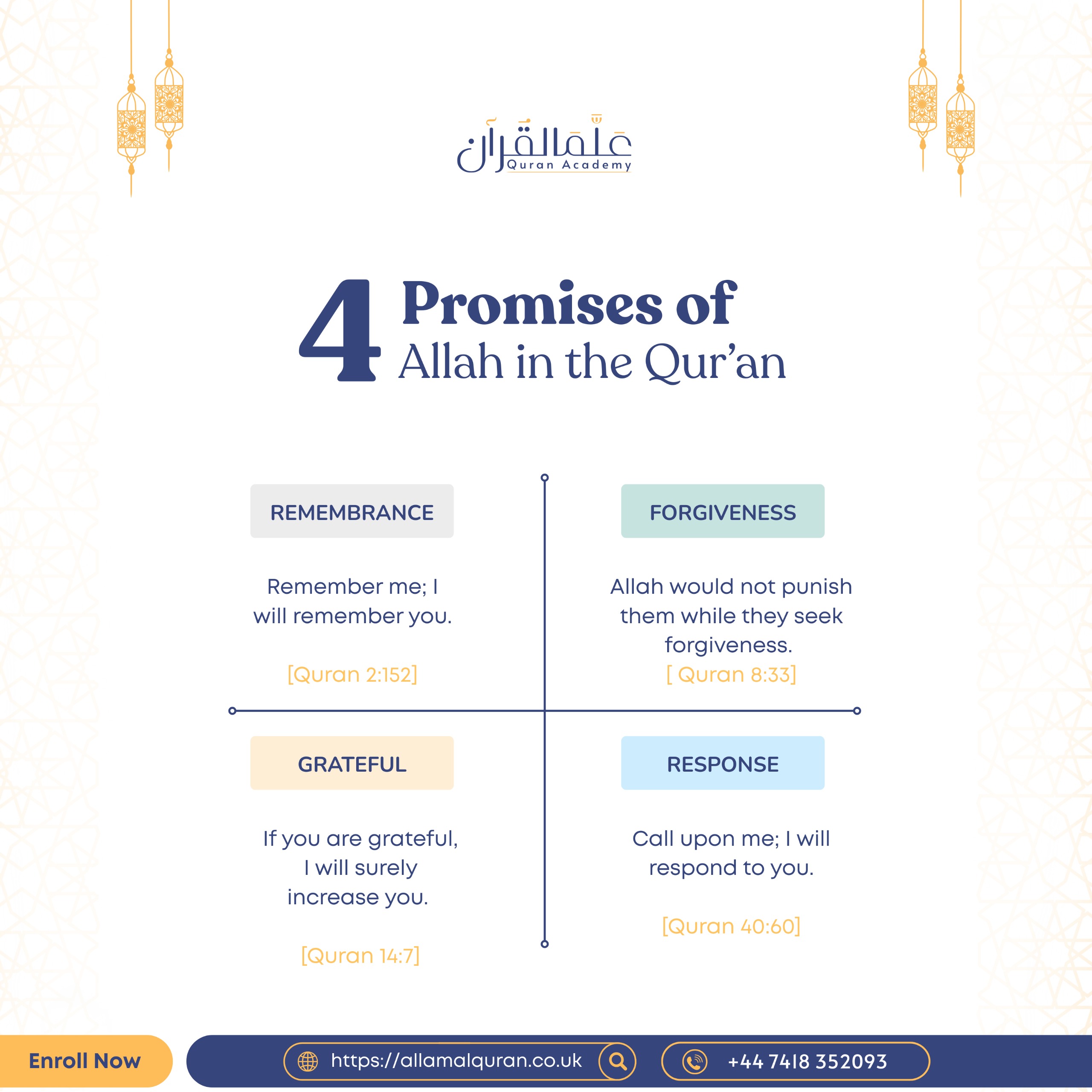
In the Islamic tradition, the Quran serves not only as a guide for moral and spiritual conduct but also as a source of profound comfort and assurance through the explicit promises made by Allah to humanity. These promises form a foundational covenant, outlining a reciprocal relationship between the Creator and the believer. This article explores four pivotal divine promises—Remembrance, Forgiveness, Gratitude, and Response—detailing their theological significance and practical implications for a Muslim's life. Understanding these covenants strengthens faith, nurtures worship, and provides a framework for a resilient, spiritually anchored existence.
The first promise establishes a profound spiritual intimacy. The verse "Remember Me; I will remember you" (Quran 2:152) encapsulates a dynamic, two-way relationship. Divine remembrance (Dhikr) here extends beyond ritualistic recitation to encompass conscious awareness of Allah in all states—through prayer, supplication, reflection, and adherence to His commands. In return, Allah's remembrance of the servant signifies the bestowal of mercy, guidance, protection, and honor. This mutual acknowledgment is the bedrock of the believer's connection, transforming acts of worship from mere duty into a living dialogue with the Divine.
This promise highlights Allah's boundless mercy and the critical importance of repentance. The assurance that "Allah would not punish them while they seek forgiveness" (Quran 8:33) underscores that the door to pardon remains open as long as the servant sincerely turns back. Seeking forgiveness (Istighfar) is not merely an utterance but a state of the heart involving regret, resolution to abstain from sin, and returning to righteousness. This promise offers immense hope, assuring believers that divine wrath is averted by genuine repentance, emphasizing that Allah's mercy precedes and overcomes His wrath for those who seek it.
This covenant ties divine increase directly to human gratitude. The declaration "If you are grateful, I will surely increase you" (Quran 14:7) applies to both tangible and spiritual blessings. Gratitude (Shukr) is expressed through the heart (acknowledgment), tongue (praise), and limbs (obedience). By being grateful for existing favors, a believer positions themselves to receive more—whether in provision, knowledge, faith, or contentment. Conversely, the verse warns that ingratitude leads to loss. Thus, gratitude becomes an active, transformative practice that unlocks further divine grace and abundance.
Perhaps the most direct promise of divine engagement is found in the verse: "Call upon Me; I will respond to you" (Quran 40:60). This establishes supplication (Dua) as a powerful, intimate act of worship. The promise of a response is unconditional, though its form—immediate grant, delayed reward, or diversion of harm—is according to Divine Wisdom. This promise encourages persistent, hopeful, and confident communication with Allah, fostering reliance on Him alone. It reassures the believer that no call goes unheard and that every sincere supplication draws one closer to Allah and attracts His intervention.
© Divine Promises Article. Content is based on Quranic exegesis (Tafsir) and Islamic scholarship. May we all benefit from understanding and living by these eternal covenants.